



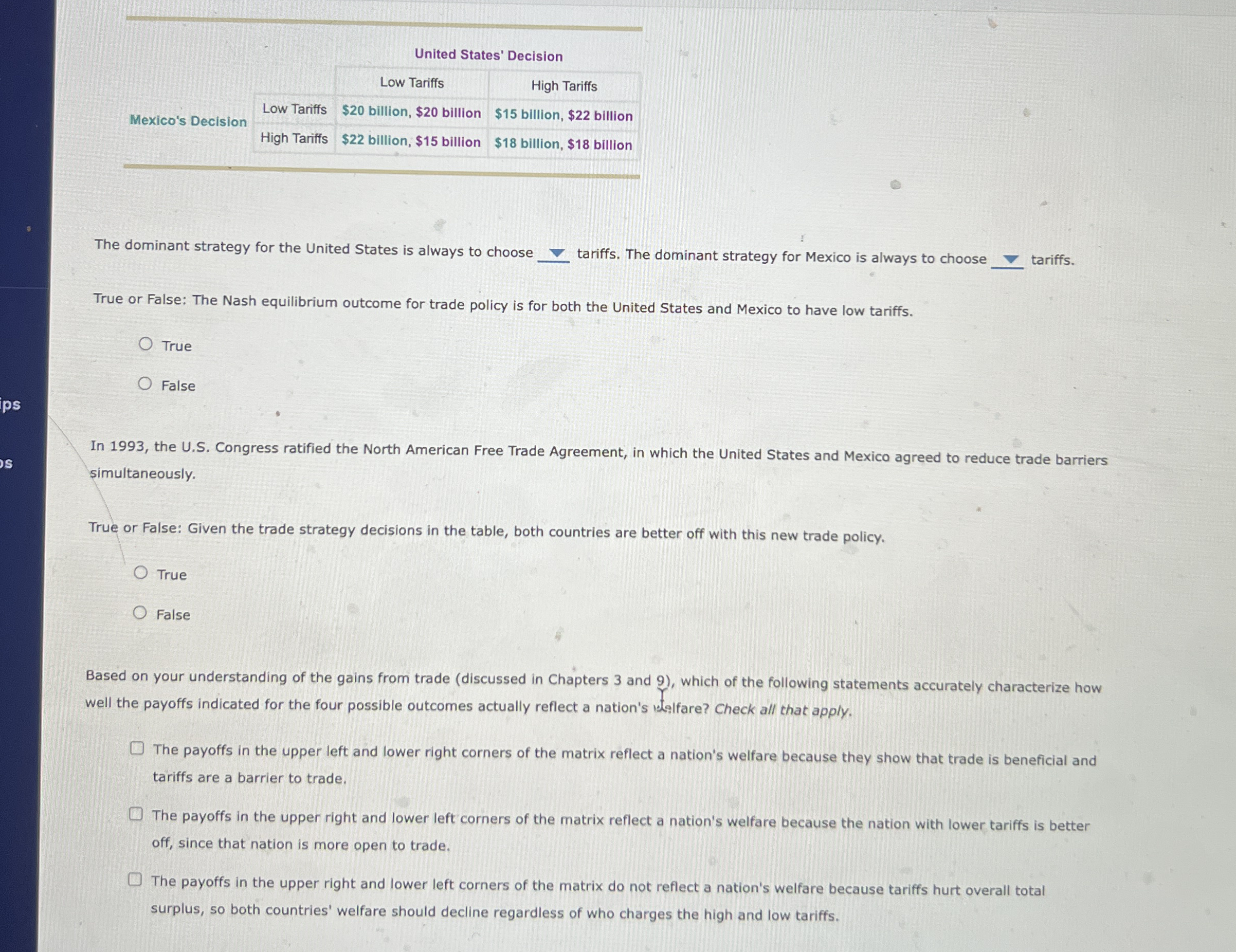
Question: United States' Decision table [ [ , , Low Tariffs,High Tariffs ] , [ Mexico ' s Decision,Low Tariffs,$ 2 0 billion, $ 2
United States' Decision
tableLow Tariffs,High TariffsMexicos Decision,Low Tariffs,$ billion, $ billion,$ billion, $ billionHigh Tariffs,$ billion, $ billion,$ billion, $ billion
The dominant strategy for the United States is always to choose tariffs. The dominant strategy for Mexico is always to choose tariffs.
True or False: The Nash equilibrium outcome for trade policy is for both the United States and Mexico to have low tariffs.
True
False
In the US Congress ratified the North American Free Trade Agreement, in which the United States and Mexico agreed to reduce trade barriers simultaneously.
True or False: Given the trade strategy decisions in the table, both countries are better off with this new trade policy.
True
False
Based on your understanding of the gains from trade discussed in Chapters and which of the following statements accurately characterize how well the payoffs indicated for the four possible outcomes actually reflect a nation's iselfare? Check all that apply.
The payoffs in the upper left and lower right corners of the matrix reflect a nation's welfare because they show that trade is beneficial and tariffs are a barrier to trade.
The payoffs in the upper right and lower left corners of the matrix reflect a nation's welfare because the nation with lower tariffs is better off, since that nation is more open to trade.
The payoffs in the upper right and lower left corners of the matrix do not reflect a nation's welfare because tariffs hurt overall total surplus, so both countries' welfare should decline regardless of who charges the high and low tariffs.
Step by Step Solution
There are 3 Steps involved in it
1 Expert Approved Answer
Step: 1 Unlock

Question Has Been Solved by an Expert!
Get step-by-step solutions from verified subject matter experts
Step: 2 Unlock
Step: 3 Unlock