







Question: URGENT PLEASE PLEASE PLEASE HELP Case study, after reading please answer the following questions: 1. Question 1: Please provide an executive summary of the case
URGENT PLEASE PLEASE PLEASE HELP
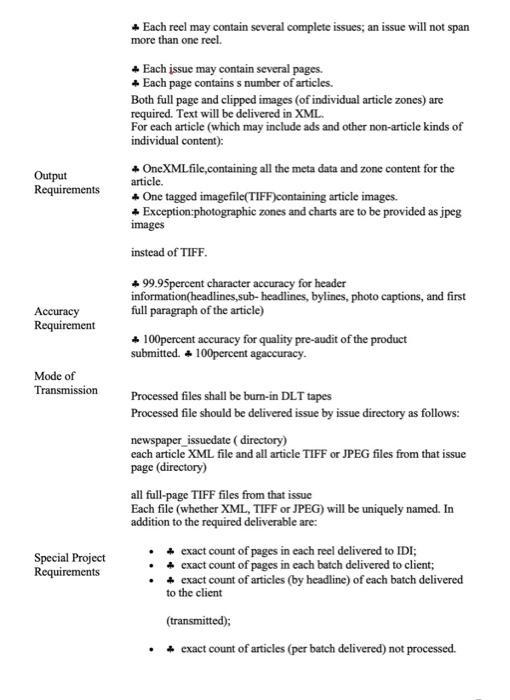
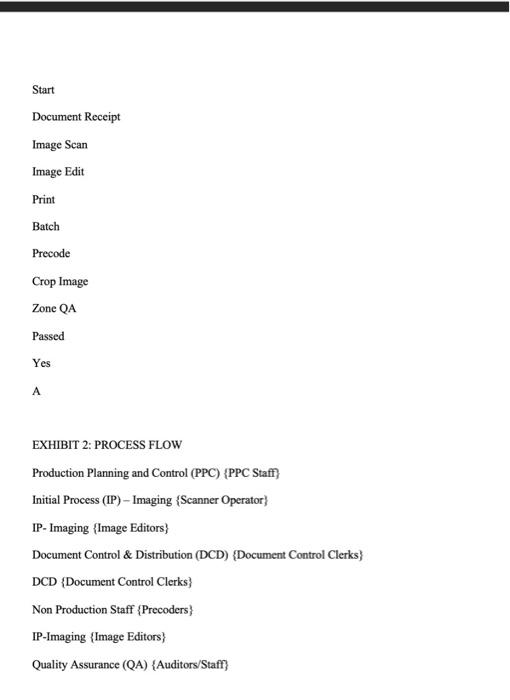
Late one evening in August 2004, Saiyumn Savarker, chief operating officer (COO) of Ken Private Limited (Ken), was sitting alone in his corporate office. While he gazed at the panoramic view from his workplace in the Philippines, his thoughts raced to the vexing problems encountered in the first phase of the Genesis Digitization Project. The Genesis Digitization Project required Ken to create digital archives of an American daily newspaper, 1 The Genesis Times, for its client, Dogma International. The coverage of this newspaper spanned 150 years. Ken had begun the project in April 2004 and had promised 10 years of digitized newspaper to the client by the end of July 2004. Unfortunately, Ken could not meet this deadline, and the delay did not sit well with Dogma International, since it had, in turn, already made a commitment to its customers. Infuriated by the delay, Dogma International sent out a dire warning: If Ken was unable to honour the commitment, Dogma International would not hesitate to cancel the project. The project was in a state of flux. Ken had to deliver 35 years of digitized newspapers with enhanced image quality to Dogma International in a time frame of just two months. Moreover, cross-cultural context exacerbated Ken's problems and presented Savarker with a tough business issue. The gravity of the situation forced him to call an emergency meeting with the various managers of the Genesis Digitization Project to discuss and develop an action plan for successful execution and on-time delivery of the project to the client. COMPANY BACKGROUND Ken Private Limited The outsourcing content services of the company focused on fabrication services and knowledge services. Included in Ken's fabrication services were processes such 1 The name of the newspaper has been disguised to protect confidentiality. Ken Private Limited was established in March 1991 in Texas, United States, and was in the business of providing knowledge outsourcing and technology services. The firm helped its clients to use information efficiently as well as cost-effectively. as digitization, XML and mark-up services, imaging, data conversion, content creation services and language translation services. Knowledge services, on the other hand, included content enhancement, vocabulary development, taxonomy, hyperlinking mark-up, indexing and abstracting and other general editorial services. The technology services focused on the design, implementation, integration and deployment of systems to author, manage and distribute content. By 2004, Ken had earned a great reputation in the market for its excellent performance. It had established offices in America, Europe and Asia, employing more than 5,000 employees, and its net profit in 2004 amounted to $90 million. Ken was many of the world's pre-eminent information, media and publishing companies, as well as leading enterprises in information- intensive industries. Dogma International was a leading global content-publishing company, located in Michigan, United States. The company's history spanned 55 years, and its reputation in the market was based on the high quality and excellence of its services. The company developed information databases through multiple sources like newspapers, magazines, journals and from the works of thousands of publishers, in turn making the information available to customers through a web-based online information system. Large organizations and individuals alike depended on Dogma International to provide reliable and trustworthy information Dogma International acquired the rights to the microfilm archives of The Genesis Times, one of the most prestigious newspapers in America. The company considered it advantageous to shift from microfilm to a web-based product and decided to digitize the newspaper. For Dogma International, this decision represented a key strategic move as well as a prestigious project - to make available over the web millions of pages currently on microfilm, dating as far back as the 18th century. As a part of this project, Dogma Interational aimed to convert the microfilm archives of the newspaper into a comprehensive digital archive. The main goal of the project was to make the content available and accessible from anywhere in the world, to scholars, researchers, students, teachers, libraries and others needing the information. Every issue was to be digitized from cover to cover in an easily searchable, user-friendly format. Thus, the company sought to provide the information in both text-only format and full- page format so that users could view the information as originally published. The company also planned to index every issue thoroughly in order to enhance the browsing experience of the user, an effort that would require additional features, such as the ability to narrow searches (by date, author's name, keyword, etc.), view brief abstracts, and access each page with a user-friendly URL. Dogma International approached Ken to take on this task. STRATEGIC AGREEMENT: DIGITIZING 150 YEARS OF HISTORY On March 21, 2004, Ken entered into an agreement with Dogma International to provide its services for the Digitization Project, creating a digital historical archive of full runs of The Genesis Times. Under the agreement, Ken was expected to provide the client with a range of services that included product manufacturing services, such as digitization and imaging services, XML conversion and transformation services, professional services; and editorial services, such as abstracting and indexing. (See Exhibit 1 for project summary.) The history of the newspaper spanned almost 150 years, from its first issue in 1851 until 1999, which included more than 3.4 million pages and represented a 15-month project for Ken. As per the agreement, Ken had to deliver the first batch (i.e., 10 years of digitized newspaper) within four months of the project's commencement. Thereafter, Ken was to deliver a bulk order of 25 years' worth of digitized newspaper content every two months. THE PREPARATION: TECHNOLOGY AND CONTENT STRATEGY working for an Indian information technology (IT) company and four years of formal education in technology The digitization of The Genesis Times represented the first time that Ken had handled a project of this kind. So far, the company had been using the traditional method of web-page delivery, wherein PCs were used to access HTML web pages that were displayed page by page. However, owing to the large volume of data in the newspapers and the requirements of the client, the Genesis Digitization Project could not be carried out using this method. Further, XML was rapidly replacing HTML as a standard format within the industry, and the project required the newspaper data to be converted to the XML format, which demanded an XML-based repository structure. However, compared to HTML and other conventional data sets, the use of XML posed a unique set of challenges. The XML format required creation of rich metadata with a high degree of precision and consistency, as well as a technology- intensive manufacturing environment. Ken's recently established XML content factory in Tacloban City, Philippines, was thought to be the appropriate location to carry out a large-scale project like this. The factory was equipped with all the tools required to meet the challenges posed by the newspaper digitization process. A new process and methodology were created for the project. The process involved gathering data from the microfilms, normalizing disparate data formats, digitizing non-digital assets and creating XML files, which were uploaded to the client's digital warehouse. However, to implement the conversion process, it was essential for Ken to operate on advanced technological platforms, which had to be built to facilitate the needs of the project. Such technology development functions were, by and large, performed at the company's office in Hyderabad, India. Both tasks - content processing and technology development - were indispensable for the project. Keeping this fact in mind, Sharma decided to split the activities of the production and technology development between the Philippines office and the Indian office. It was the first time that the company had adopted this kind of an arrangement to execute a project. The Indian team was given the responsibility of developing a technological platform and transferring it to the Filipino team, whereas the latter was given the task of content processing and production, using the newly developed technical platform. DISTANT TEAMS, DIFFERENT BACKGROUNDS Sharma, the project manager, took charge of the Genesis Digitization Project, relocated to the Philippines, and decided to start work simultaneously at both locations to save time. The project started on April 1, 2004. To carry out the project, Ken created a team of 1,600 employees, with 1,400 members in the Philippines and 200 in India. The Filipino team was segregated into five departments: Production Planning and Control (PPC), Initial Process Imaging (IPT), Document Control and Distribution (DCD), Non-Production Staff (NPS) and Quality Assurance (QA) (see Exhibit 2). The employees in each department were assigned clear tasks. A department manager was associated with each department and was accountable for the department they managed. The Indian team had three assistant managers supervising the project in India in three shifts. Each of the three managers was responsible for delivery from their respective teams. The Indian team initiated the project through the planning and design of the technological platform, transferring each technology segment to the Filipino team throughout each stage of the development process. While the Indian team was working on the first segment of the technology, the Production Planning and Control department of the Filipino team had the task of receiving the input from the client in the form of microfilms. The Filipino team members were very comfortable working with the current form of pragmatic workflow (a term used for work that required minimal use of high-end technology) since it offered enough flexibility to carry out operations. The members of the Filipino team, however, did not see the benefits of switching over to the new workflow. They were quite sceptical about the new technology that was being developed by the Indian team, and they had reservations about the value of the technology, both to their own team and to the project. Although the team members discussed this issue among themselves, they did not share their concerns with their project manager. THE WIDENING GAP While the Filipino team continued to express concems among themselves about the new workflow, the Indian team was ready with the first segment of the technological platform. The Filipino team received the technology, and its IPI department initiated the scanning of microfilms to create electronic images. The members of the IPI department found the technology frustrating because, in their opinion, it was not very user-friendly and required significant improvement. Michael Tajale, the IPI department manager, complained to Sharma about the issue, and Sharma passed along the feedback about the glitches to the Indian team. The team in India reviewed the feedback and made the necessary modifications in the first segment of the technology and then transferred the revised version back to the Filipino team. The Indian team then began to work on the second segment of the platform, soon delivering it to the Filipino team. The second segment was crucial for the Document Control and Distribution (DCD) department, which required this platform in order to print the image files to serve as source documents for production The DCD department received the second part of the technological platform and got to work. During implementation, however, the employees determined that the technology was flawed, asserting that the glitches in the technology prevented them from continuing their work. The manager of the DCD department, Albert Lumapas, was frustrated with the situation because production in his department had come to a standstill. Further, this unpleasant development increased the Filipino team's concerns about the technology and the team in India, as the team members became convinced that their initial apprehensions had been justified. HITTING A ROADBLOCK As the project manager, Sharma, found himself in a quandary because he had never anticipated a situation like this. He realized that he needed to get more involved to straighten out the situation and get the job back on track. With this goal in mind, he convened a meeting with all five department managers and a few employees from each department. He started off with a general discussion and then gradually began to make inquiries about the delay in the project. He addressed the managers but was met with a stony silence; none of them expressed their concerns. This did not deter Sharma. He insisted that each employee share their views regarding the problems. An employee from the DCC department murmured something about there being a lot of errors in the technology delivered to them and that the team in India was not sensitive to the production department's needs. Sharma took note of the response, tried to find out more about the problem, and asked the employee to explain what the glitches were; however, the employee refused to share anything more. Sharma tried yet again to get answers from the employees, but none were forthcoming. Feeling irritated and frustrated, Sharma lost his temper and yelled at the employees but still could not get a response. He called the meeting to a close. THE MYSTERY DEEPENS After the meeting, Sharma urged the Indian team to do their job more conscientiously and also directed them to resolve the errors they had made in the second segment of the technological platform before resending it to the Filipino team. By this time, it was already May 2004, and things were not improving. Sharma felt genuinely worried about the project. While walking around the production facility, he overheard a conversation in the hallway between Tajale and Lumapas, who respectively headed the IPI and DCC departments. Tajale: Hey, Lumapas. How's the production going in your department? Are things getting any better? Lumapas: Not really. There are a lot of issues in the technical part. I don't know what the Indian team is up to. I think they are just not concerned about our problems. Tajale: I agree with you. While we were working on the microfilm conversion, we had minimal support from the engineering department. Lumapas: Very true. The other day I sent a very important e-mail to the team in India for resolving a technical issue. It was an urgent one, but there was no answer from the Indian team. Those guys just do not understand the urgency and take their own sweet time to get back to us. My department had to sit idle for the whole day because of the unresolved problem. My team felt frustrated. This was, of course, not the first time that such an incident happened. It's an everyday scenario now with the engineering team. Tajale: Yeah. That's sad. We didn't have a great experience working with them either. The technology that was transferred to us was not at all user-friendly, and moreover, I feel those guys aren't even looking out for inputs from the production department. Lumapas: That's right, and this is a big barrier. Our team members are not well versed in the use of technology. Of course, the engineering team didn't organize any knowledge-sharing sessions or training. The lack of awareness on the use of technology has made it even more difficult for us to reduce the problems Tajale: The Indian team did resolve some issues by making some modifications in the technology and transferred that to us a second time. It became all the more complicated to work on those platforms as the rework processes were not clearly defined. Lumapas: Oh, I see. I wasn't aware of these intricacies. Thanks, Tajale, for sharing this piece of information Tajale: Lumapas, there's one thing that I fail to understand. The problem lies with the Indian team, and the project manager keeps asking us, "What's the problem?" Lumapas: I know, and finally, if something goes wrong, it is always our team that is blamed. Nobody blames them. Tajale: Yeah ... alright then, Lumapas. I have someone waiting for me at reception. I'll catch you later. Lumapas: Sure, Tajale. Thanks. After Sharma overheard the conversation, he fel even more perplexed and overwhelmed by the whole situation, which seemed to be rapidly spinning out of control. THE OTHER SIDE Sharna believed it was essential to talk to the Indian managers before taking any further steps. Consequently, he connected with Rajeev Anand, one of the three assistant managers in India Sharma expressed his disappointment over the results delivered by the Indian team. He also asked Anand to clarify why things were not proceeding according to the original plan, to which Anand replied: The team here in India has its expertise in developing technology, but at the moment, we are dealing with a new project. This project is not like any of the usual projects and requires a different kind of treatment. Technology of this kind has not been established in the company and thus has required extra time, effort and even refinement. There are a few inevitable bottlenecks in technology at the moment. Despite this, the team is trying to fix all the issues and enhance the applications as and when reported. As far as the Filipino team is concerned, sir, I try to ensure that all their concerns are immediately addressed, and they get a timely response. They are not at all patient, and they create an uproar over every petty issue. I believe there aren't as many errors in the technology as they have made out, and I feel lack the inclination to learn the processes involved. I wonder if they even understand the project they are working on. We will, of course, take your suggestions into consideration and ensure successful delivery of the technology THE DEADLINE APPROACHES The project manager's attempts at mediation brought some success. After fixing the errors, the Indian team passed on the technology to the Filipino team, and production in the Philippines finally resumed. The DCC department printed the image files to serve as documents for production and, thereafter, batched source documents per page for easier data tracking and processing. Meanwhile, the Indian team was preparing its third segment of the technical platform. As a part of the third segment of technical work, the Indian team engineered links that would enable the Filipino team to provide the abstracting, indexing and other editorial services to the client. This time, they were certain that there were minimal errors. With the help of the third segment of technology, the NPS department of the Filipino team inserted tags within the content to provide markers that the computer could process. They were also expected to provide the client with certain other services, such as content enhancement, hyper-linking, indexing, abstracting and general editorial services, which once again proved to be taxing for the Filipinos. The NPS department faced major difficulties in delivering these services. The team members were not able to comprehend the style of language used in the newspaper as they had never been exposed to such writing before. It was with great difficulty that the project moved to the next step. The IPI department edited the images in this stage. They cropped the corresponding image file according to the pre-coded source document. The project was subsequently passed on to the Quality Assurance (QA) department to perform the procedures required in order to certify that the processed zones met the zoning quality requirement. The department ascertained that the product being extended to the client was of suitable quality and that it met all the required standards. According to the QA department, there were no errors in the digitization of the newspapers Despite the team's best efforts, Ken was prepared to deliver only two years' worth of digitized newspapers on July 31, 2004. THE ANGRY CLIENT After four months, it was time for the first delivery to be made, as per the agreement. But to the shock of the client, Ken could deliver just two years of digitized newspapers, not even one-quarter of what it had promised. Not surprisingly, the client was appalled. Dogma International was extremely unhappy, not just with the delay, but also the quality of the delivery. The company issued an ultimatum to Ken: either Ken would deliver high-quality digitized archives of the newspaper, as per the agreement within a period of two months, or it would lose the project. The client's warning was a major wake-up call for Ken. The company managers realized that if they wanted to retain the project, they had no other choice but to deliver the product as per the client's requirement. The loss of an important client and potential damage to Ken's own reputation was at stake. The board of the company got together to find a way out. They zeroed in on COO Saiyumn Savarker as their point man to handle the project at this critical juncture. Prior to attaining this COO position, Savarker had served as assistant vice-president of project delivery at Ken. He had a long and successful record of managing many national and international project deliveries for the company, and the board appreciated his work and the corporate contributions he had made. Savarker flew from India to the Philippines to assess the issue. Savarker's primary focus was to get acquainted with the situation. He met with Sharma, who briefed him about the state of affairs and shared everything that had happened during the four-month period. With the information he gleaned, Savarker gained some insight into the client's disappointment with the deadlines, but he still could not identify the source of the problem. Savarker's next step was to go to the QA department in search of further insights. To his surprise, he was told that the product that had been offered to the client was of good quality. The department manager said, "The team captured the client's relevant content and converted it into XML as per the standards. The 99.95 per cent character accuracy requirement for header information for headlines, sub-headlines, bylines, photo captions, and first full paragraph of the article was ensured. The team also ensured 100 per cent tag accuracy and 100 per cent accuracy for quality pre-audit of the product submitted." Upon discovering this information, Savarker wondered about the all-important missing link. He decided it would be helpful to find out more from the client, so he promptly arranged for a meeting in order to gain a clear understanding as to why Dogma International considered the product to be inadequate. The client replied by saying, "Though the text part was digitized in a correct manner, the quality of the images was really poor." The client told Savarker that they considered the image part important because it had tremendous power to attract users to the product. With the growth of the Internet, they expected the demand for images to be huge. As the meeting was about to come to an end, the client exclaimed, "At least you talked to us! This is the first time that somebody from your company has asked for input or feedback from us, so we thought our specifications and expectations must be clear to your company." Savarker returned to his office and met with Sharma. He explained his conversation with the staff at Dogma International and asked Sharma for an explanation. Sharma said, "We weren't aware that the client was concerned about the aesthetics as well. We had no clue about this requirement. If we replace our current scanners with high-resolution scanners, we will be able to deliver high-quality images to the client as per their requirement." After winding up his meeting with Sharma, Savarker walked directly into his office on the fourth floor. He called his assistant and asked her not to let anybody disturb him for next two hours. He then sat on his chair and said to himself, "There is no time for crying over spilt milk and blaming anybody, but it is sad that this lack of competency or comprehension of the client's need was attributed to poor knowledge on the company's part." He pondered the situation and realized that Ken needed to digitize approximately 35 years' worth of newspaper afresh, and it also needed to improve the image quality throughout the process. The task seemed enormous since it had to be done within a period of just two months. As he grappled with the situation, Savarker worked towards finding a solution that would steer the project out of dangerous waters. Project Description EXHIBIT 1: PROJECT SUMMARY A newspaper digitization project required to create digital archives of 150 years of the newspaper, The Genesis Times. Input Materials Newspapers in 35 mm roll microfilm. Each shipment will contain multiple reels. Output Requirements + Each reel may contain several complete issues, an issue will not span more than one reel + Each issue may contain several pages. + Each page contains s number of articles. Both full page and clipped images (of individual article zones) are required. Text will be delivered in XML. For each article (which may include ads and other non-article kinds of individual content): + OneXML file containing all the meta data and zone content for the article. + One tagged imagefile(TIFF)containing article images. * Exception photographic zones and charts are to be provided as jpeg images instead of TIFF. +99.95percent character accuracy for header information(headlines,sub- headlines, bylines, photo captions, and first full paragraph of the article) + 100 percent accuracy for quality pre-audit of the product submitted. + 100percent agaccuracy. Accuracy Requirement Mode of Transmission Processed files shall be burn-in DLT tapes Processed file should be delivered issue by issue directory as follows: newspaper_issuedate ( directory) each article XML file and all article TIFF or JPEG files from that issue page (directory) all full-page TIFF files from that issue Each file (whether XML, TIFF or JPEG) will be uniquely named. In addition to the required deliverable are: + exact count of pages in each reel delivered to IDI; + exact count of pages in cach batch delivered to client; + exact count of articles (by headline) of each batch delivered to the client (transmitted); + exact count of articles (per batch delivered) not processed. Special Project Requirements Start Document Receipt Image Scan Image Edit Print Batch Precode Crop Image Zone QA Passed Yes A EXHIBIT 2: PROCESS FLOW Production Planning and Control (PPC) (PPC Staff Initial Process (IP) - Imaging (Scanner Operator) IP- Imaging {Image Editors) Document Control & Distribution (DCD) {Document Control Clerks) DCD {Document Control Clerks) Non Production Staff (Precoders) IP-Imaging (Image Editors) Quality Assurance (QA) (Auditors/Staff) Case study, after reading please answer the following questions: 
1. Question 1: Please provide an executive summary of the case (a single paragraph summarizing the entire case)
2. Question 2: Diagnose and discuss the issues in the case that caused Kens failure to meet the clients timeline and expectations.
3. Question 3: Discuss the dynamics between the Indian and Filipino teams. Can these dynamics be held responsible for the ineffective execution of the project?
4. Question 4: What should the COO Saiyumn Savarker do to ensure Kens successful delivery of the project?
Step by Step Solution
There are 3 Steps involved in it
1 Expert Approved Answer
Step: 1 Unlock

Question Has Been Solved by an Expert!
Get step-by-step solutions from verified subject matter experts
Step: 2 Unlock
Step: 3 Unlock
 Study Help