







Question: Use a SQL Language please, show a screen shot for your solution in your computer. 4. Write a SELECT statement that returns four columns: vendor_name,
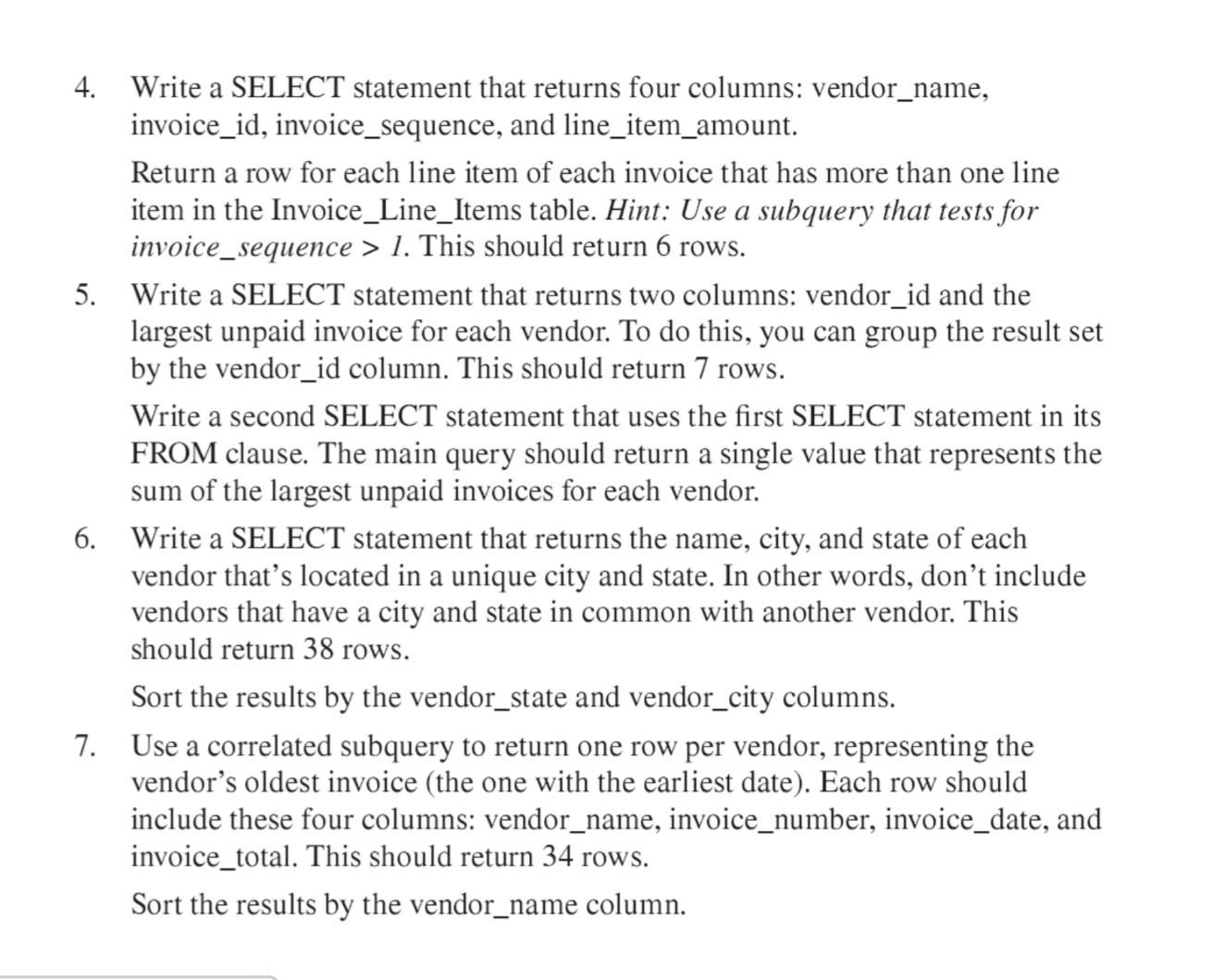
Use a SQL Language please, show a screen shot for your solution in your computer.
4. Write a SELECT statement that returns four columns: vendor_name, invoice_id, invoice_sequence, and line_item_amount. Return a row for each line item of each invoice that has more than one line item in the Invoice_Line_Items table. Hint: Use a subquery that tests for invoice_sequence >1. This should return 6 rows. 5. Write a SELECT statement that returns two columns: vendor_id and the largest unpaid invoice for each vendor. To do this, you can group the result set by the vendor_id column. This should return 7 rows. Write a second SELECT statement that uses the first SELECT statement in its FROM clause. The main query should return a single value that represents the sum of the largest unpaid invoices for each vendor. 6. Write a SELECT statement that returns the name, city, and state of each vendor that's located in a unique city and state. In other words, don't include vendors that have a city and state in common with another vendor. This should return 38 rows. Sort the results by the vendor_state and vendor_city columns. 7. Use a correlated subquery to return one row per vendor, representing the vendor's oldest invoice (the one with the earliest date). Each row should include these four columns: vendor_name, invoice_number, invoice_date, and invoice_total. This should return 34 rows. Sort the results by the vendor_name column
Step by Step Solution
There are 3 Steps involved in it

Get step-by-step solutions from verified subject matter experts
 Study Help