Question: Use below for answer form Chapter 15 Sourcing Decisions in a Supply Chain Case Study Polaris Industries Inc. In September 2010 Suresh Krishna, vice president
Use below for answer form
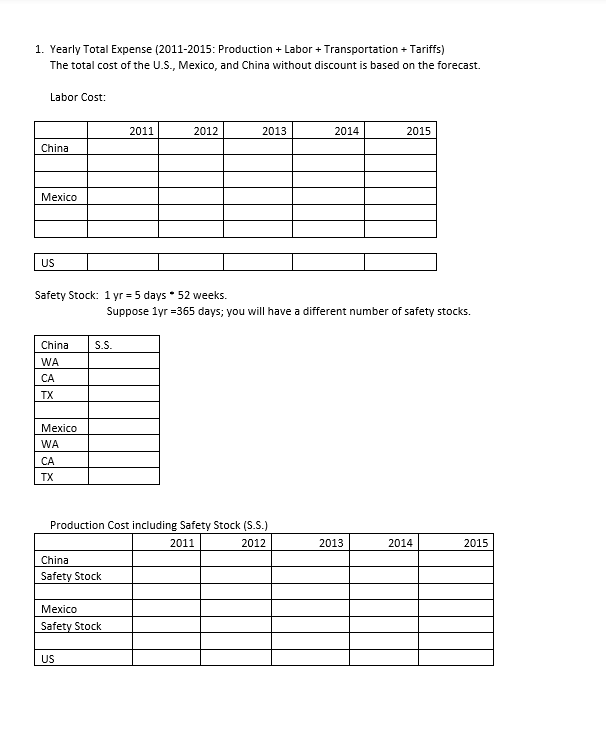
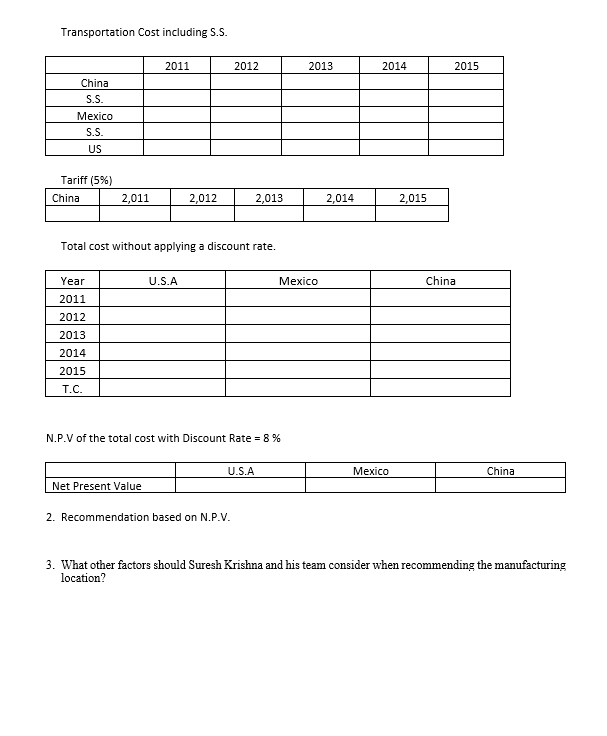
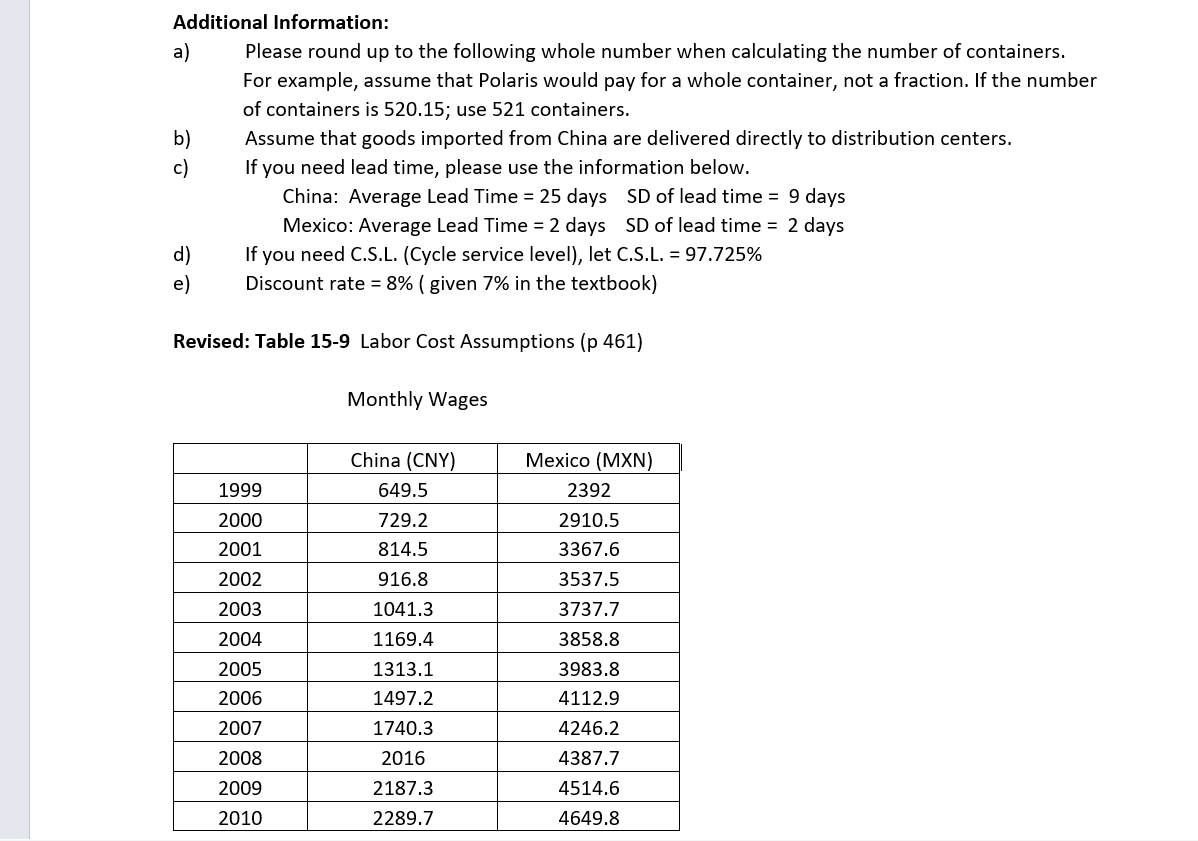
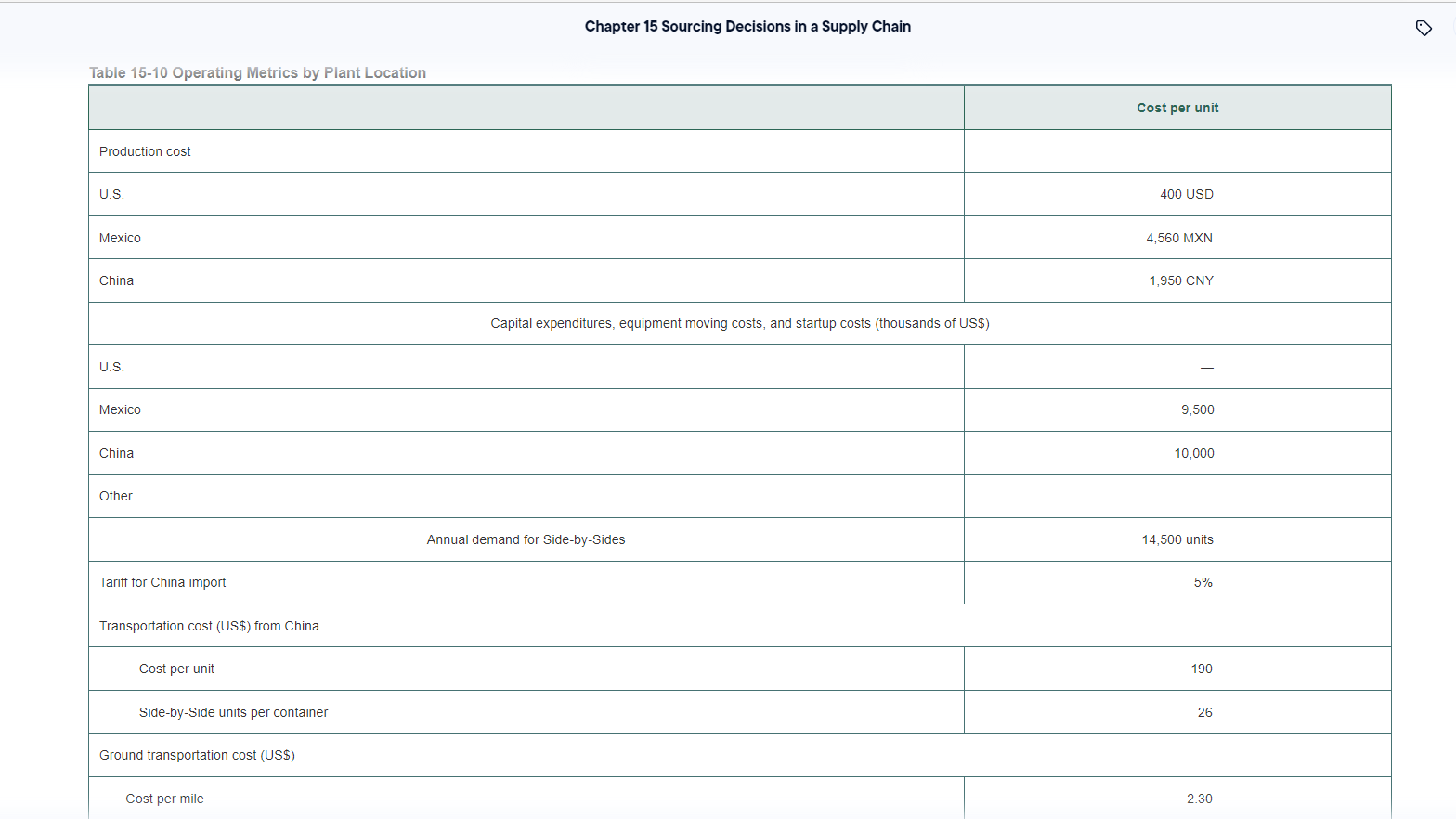
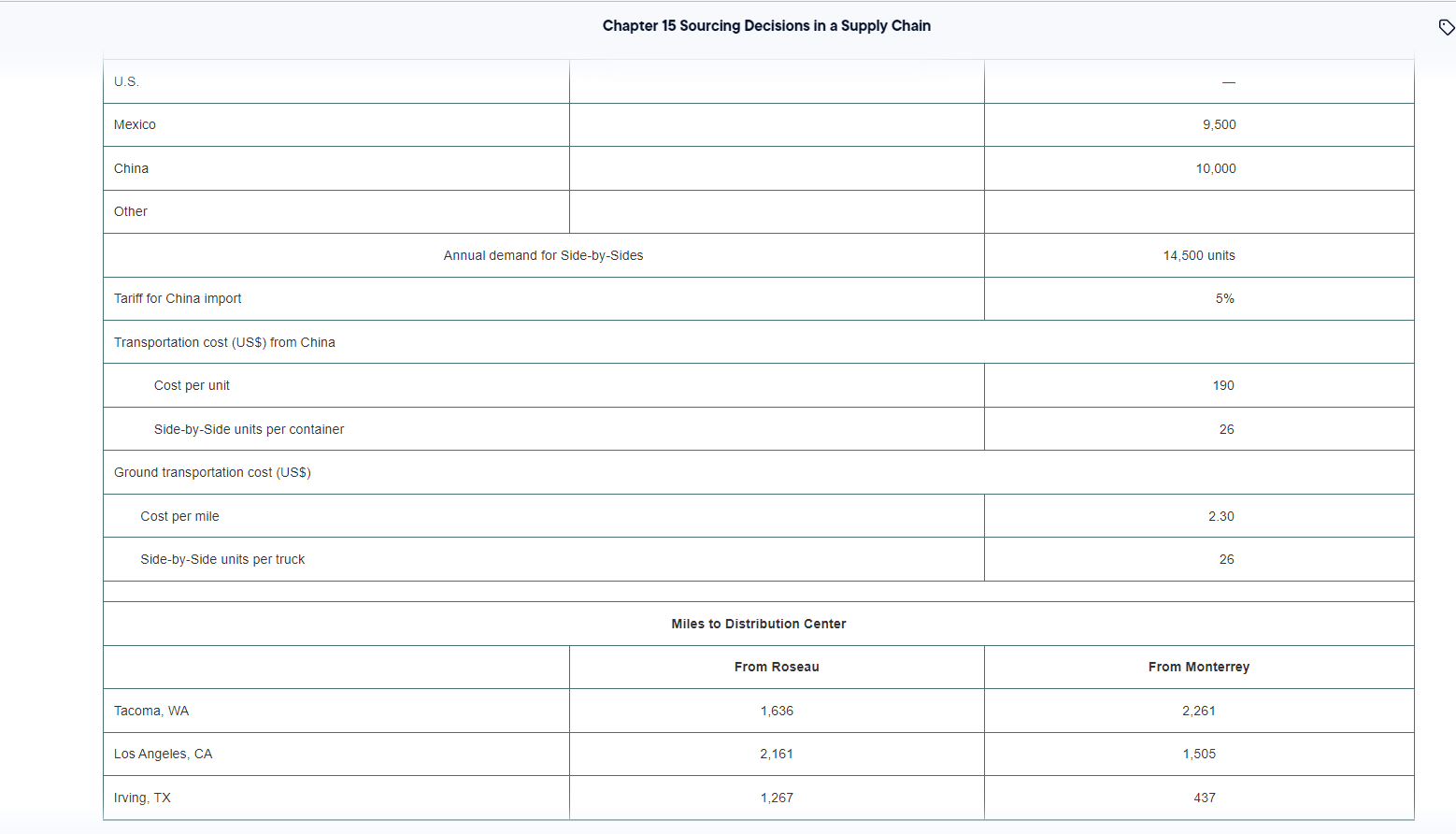
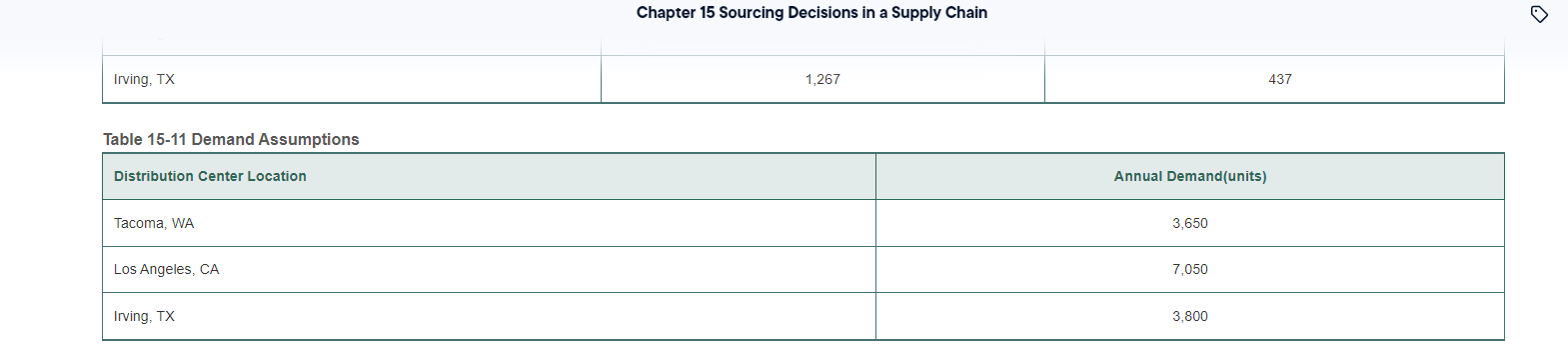
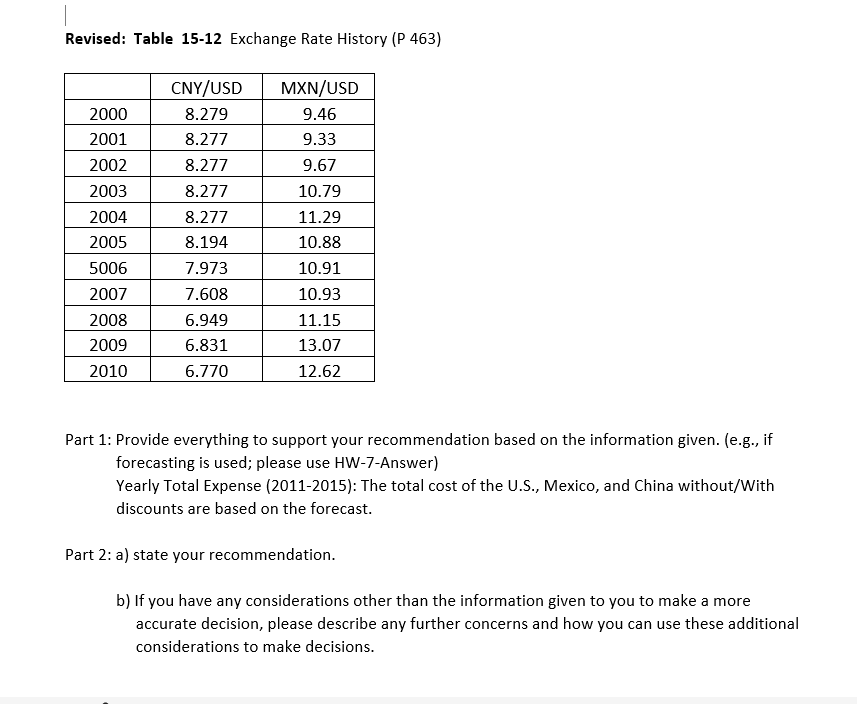
Chapter 15 Sourcing Decisions in a Supply Chain Case Study Polaris Industries Inc. In September 2010 Suresh Krishna, vice president of operations and integration at Polaris Industries Inc., a manufacturer of all-terrain vehicles (ATVs), Side-by-Sides, and snowmobiles, sat in his office in Medina, Minnesota, deliberating the recommendation he was developing for a new plant to manufacture the company's Side-by-Side vehicles. The economic slowdown in the United States had put considerable pressure on Polaris's profits, so the company was considering whether it should follow the lead of several of its competitors and open a facility in a country with lower labor costs. China and Mexico were shortlisted as possible locations for the new factory, which would be the first Polaris manufacturing facility located outside the Midwestern United States. By the end of the year Krishna needed to recommend to CEO Scott Wine and the board of directors whether Polaris should build a new plant abroad or continue to manufacture in its American facilities. Polaris industries Inc. Chapter 15 Sourcing Decisions in a Supply Chain Polaris industries Inc. Established in 1954, Polaris was a manufacturer of high-performance motorsport products, including ATVs, Side-by-Sides, and snowmobiles. With nearly $2 billion in sales in 2010 , it was a strong player in the $10 billion power sports market alongside competitors Yamaha, Honda, Arctic Cat, Ski-Doo, and Harley Davidson. Polaris's customers were primarily located in North America (85 percent); its international customers were concentrated in Europe. Foreign markets were becoming increasingly important to Polaris; international revenue had grown 21 percent in 2010 , and was forecasted to grow even more in 2011. Polaris products were sold through 1,500 distributors in the United States and 1,000 distributors in the rest of the world. Polaris's heritage was deeply rooted in the power sports industry. The company introduced its first snowmobile in the 1950s and its first ATV in 1985. Between 1985 and 2010 Polaris sold more than two million ATVs. In 1992 Polaris entered the personal watercraft market, but it lacked a sustainable distribution system and exited the business in 2004. In 1998 the company introduced the first Side-by-Side off-road vehicle (ORV), which was expected to surpass ATV sales during 2011. Also in 1998, Polaris entered the parts, accessories, and apparel segment, which grew significantly over the next decade. Finally, Polaris also Polaris's heritage was deeply rooted in the power sports industry. The company introduced its first snowmobile in the 1950s and its first ATV in 1985. Between 1985 and 2010 Polaris sold more than two million ATVs. In 1992 Polaris entered the personal watercraft market, but it lacked a sustainable distribution system and exited the business in 2004. In 1998 the company introduced the first Side-by-Side off-road vehicle (ORV), which was expected to surpass ATV sales during 2011. Also in 1998, Polaris entered the parts, accessories, and apparel segment, which grew significantly over the next decade. Finally, Polaris also introduced its first on-road vehicle in 1998-a motorcycle with the brand name "Victory"-to compete with Harley Davidson. Combined, these products were forecasted to bring in $2.2 billion revenue in 2011. Polaris's total revenue grew more than 20 percent in 2010 and was expected to grow 8 to 11 percent in 2011. Polaris was the dominant player in the ORV market based on market share. In 2010 ORVs accounted for 69 percent of Polaris's sales, with Side-by-Sides comprising the majority of sales in this segment. Looking ahead, the company was excited by the potential growth in emerging markets. From Latin America to Asia, Polaris had begun to invest heavily in marketing to increase awareness of its brand. For example, in China the company placed off-road image advertising in racing and extreme sports enthusiast publications. Similarly, in Latin America Polaris was leveraging its brand in the utility vehicle space to penetrate the substantial agricultural industries. Chapter 15 Sourcing Decisions in a Supply Chain Manufacturing In 2010 all of Polaris's manufacturing operations were located in the northern Midwest. In addition to its corporate headquarters in Medina, Minnesota, and product development and innovation center in Wyoming, Minnesota, Polaris operated three manufacturing facilities in Roseau, Minnesota; Osceola, Wisconsin; and Spirit Lake, lowa. Roseau, the birthplace of the Polaris snowmobile, housed research, development, and manufacturing for the snowmobile, ATV, and Side-by-Side divisions. Roseau also included a small state-ofthe-art injection molding plant that produced plastic parts for the Roseau and Spirit Lake factories. As demand grew for ATVs and on-road vehicles, Polaris established an additional manufacturing facility in 1994 at Spirit Lake. This facility produced select ATV, watercraft, and Victory motorcycle models. Osceola was primarily an engine and components supplier for the other two facilities. All other components were sourced through more than 450 global suppliers. In 2010 Polaris sourced almost 40 percent of its components and materials from outside the United States, up from 30 percent in 2008. The company was also increasing low-cost country (LCC) sourcing, almost doubling its LCC spend to approximately 24 percent in 2010. To support its production capabilities in and around the northern United States, Polaris had three warehouse To support its production capabilities in and around the northern United States, Polaris had three warehouse facilities in Minnesota for raw materials, export processing, and distribution. When demand for parts, apparel, and accessories exceeded the company's warehouse capacity in 1997, a new distribution center was opened in Vermillion, South Dakota. In addition to its U.S. locations, Polaris also owned and operated regional sales and distribution centers in Winnipeg, Canada, and in Northern Europe and Australia. Redesigning the Supply Chain Krishna had to consider the tradeoff between manufacturing and transportation costs when redesigning the supply chain for Side-by-Side products. On one hand, manufacturing in markets with low labor costs could result in significant savings. Although labor rates in traditional LCCs such as China were rising, U.S.-based labor was still more costly. On the other hand, with oil prices rising steadily, Krishna knew transportation costs would be far lower if he kept production close to customers. Senior management at Polaris was also concerned about a manufacturing talent gap in the United States. Over the past twenty years, decreased funding for community colleges and trade schools had resulted in technical workers becoming increasingly difficult to find. Moreover, young trade school graduates were less Senior management at Polaris was also concerned about a manufacturing talent gap in the United States. Over the past twenty years, decreased funding for community colleges and trade schools had resulted in technical workers becoming increasingly difficult to find. Moreover, young trade school graduates were less interested in moving to the locations where Polaris operated, which were small towns with only one large employer. By comparison, well-trained technical talent was relatively easy to find in many South American and Asian countries. Lastly, Polaris expected much of its future sales growth would come from overseas markets, particularly emerging markets. There were multiple ways to enter these markets, including acquisitions and joint ventures, but building a facility in an emerging market could potentially help Polaris capture future demand. Choosing a Manufacturing Location Krishna and his team considered several options for optimizing the manufacture of Side-by-Sides and the design of the supply chain. They concluded that the best options were either to continue production in existing American factories or to build a new plant in China or Mexico. Chapter 15 Sourcing Decisions in a Supply Chain Choosing a Manufacturing Location Krishna and his team considered several options for optimizing the manufacture of Side-by-Sides and the design of the supply chain. They concluded that the best options were either to continue production in existing American factories or to build a new plant in China or Mexico. Beyond the specific pluses and minuses of each location, Krishna needed to consider the following in making a final decision: - The majority of demand for Side-by-Sides was in the southern United States. The states with the highest share of sales volume in 2010 were Texas and California. - Side-by-Sides were high volume-to-weight/low value-to-weight products, which meant that shipping costs accounted for a large fraction of their retail price. - Polaris's senior management placed a high value on ease of communication with its manufacturing plants and believed that in-person interaction among managers, design engineers, and production staff was a key driver of the company's long-term product innovation. - If Polaris moved production of Side-by-Sides abroad, the company planned to lay off sixty workers at its Roseau plant. Each worker would be paid a one-time severance of $20,000. Additional Information: a) Please round up to the following whole number when calculating the number of containers. For example, assume that Polaris would pay for a whole container, not a fraction. If the number of containers is 520.15; use 521 containers. b) Assume that goods imported from China are delivered directly to distribution centers. c) If you need lead time, please use the information below. China: Average Lead Time =25 days SD of lead time =9 days Mexico: Average Lead Time =2 days SD of lead time =2 days d) If you need C.S.L. (Cycle service level), let C.S.L. =97.725% e) Discount rate =8% ( given 7% in the textbook) Revised: Table 15-9 Labor Cost Assumptions (p 461) Monthly Wages Chapter 15 Sourcing Decisions in a Supply Chain Chapter 15 Sourcing Decisions in a Supply Chain Chapter 15 Sourcing Decisions in a Supply Chain Revised: Table 15-12 Exchange Rate History (P 463) Part 1: Provide everything to support your recommendation based on the information given. (e.g., if forecasting is used; please use HW-7-Answer) Yearly Total Expense (2011-2015): The total cost of the U.S., Mexico, and China without/With discounts are based on the forecast. Part 2: a) state your recommendation. b) If you have any considerations other than the information given to you to make a more accurate decision, please describe any further concerns and how you can use these additional considerations to make decisions. 1. Yearly Total Expense (2011-2015: Production + Labor + Transportation + Tariffs) The total cost of the U.S., Mexico, and China without discount is based on the forecast. Labor Cost: Safety Stock: 1 yr =5 days 52 weeks. Suppose 1yr=365 days; you will have a different number of safety stocks. Production Cost including Safetv Stock (S.S.) Transportation Cost including S.S. Tariff (5%) Total cost without applying a discount rate. N.P.V of the total cost with Discount Rate =8% 2. Recommendation based on N.P.V. 3. What other factors should Suresh Krishna and his team consider when recommending the manufacturing location









 Study Help