







Question: use C++ PROVIDE SCREENSHOT ALSO and code must be type written The Weibull Distribution is used to assess product reliability and model failure times. We
use C++ PROVIDE SCREENSHOT ALSO and code must be type written
The Weibull Distribution is used to assess product reliability and model failure times.
We can determine if the number of failures is increasing with time, decreasing with time, or remaining constant.
The following equations are used to compute for the Weibull Distribution of a product:
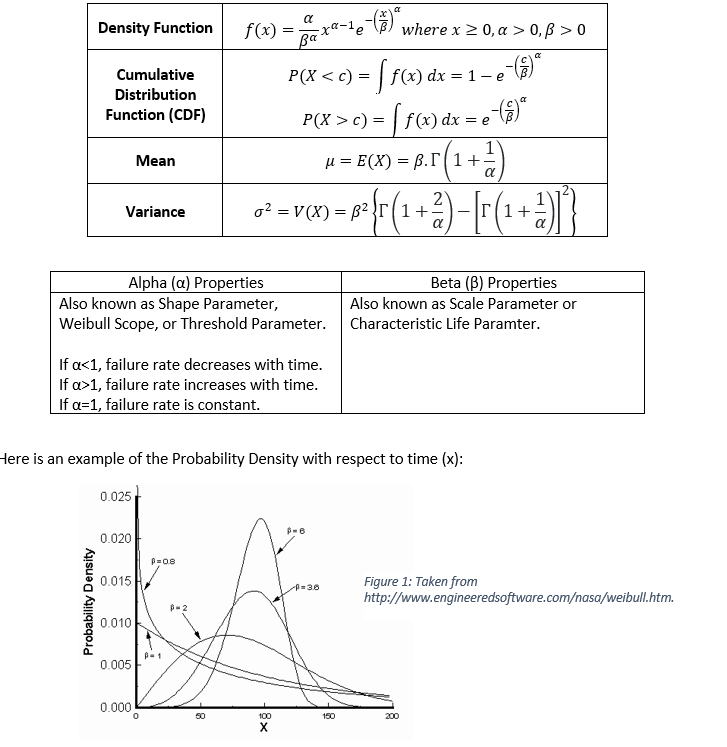
Based on Figure 1, failure rates can increase or decrease with respect to time and depending on the alpha and beta properties of the product.
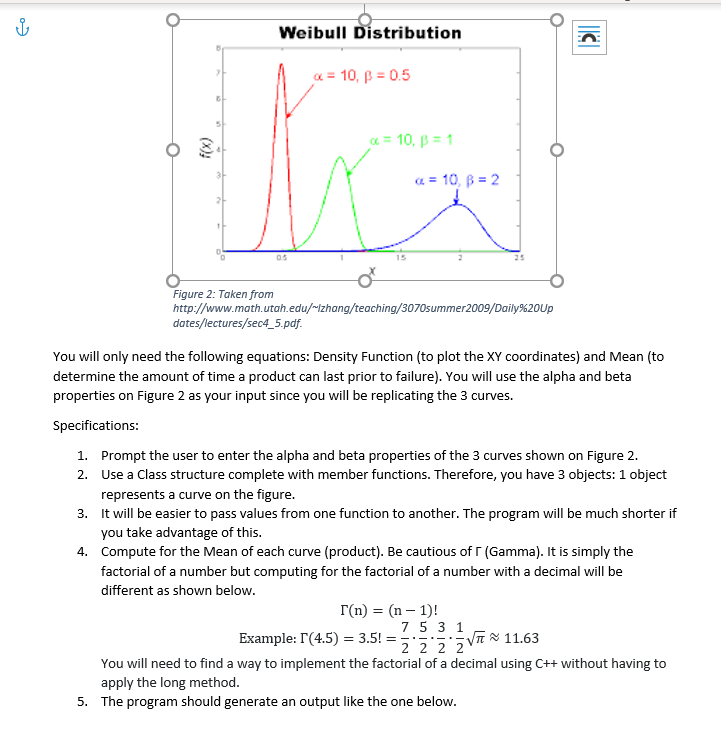
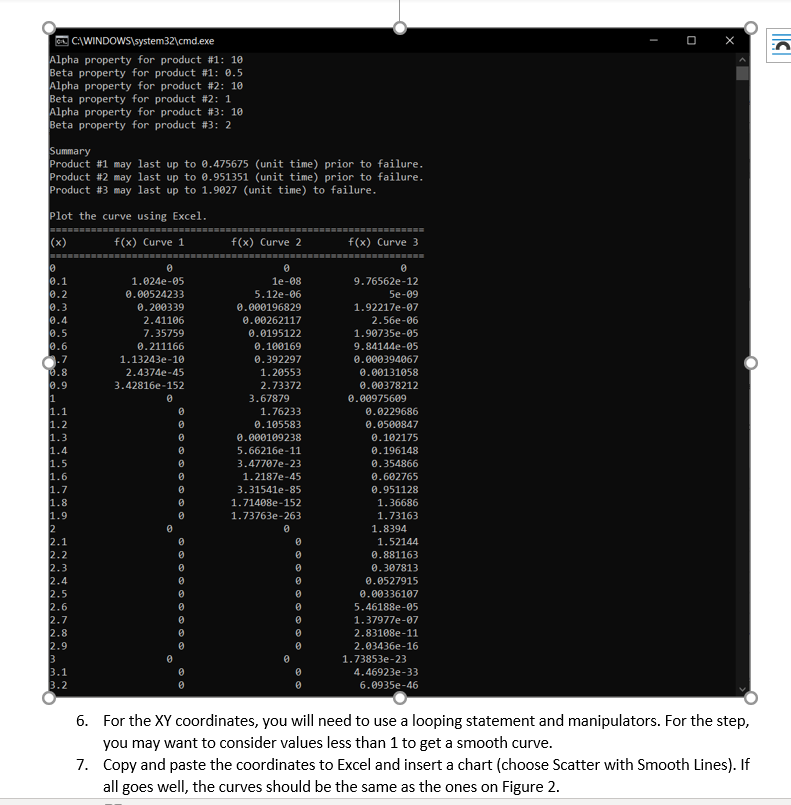
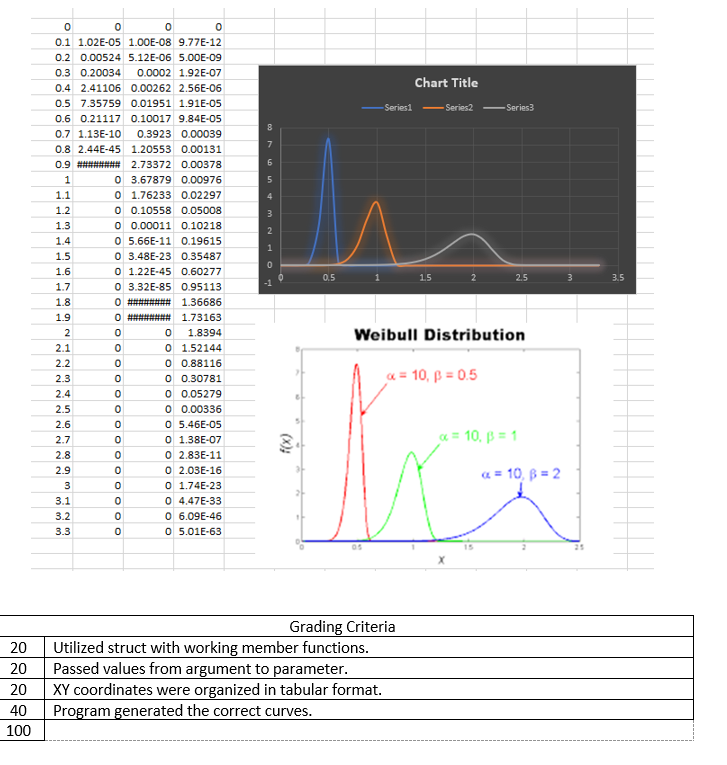
For this machine problem, create a program that will replicate the Weibull Distribution below.
USE THIS STARTING CODE
]#include
using namespace std;
struct Weibull { double alpha; double beta; double meanResult;
Weibull(); ~Weibull(); void Density(Weibull, Weibull); void Mean(double, double); void displayResults(Weibull, Weibull); };
Weibull::Weibull() { this->alpha = 0; this->beta = 0; this->meanResult = 0; }
Weibull::~Weibull() { }
void Weibull::Density(Weibull distribution2, Weibull distribution3) { }
void Weibull::Mean(double alpha, double beta) { this->alpha = alpha; this->beta = beta; this->meanResult = beta * (tgamma(1 + 1 / alpha)); }
void Weibull::displayResults(Weibull distribution2, Weibull distribution3) { cout
int main() { Weibull distribution1, distribution2, distribution3; void assignProperties(Weibull&, double, double); double alpha, beta;
for (int x = 1; x > alpha; cout > beta;
switch (x) { case 1: assignProperties(distribution1, alpha, beta); break; case 2: assignProperties(distribution2, alpha, beta); break; case 3: assignProperties(distribution3, alpha, beta); break; } }
distribution1.displayResults(distribution2, distribution3); distribution1.Density(distribution2, distribution3);
return 0; }
void assignProperties(Weibull& distribution, double alpha, double beta) { distribution.Mean(alpha, beta);
a Density Function f(x) = =x*-1e Cumulative Distribution Function (CDF) ** where x 20, a > 0,8>0 P(X
Step by Step Solution
There are 3 Steps involved in it

Get step-by-step solutions from verified subject matter experts
 Study Help