







Question: Use interval notation to write the intervals over which fis (a) increasing, (b) decreasing, and (c) constant. Part 1 of3 .he function is never increasing.
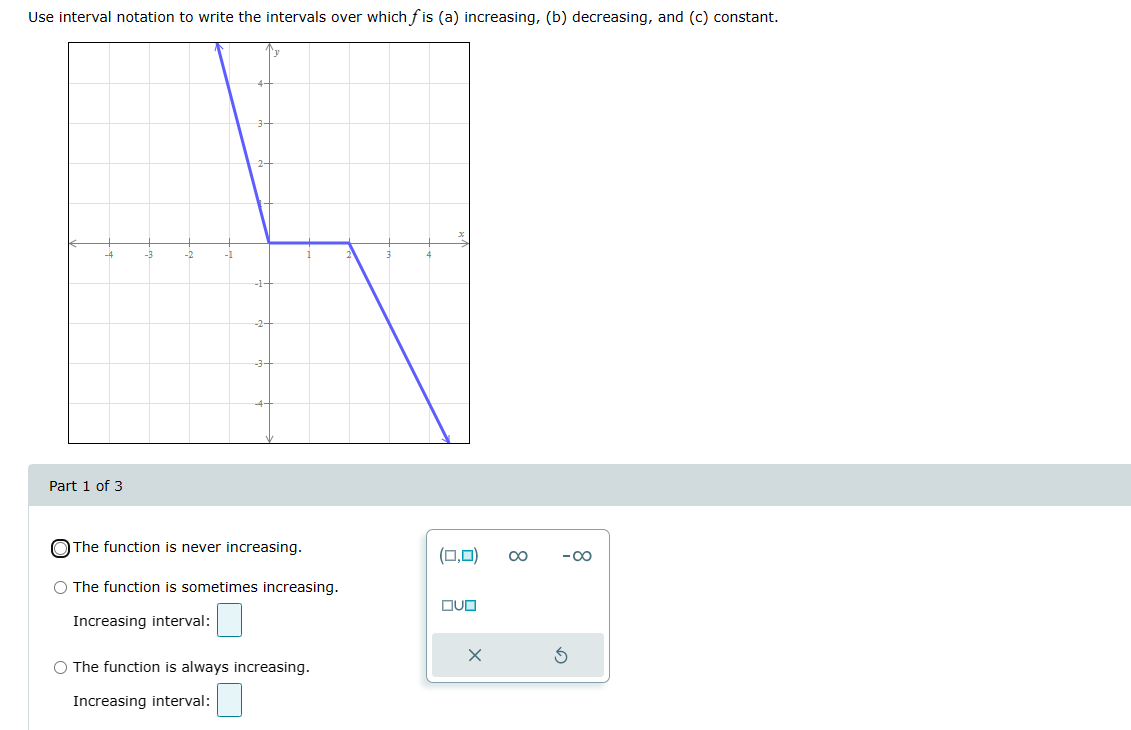
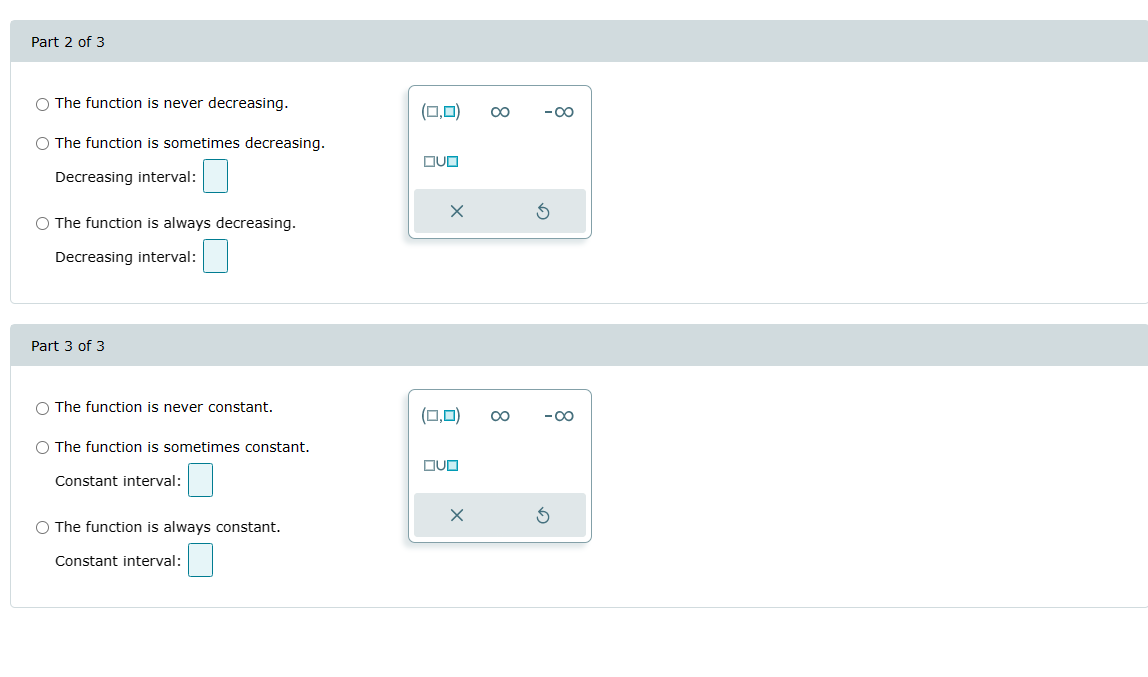
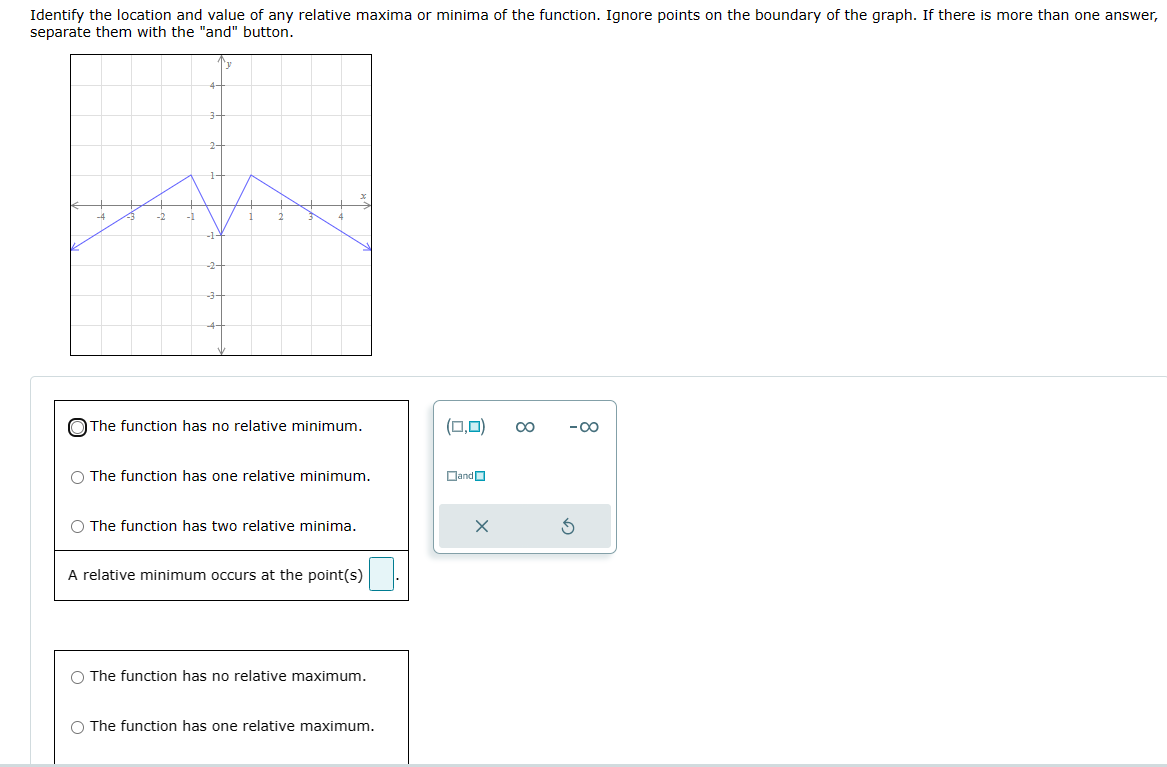
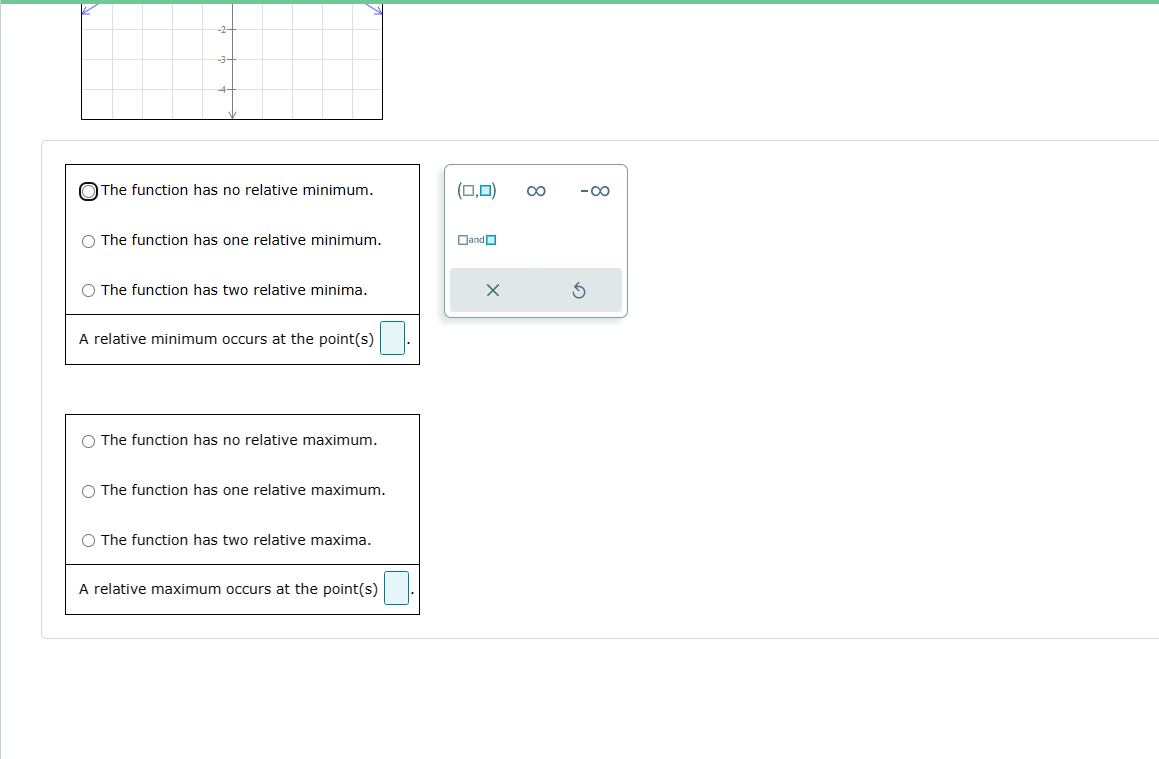
Use interval notation to write the intervals over which fis (a) increasing, (b) decreasing, and (c) constant. Part 1 of3 ."he function is never increasing. 'he function is sometimes increasing. U Increasing interval: |:| "he function is always increasing. Increasing interval: |:| Part 2 of3 0 "he function is never decreasing. 0 "he function is sometimes decreasing. Decreasing interval: D O The function is always decreasing. Decreasing interval: D Part 3 of3 0 "he function is never constant. 0 "he function is sometimes constant. Constant interval: D O The function is always constant. Constant interval: |:| Identify the location and value of anyr relative maxima or minima of the function. Ignore points on the boundary of the graph. If there is more than one answer, separate them with the "and" button. ..'_ ."he function has no relative minimum. { , ] 00 -OO -:j ':- "he function has one relative minimum. u-tl -:j j:- "he function has two relative minima. X E) A relative minimum occurs at the point(s) ' '. -:' ':- "he function has no relative maximum. -:j ':- "he function has one relative maximum. ."he function has no relative minimum. -:j ':- "he function has one relative minimum. -SI 22- "he function has two relative minima. A relative minimum occurs at the point(5) ' '. -:j ':- "he function has no relative maximum. -:j ':- "he function has one relative maximum. -SI 22- "he function has two relative maxima. A relative maximum occurs at the point
Step by Step Solution
There are 3 Steps involved in it

Get step-by-step solutions from verified subject matter experts
 Study Help