







Question: Use the information contained below to compress one-time unit per move using the least cost method . Reduce the schedule until you reach the crash
Use the information contained below to compress one-time unit per move using the least cost method.
Reduce the schedule until you reach the crash point of the network.
For each move identify what activity(ies) was crashed and the adjusted total cost.
| Activity ID | Crash Cost Slope | Max crash time | Normal Time | Normal Cost | Crash Time | Crash Cost |
|---|---|---|---|---|---|---|
| A | $0 | 0 | 3 | $150 | 3 | $150 |
| B | $50 | 2 | 4 | $100 | 2 | $200 |
| C | $30 | 2 | 7 | $200 | 5 | $260 |
| D | $40 | 2 | 3 | $200 | 1 | $280 |
| E | $50 | 1 | 2 | $200 | 1 | $250 |
| F | $60 | 1 | 6 | $150 | 5 | $210 |
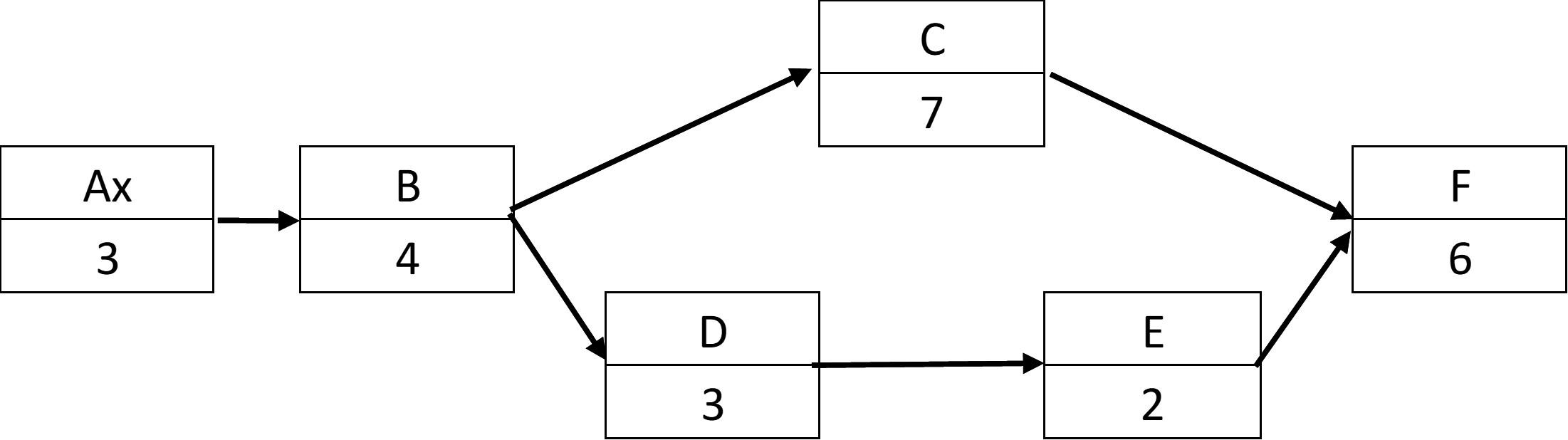
What is the total direct cost of the project?
Reduce the schedule until you reach the maximum crash point (crash duration) of the network.
What is the project duration at the crash point? What is the total direct cost for the project at the crashing point?
If the indirect costs for each project duration are:
$300 (20 time units), $220 (19), $140 (18), $80 (17), and $60 (16), $40 (15),
compute the total project cost for each duration. Fill in the table below.
| Time unit | Total direct cost | Total indirect cost | Total cost |
|---|---|---|---|
What is the optimum cost-time schedule for the project? Indicate the time unit.
What is this cost to crash the project to the optimum cost-time schedule?
7 Ax B F 3 4 6 D E 3 2Step by Step Solution
There are 3 Steps involved in it

Get step-by-step solutions from verified subject matter experts
 Study Help