







Question: Use the NPV method to determine whether Root Products should invest in the following projects: - Project A : Costs $295,000 and offers seven annual

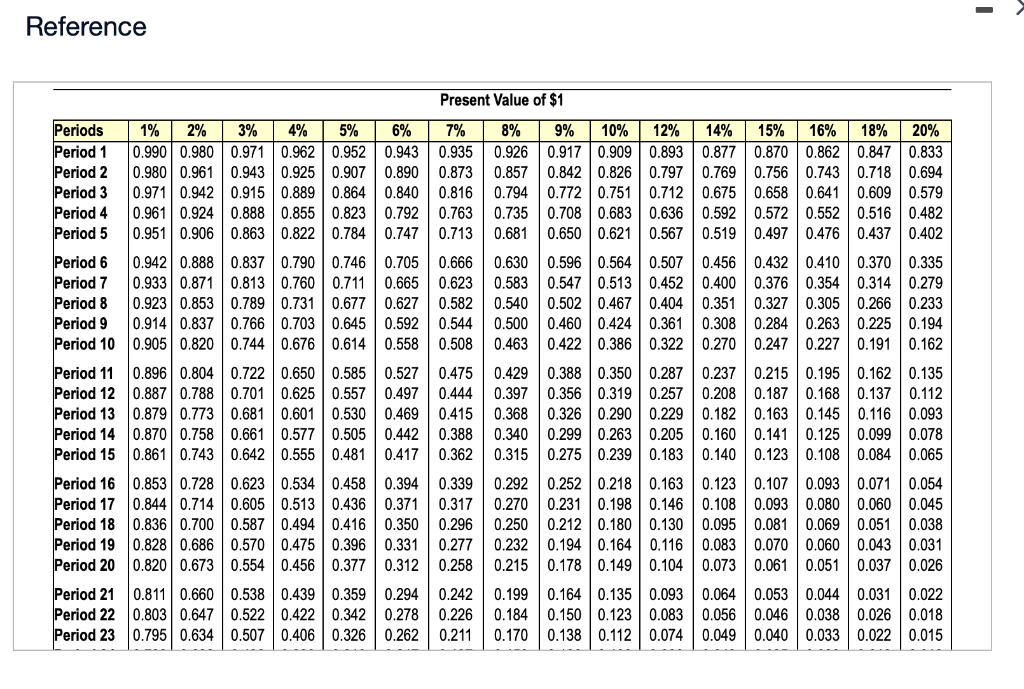
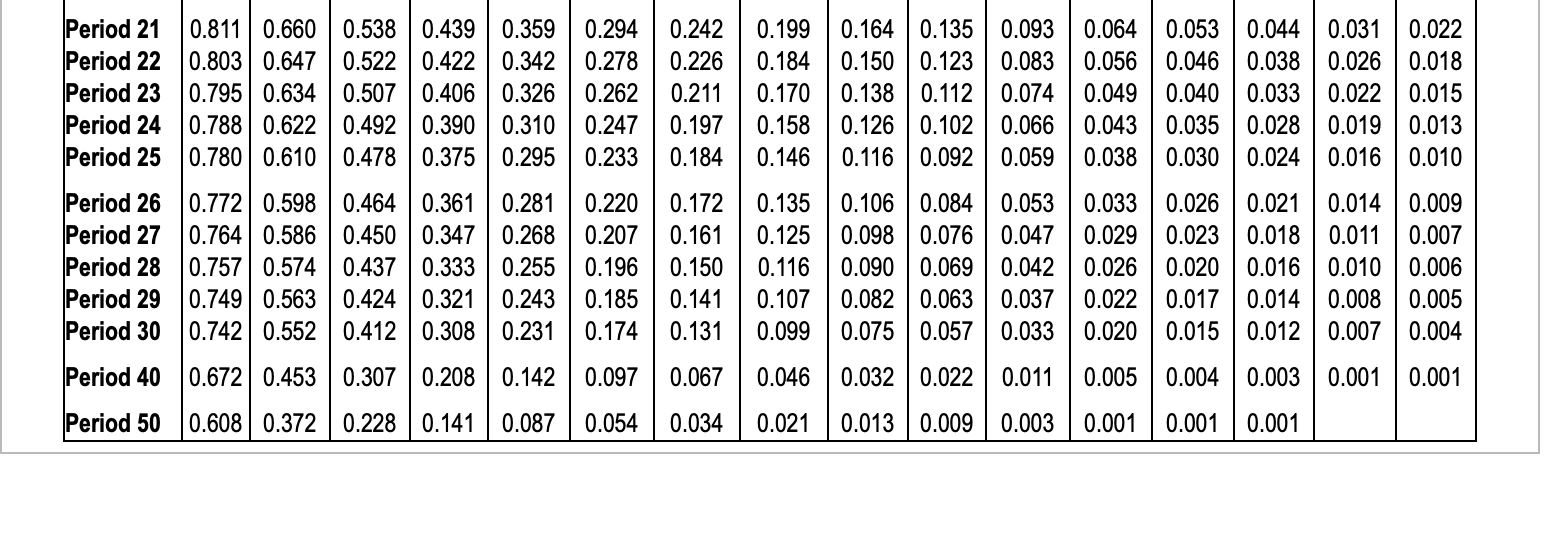
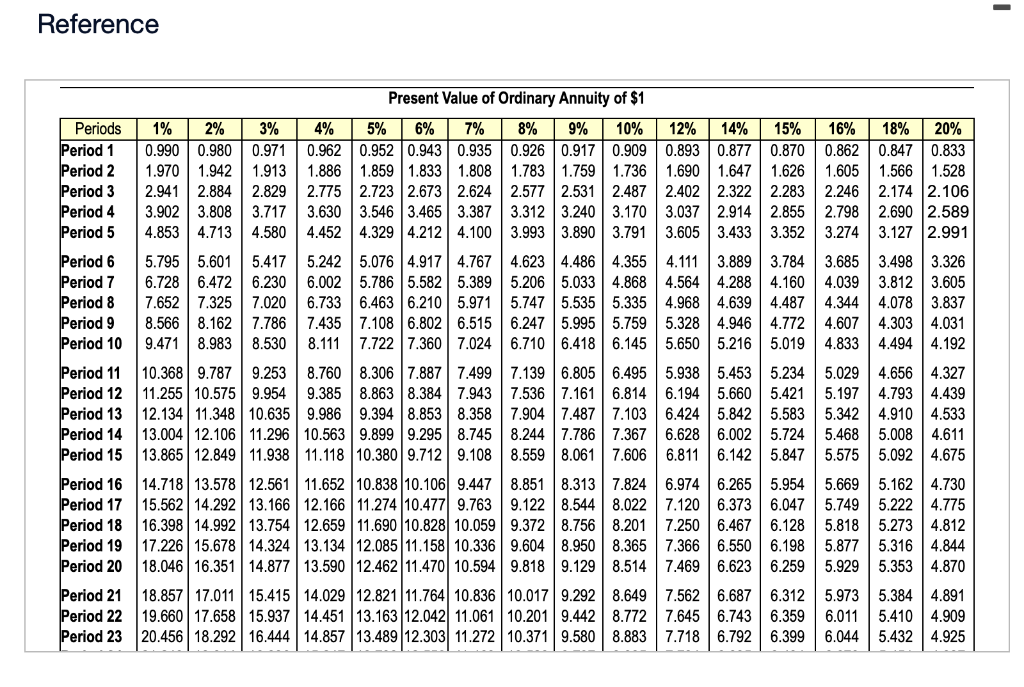
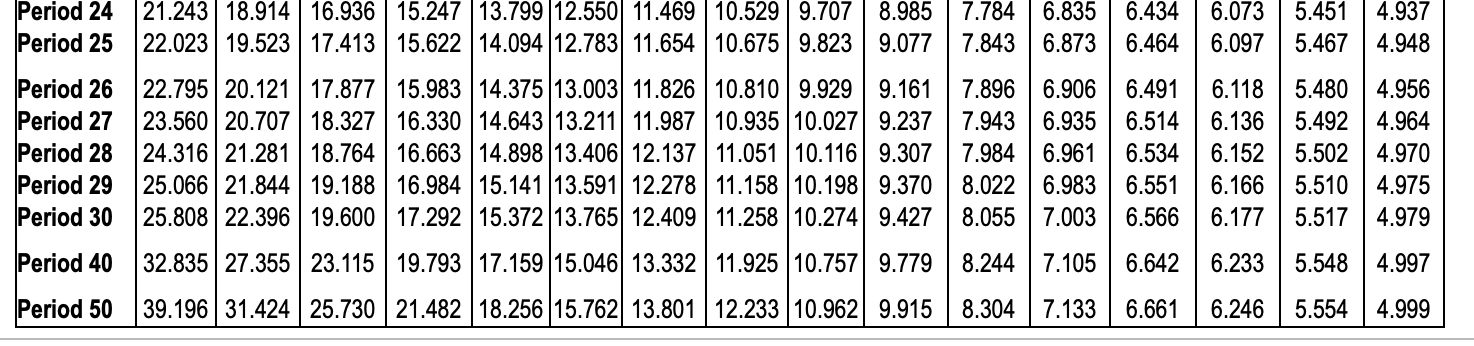
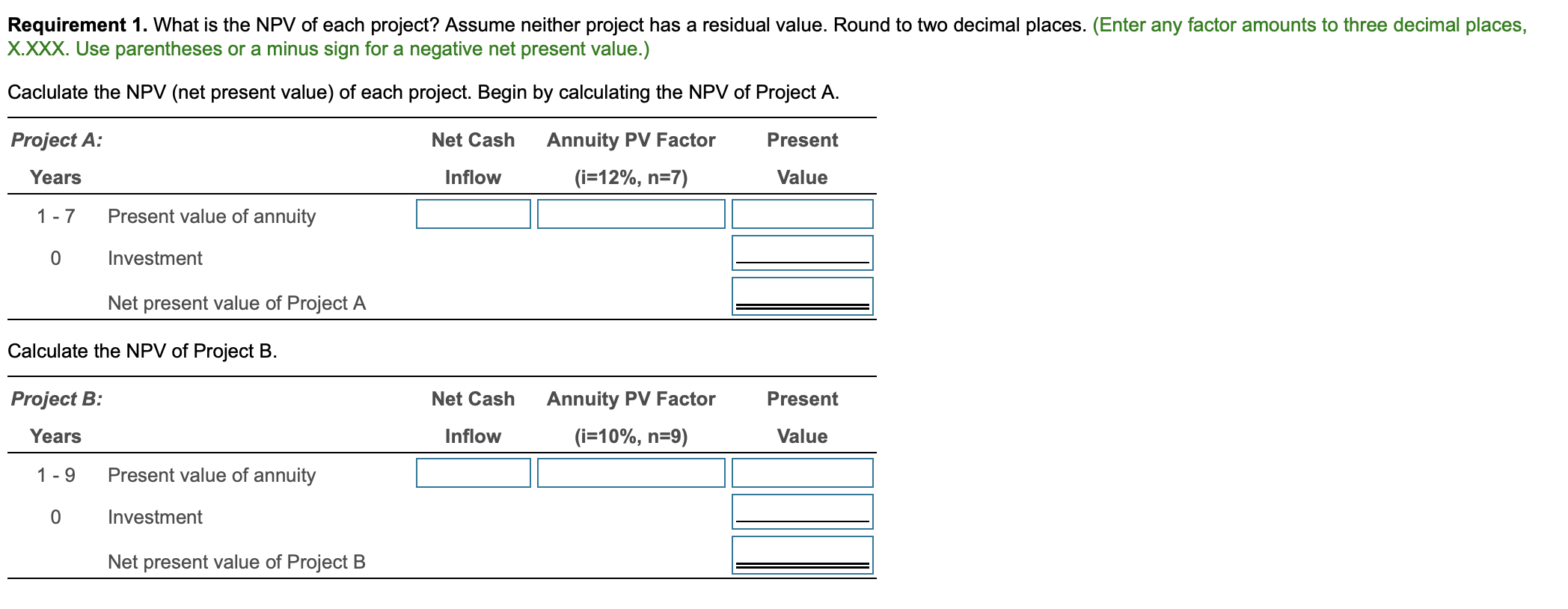
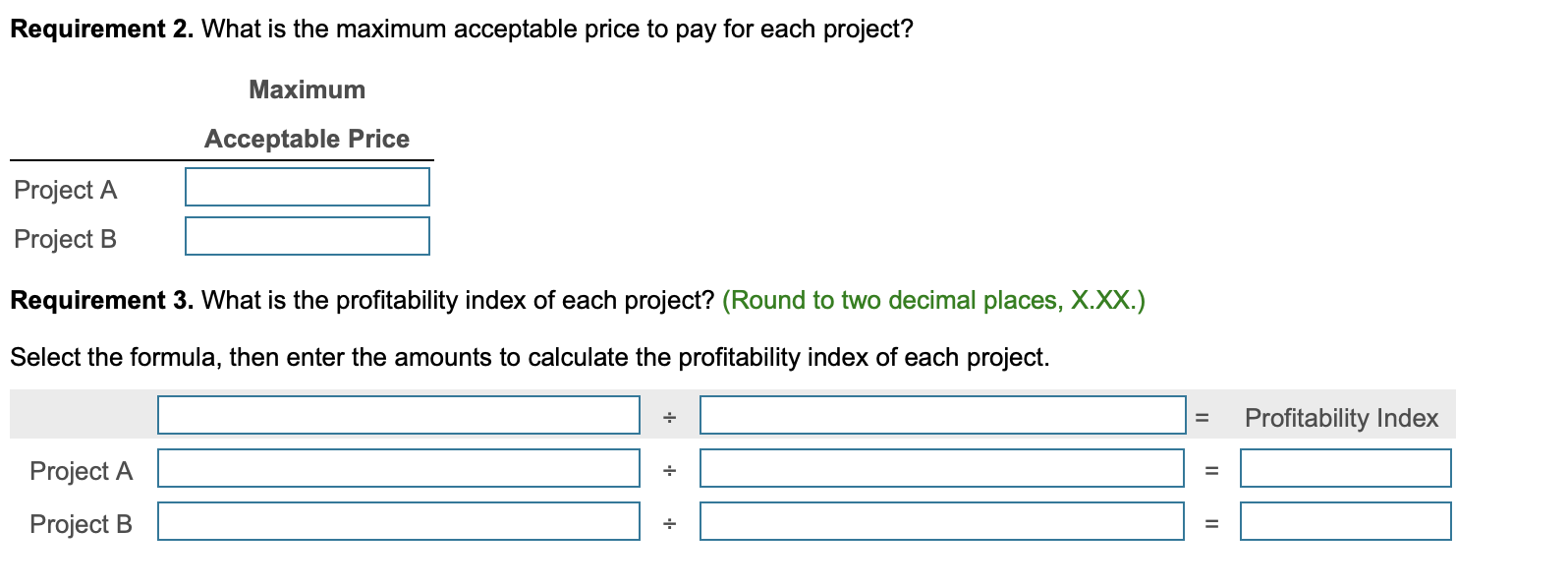
Use the NPV method to determine whether Root Products should invest in the following projects: - Project A : Costs $295,000 and offers seven annual net cash inflows of $54,000. Root Products requires an annual return of 12% on investments of this nature. - Project B : Costs $380,000 and offers 9 annual net cash inflows of $71,000. Root Products demands an annual return of 10% on investments of this nature. (Click the icon to view Present Value of $1 table.) (Click the icon to view Present Value of Ordinary Annuity of $1 table.) Read the requirements. Reference Reference \begin{tabular}{|l|l|l|l|l|l|l|l|l|l|l|l|l|l|l|l|l|} Period 24 & 21.243 & 18.914 & 16.936 & 15.247 & 13.799 & 12.550 & 11.469 & 10.529 & 9.707 & 8.985 & 7.784 & 6.835 & 6.434 & 6.073 & 5.451 & 4.937 \\ Period 25 & 22.023 & 19.523 & 17.413 & 15.622 & 14.094 & 12.783 & 11.654 & 10.675 & 9.823 & 9.077 & 7.843 & 6.873 & 6.464 & 6.097 & 5.467 & 4.948 \\ Period 26 & 22.795 & 20.121 & 17.877 & 15.983 & 14.375 & 13.003 & 11.826 & 10.810 & 9.929 & 9.161 & 7.896 & 6.906 & 6.491 & 6.118 & 5.480 & 4.956 \\ Period 27 & 23.560 & 20.707 & 18.327 & 16.330 & 14.643 & 13.211 & 11.987 & 10.935 & 10.027 & 9.237 & 7.943 & 6.935 & 6.514 & 6.136 & 5.492 & 4.964 \\ Period 28 & 24.316 & 21.281 & 18.764 & 16.663 & 14.898 & 13.406 & 12.137 & 11.051 & 10.116 & 9.307 & 7.984 & 6.961 & 6.534 & 6.152 & 5.502 & 4.970 \\ Period 29 & 25.066 & 21.844 & 19.188 & 16.984 & 15.141 & 13.591 & 12.278 & 11.158 & 10.198 & 9.370 & 8.022 & 6.983 & 6.551 & 6.166 & 5.510 & 4.975 \\ Period 30 & 25.808 & 22.396 & 19.600 & 17.292 & 15.372 & 13.765 & 12.409 & 11.258 & 10.274 & 9.427 & 8.055 & 7.003 & 6.566 & 6.177 & 5.517 & 4.979 \\ Period 40 & 32.835 & 27.355 & 23.115 & 19.793 & 17.159 & 15.046 & 13.332 & 11.925 & 10.757 & 9.779 & 8.244 & 7.105 & 6.642 & 6.233 & 5.548 & 4.997 \\ Period 50 & 39.196 & 31.424 & 25.730 & 21.482 & 18.256 & 15.762 & 13.801 & 12.233 & 10.962 & 9.915 & 8.304 & 7.133 & 6.661 & 6.246 & 5.554 & 4.999 \\ \hline \end{tabular} Requirement 1. What is the NPV of each project? Assume neither project has a residual value. Round to two decimal places. (Enter any factor amounts to three decimal places, K.XXX. Use parentheses or a minus sign for a negative net present value.) Jaclulate the NPV (net present value) of each project. Begin by calculating the NPV of Project A. Requirement 2. What is the maximum acceptable price to pay for each project? Requirement 3. What is the profitability index of each project? (Round to two decimal places, X.XX Select the formula, then enter the amounts to calculate the profitability index of each project
Step by Step Solution
There are 3 Steps involved in it

Get step-by-step solutions from verified subject matter experts
 Study Help