







Question: USE THIS CASE STUDY TO ANSWER THE QUESTIONS BELOW You have been asked to prepare a presentation to the management addressing the following: 1. Why
USE THIS CASE STUDY TO ANSWER THE QUESTIONS BELOW
You have been asked to prepare a presentation to the management addressing the following:
1. Why Community relations (CR) work is a dynamic aspect of public relations? (20 Marks)
2. Discuss ten (10) issues concerning all communities. (20 Marks)
3. Discuss The Role of Public Relations of an organization's community relationships. (20 Marks)
4. Discuss employee-employer communications basic principles prevail as guidelines for the practitioner. (20 Marks)
5. Discuss the role of Media relation in the community relationships.
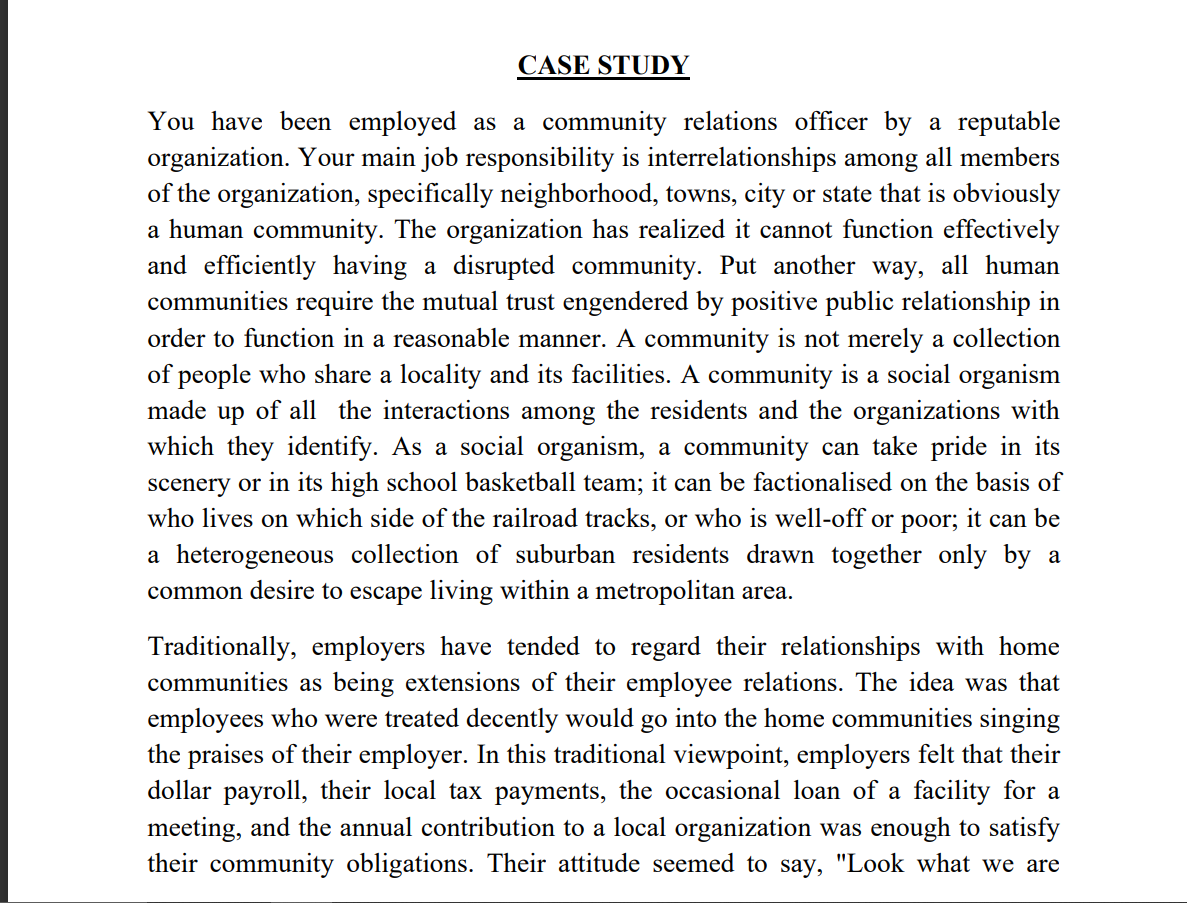
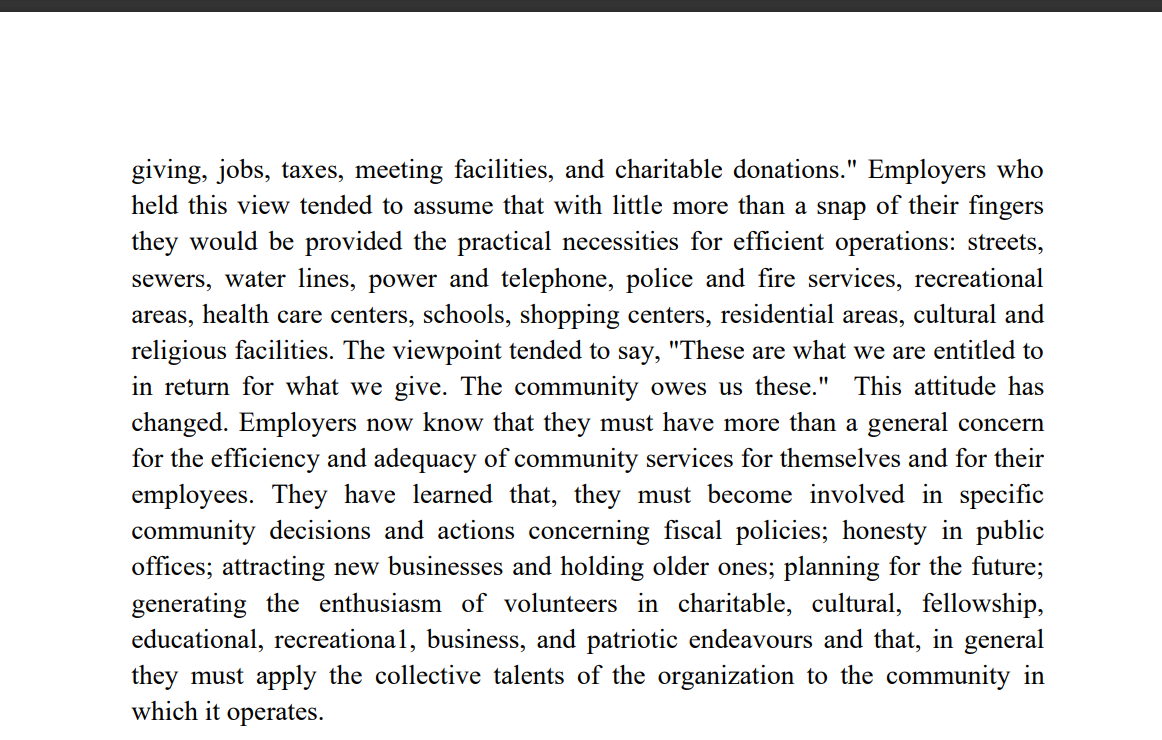
CASE STUDY You have been employed as a community relations officer by a reputable organization. Your main job responsibility is interrelationships among all members of the organization, specifically neighborhood, towns, city or state that is obviously a human community. The organization has realized it cannot function effectively and efficiently having a disrupted community. Put another way, all human communities require the mutual trust engendered by positive public relationship in order to function in a reasonable manner. A community is not merely a collection of people who share a locality and its facilities. A community is a social organism made up of all the interactions among the residents and the organizations with which they identify. As a social organism, a community can take pride in its scenery or in its high school basketball team; it can be factionalised on the basis of who lives on which side of the railroad tracks, or who is well-off or poor; it can be a heterogeneous collection of suburban residents drawn together only by a common desire to escape living within a metropolitan area. Traditionally, employers have tended to regard their relationships with home communities as being extensions of their employee relations. The idea was that employees who were treated decently would go into the home communities singing the praises of their employer. In this traditional viewpoint, employers felt that their dollar payroll, their local tax payments, the occasional loan of a facility for a meeting, and the annual contribution to a local organization was enough to satisfy their community obligations. Their attitude seemed to say, "Look what we are giving, jobs, taxes, meeting facilities, and charitable donations." Employers who held this view tended to assume that with little more than a snap of their fingers they would be provided the practical necessities for efficient operations: streets, sewers, water lines, power and telephone, police and fire services, recreational areas, health care centers, schools, shopping centers, residential areas, cultural and religious facilities. The viewpoint tended to say, "These are what we are entitled to in return for what we give. The community owes us these." This attitude has changed. Employers now know that they must have more than a general concern for the efficiency and adequacy of community services for themselves and for their employees. They have learned that, they must become involved in specific community decisions and actions concerning fiscal policies; honesty in public offices; attracting new businesses and holding older ones; planning for the future; generating the enthusiasm of volunteers in charitable, cultural, fellowship, educational, recreational, business, and patriotic endeavours and that, in general they must apply the collective talents of the organization to the community in which it operatesStep by Step Solution
There are 3 Steps involved in it
1 Expert Approved Answer
Step: 1 Unlock

Question Has Been Solved by an Expert!
Get step-by-step solutions from verified subject matter experts
Step: 2 Unlock
Step: 3 Unlock
 Study Help