







Question: Using ARM assembly programming language. It doesn't have to read in a value from the user. It can have two set values for the numbers
Using ARM assembly programming language. It doesn't have to read in a value from the user. It can have two set values for the numbers being multiplied.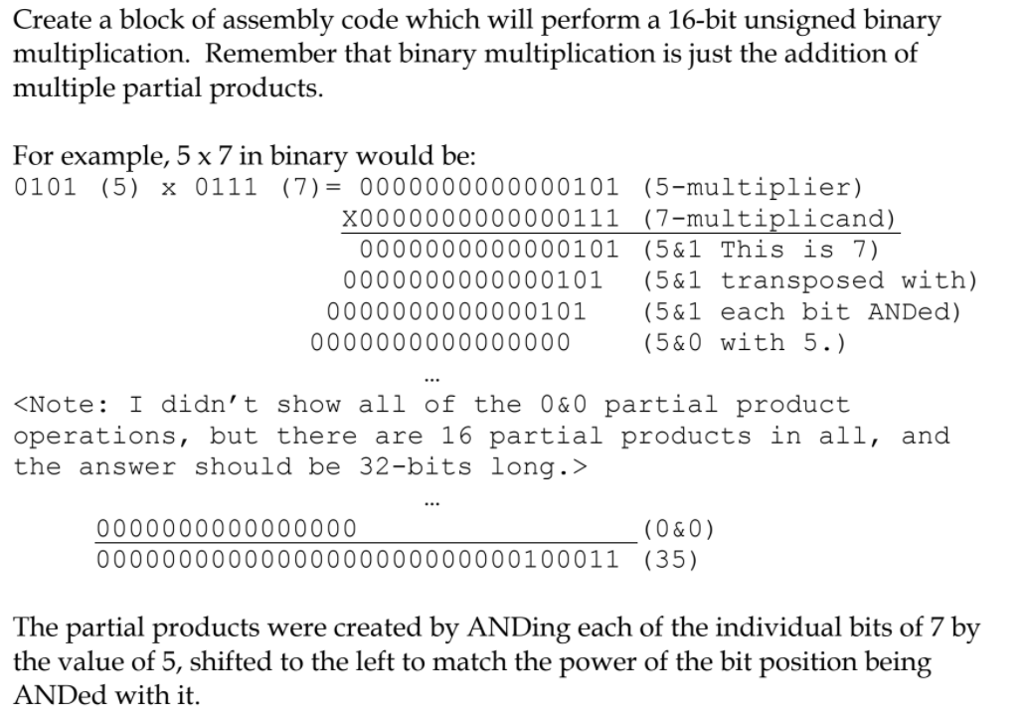
Create a block of assembly code which will perform a 16-bit unsigned binary multiplication. Remember that binary multiplication is just the addition of multiple partial products. For example, 5 x 7 in binary would be: 0101 (5) x 0111 (7)- 0000000000000101 (5-multiplier) X0000000000000111 (7-multiplicand) 0000000000000101 (5&1 This is 7) 0000000000000101 (5&1 transposed with) 0000000000000101 (5&1 each bit ANDed) (5&0 with 5.) Note: I didn't show all of the 0&0 partial product operations, but there are 16 partial products in al1, and the answer should be 32-bits long.> (0&0) 00000000000000000000000000100011 (35) The partial products were created by ANDing each of the individual bits of 7 by the value of 5, shifted to the left to match the power of the bit position being ANDed with it
Step by Step Solution
There are 3 Steps involved in it

Get step-by-step solutions from verified subject matter experts
 Study Help