Question: Using Table 15-2 on page 435, discuss managing the triggering events as it applies to Research in Motion. What elements from building an adaptive organization
- Using Table 15-2 on page 435, discuss managing the triggering events as it applies to Research in Motion.
- What elements from building an adaptive organization would be relevant for the maker of the BlackBerry?
- Outline a strategy for Research in Motion as it tries to sustain its innovative leadership. Do you think they will be successful or not?
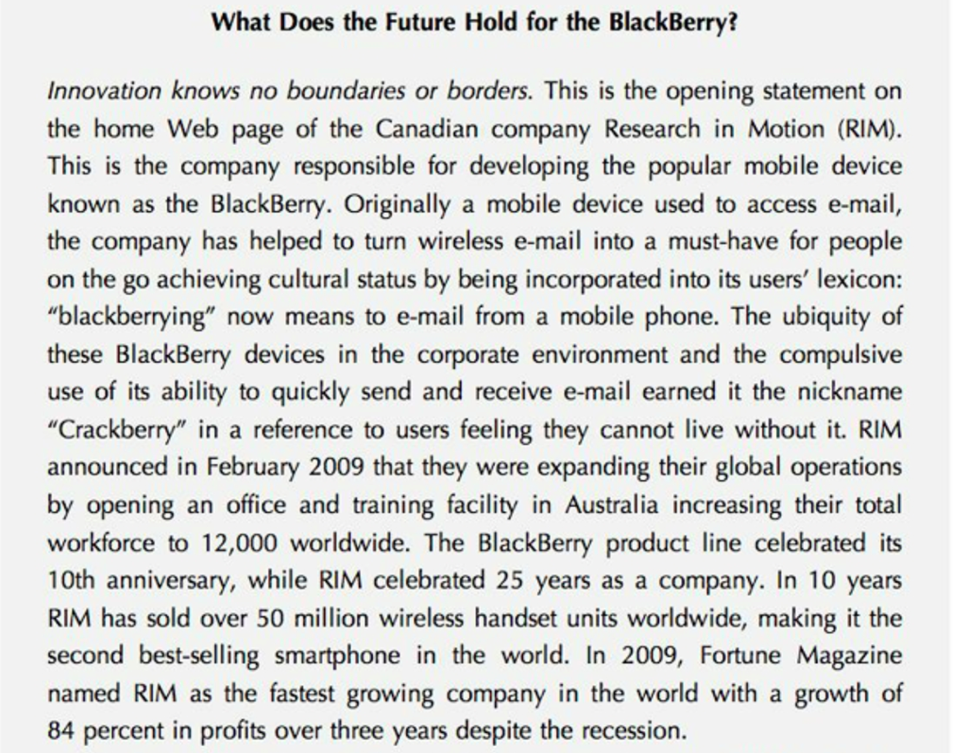
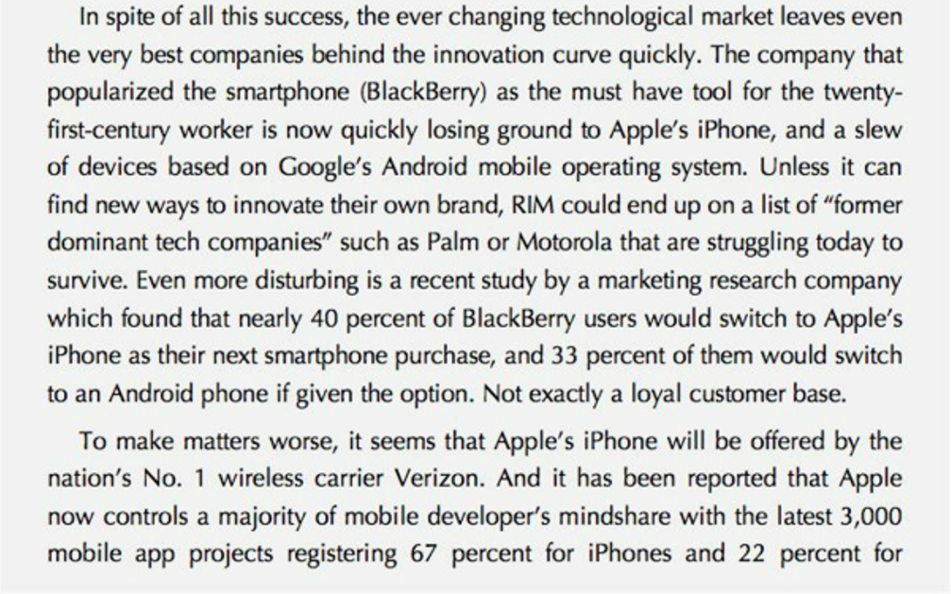
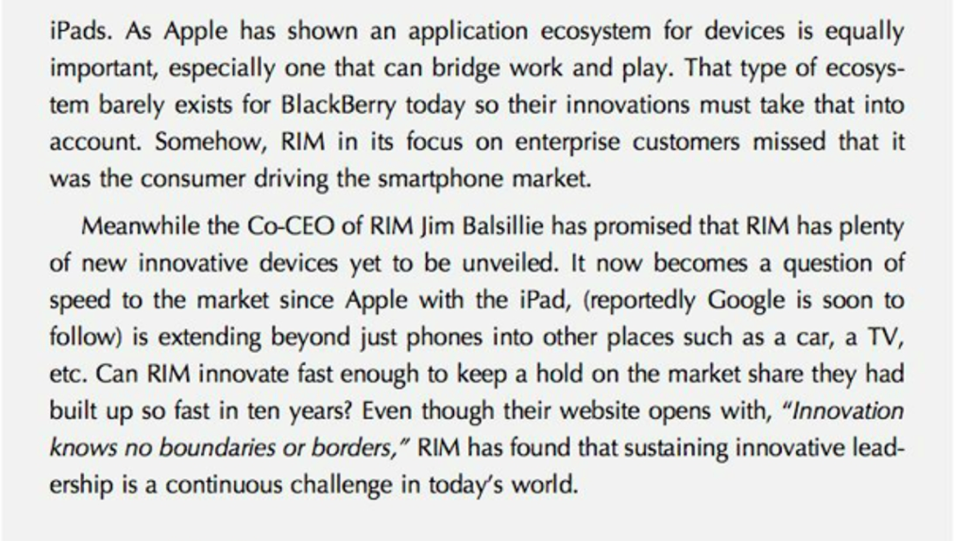
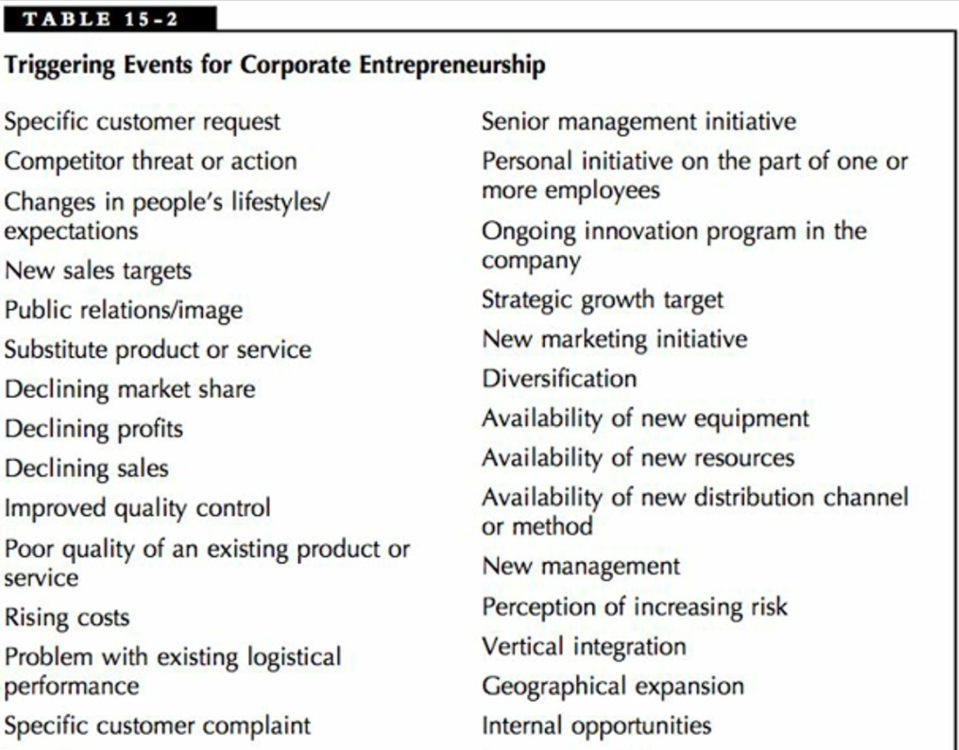
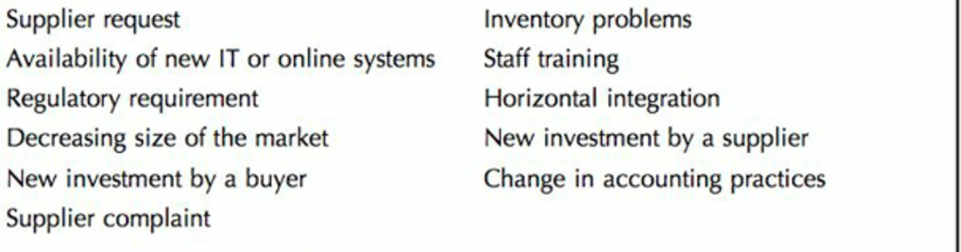
What Does the Future Hold for the BlackBerry? Innovation knows no boundaries or borders. This is the opening statement on the home Web page of the Canadian company Research in Motion (RIM). This is the company responsible for developing the popular mobile device known as the BlackBerry. Originally a mobile device used to access e-mail, the company has helped to turn wireless e-mail into a must-have for people on the go achieving cultural status by being incorporated into its users' lexicon: "blackberrying" now means to e-mail from a mobile phone. The ubiquity of these BlackBerry devices in the corporate environment and the compulsive use of its ability to quickly send and receive e-mail earned it the nickname "Crackberry" in a reference to users feeling they cannot live without it. RIM announced in February 2009 that they were expanding their global operations by opening an office and training facility in Australia increasing their total workforce to 12,000 worldwide. The BlackBerry product line celebrated its 10th anniversary, while RIM celebrated 25 years as a company. In 10 years RIM has sold over 50 million wireless handset units worldwide, making it the second best-selling smartphone in the world. In 2009, Fortune Magazine named RIM as the fastest growing company in the world with a growth of 84 percent in profits over three years despite the recession. In spite of all this success, the ever changing technological market leaves even the very best companies behind the innovation curve quickly. The company that popularized the smartphone (BlackBerry) as the must have tool for the twenty- first-century worker is now quickly losing ground to Apple's iPhone, and a slew of devices based on Google's Android mobile operating system. Unless it can find new ways to innovate their own brand, RIM could end up on a list of "former dominant tech companies" such as Palm or Motorola that are struggling today to survive. Even more disturbing is a recent study by a marketing research company which found that nearly 40 percent of BlackBerry users would switch to Apple's iPhone as their next smartphone purchase, and 33 percent of them would switch to an Android phone if given the option. Not exactly a loyal customer base. To make matters worse, it seems that Apple's iPhone will be offered by the nation's No. 1 wireless carrier Verizon. And it has been reported that Apple now controls a majority of mobile developer's mindshare with the latest 3,000 mobile app projects registering 67 percent for iPhones and 22 percent for iPads. As Apple has shown an application ecosystem for devices is equally important, especially one that can bridge work and play. That type of ecosys- tem barely exists for BlackBerry today so their innovations must take that into account. Somehow, RIM in its focus on enterprise customers missed that it was the consumer driving the smartphone market. Meanwhile the Co-CEO of RIM Jim Balsillie has promised that RIM has plenty of new innovative devices yet to be unveiled. It now becomes a question of speed to the market since Apple with the iPad, (reportedly Google is soon to follow) is extending beyond just phones into other places such as a car, a TV, etc. Can RIM innovate fast enough to keep a hold on the market share they had built up so fast in ten years? Even though their website opens with, "Innovation knows no boundaries or borders," RIM has found that sustaining innovative lead- ership is a continuous challenge in today's world. TABLE 15 - 2 Triggering Events for Corporate Entrepreneurship Specific customer request Senior management initiative Competitor threat or action Personal initiative on the part of one or Changes in people's lifestyles/ more employees expectations Ongoing innovation program in the New sales targets company Public relations/image Strategic growth target Substitute product or service New marketing initiative Declining market share Diversification Declining profits Availability of new equipment Declining sales Availability of new resources Improved quality control Availability of new distribution channel or method Poor quality of an existing product or service New management Rising costs Perception of increasing risk Problem with existing logistical Vertical integration performance Geographical expansion Specific customer complaint Internal opportunities Supplier request Availability of new IT or online systems Regulatory requirement Decreasing size of the market New investment by a buyer Supplier complaint Inventory problems Staff training Horizontal integration New investment by a supplier Change in accounting practices









 Study Help