







Question: design cultural web and its main elements. base your answer on the description offered in the case study at about the time when the workshops
design cultural web and its main elements. base your answer on the description offered in the case study at about the time when the workshops begun.
Case Study: Kao Corporation By Samantha Ghoshal ans Charlotte Butler
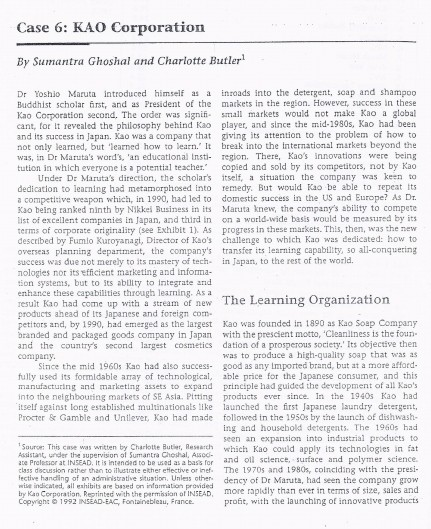
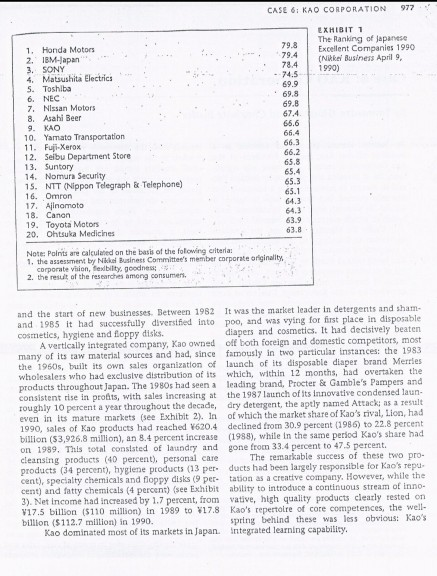
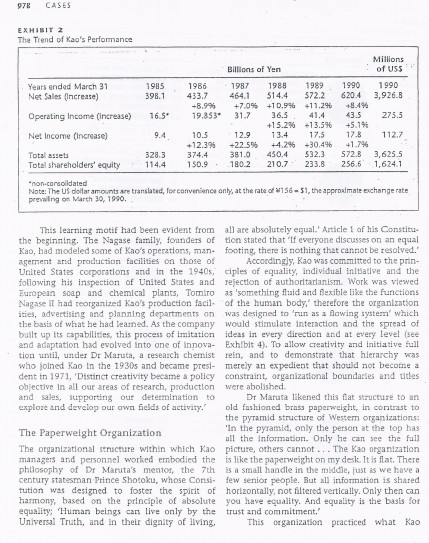
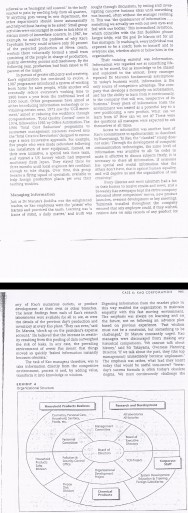
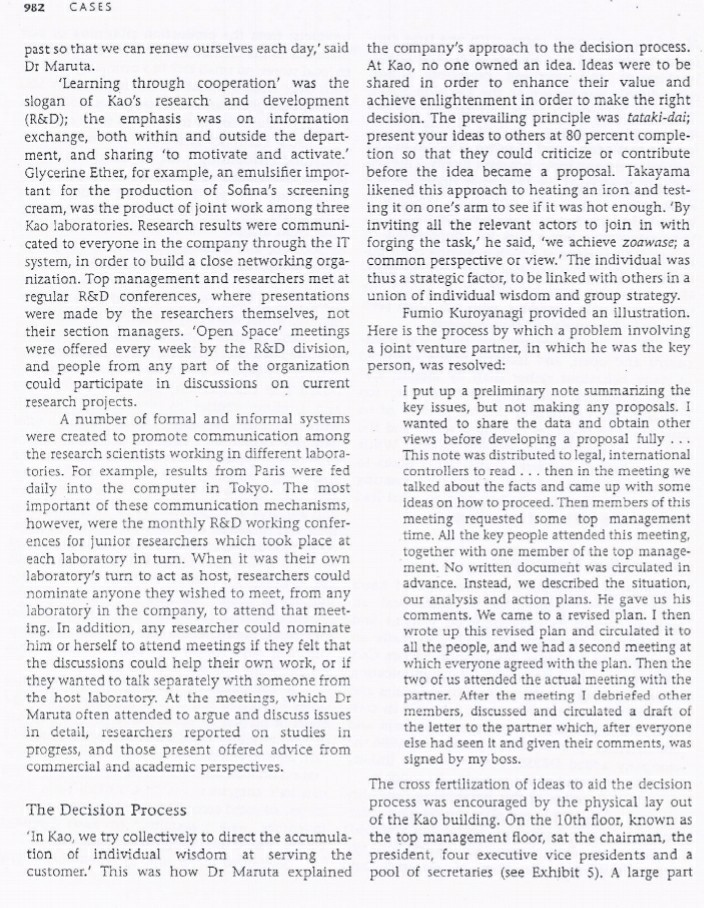
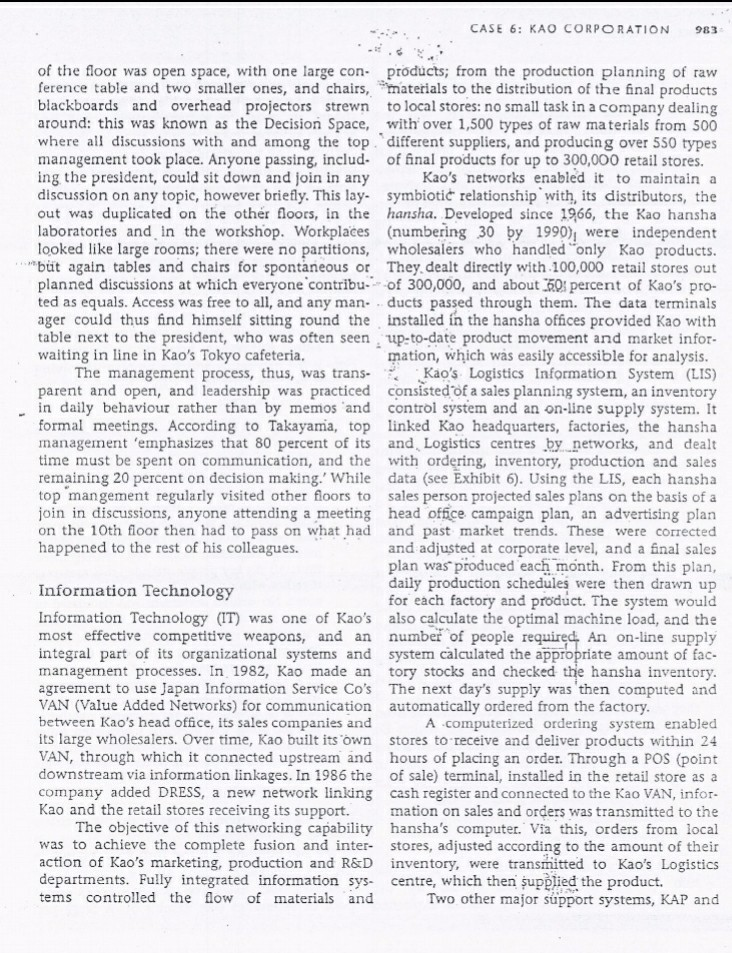
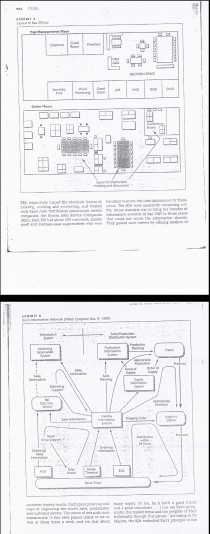
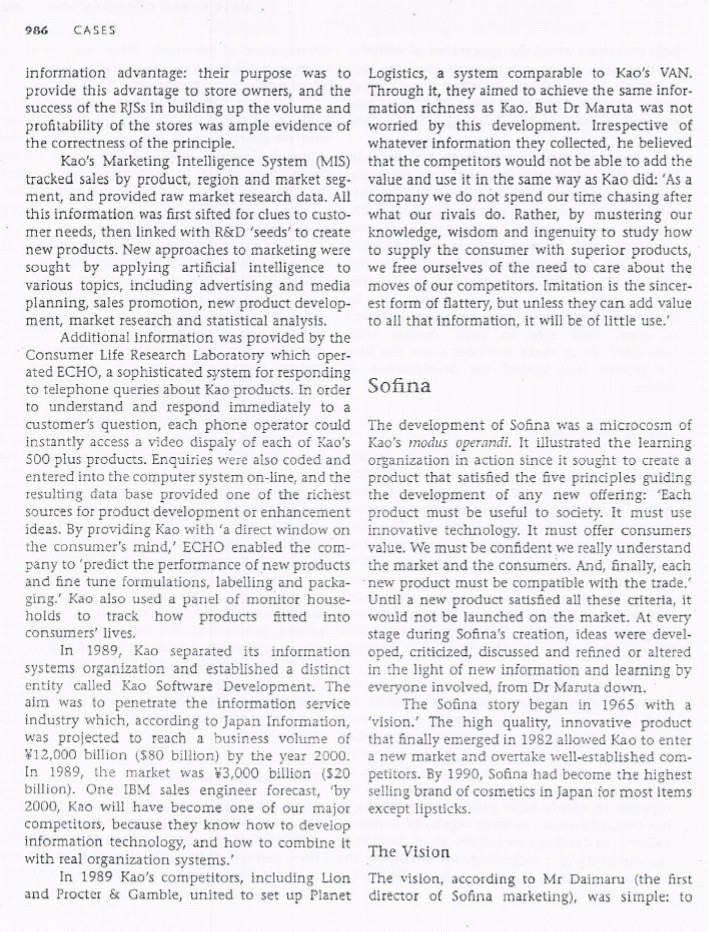
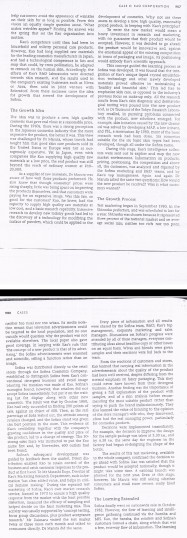
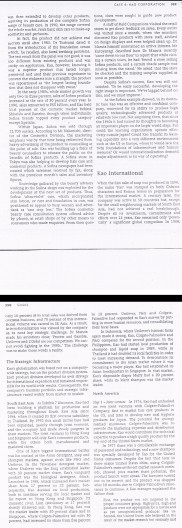
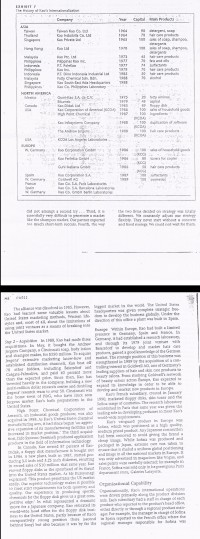
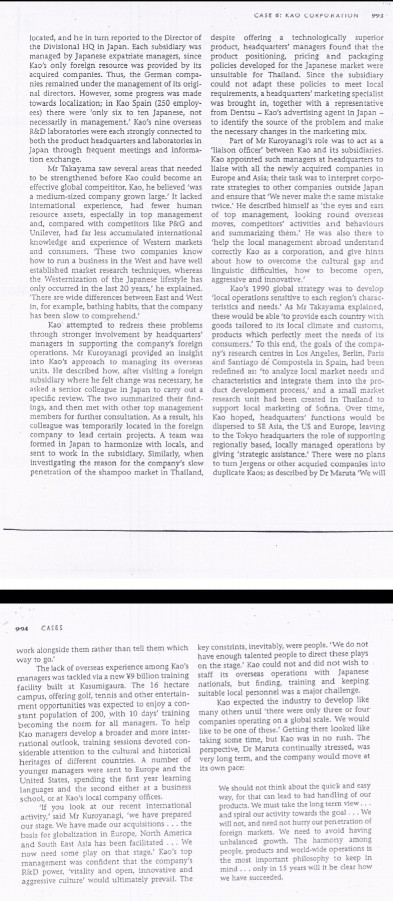
Case 6: KAO Corporation By Sumantra Ghoshal and Charlotte Butler! Dr Yoshio Maruta introduced himself as a inroads into the detergent, scap and shampoo Buddhist scholar first, and as President of the markets in the region. However, success in these Kao Corporation second. The order was signit small markets would not make Kao a global cant, for it revealed the philosophy behind Kao player, and since the mid-1980s, Kao had been and its success in Japan. Kao was a company that giving its attention to the problem of how to not only learned, but learned how to learn.' It break into the International markets beyond the was, in Dr Maruta's words, an educational Insti region. There, Kao's Innovations were being tution in which everyone is a potential teacher.' copied and sold by its competitors, not by Kao Under Dr Maruta's direction, the scholar's itself a situation the company was keen to dedication to learning had metamorphosed into remedy. But would Kao be able to repeat its a competitive weapon which, in 1990, had led to domestic success in the US and Europe? As Dr. Kao being ranked ninth by Nikkel Business in its Maruta knew, the company's ability to compete list of excellent companies in Japan, and third in on a worldwide basis would be measured by its of corporate originality (see Exhibit 1) As progress in these markets. This, then, was the new described by Fumlo Kuroyanagi, Director of Kao's challenge to which Kao was dedicated: how to overseas planning department, the company's transfer its learning capability, 50 all-conquering success was due not merely to its mastery of tech in Japan, to the rest of the world, nologies nor its efficient marketing and informa tion systems, but to its abuity to integrate and enhance these capabilities through learning. As a result Kao had come up with a stream of new The Learning Organization products ahead of its Japanese and foreign com petitors and, by 1990, had emerged as the largest Kao was founded in 1890 as Kao Soep Company branded and packaged goods company in Japan with the prescient motto, 'Cleanliness is the foun- and the country's second largest cosmetics dation of a prosperous society.' Its objective then company was to produce a high-quality soap that was as Since the mid 1960s Kao had also success- good as any Imported brand, but at a more afford- fully used its formidable array of technological, able price for the Japanese consumer, and this manufacturing and marketing assets to expand principle had guided the development of all Kao's into the neighbouring markets of SE Asia. Pitting products ever since. In the 1940s Kao had itself against long established multinationals like launched the first Japanese laundry detergent, Procter & Gamble and Unilever. Kao had made followed in the 1950s by the launch of dishwash- ing and household detergents. The 1960s had seen an expansion into industrial products to Soutor. This case was written by Charlotte Butler, Restarch Assistant, under the supervision of Sumantra Choshal Asco- which Kao could apply its technologies in fat ate Professor at INSEAD. It is intended to be used as a basis for and oll science, surface and polymer science class discussion rather than to illustrate ether effective or inef The 1970s and 1980s, coinciding with the presi- fective handing of an administrative situation. Unless other wise indicated all exhibits are based on information provided dency of Dr Maruta, had seen the company grow by Kan Corporation. Reprinted with the permission of INSEAD, more rapidly than ever in terms of size, sales and Copyright 1992 INSEAD-EAC, Fontainebleau, France. profit, with the launching of innovative products CASE 6: KAO CORPORATION 977 EXHIBIT 1 The Ranking of Japanese Excellent Companies 1990 (Nikkel Business April 9, 1990) 66.2 1. Honda Motors 79.8 2. IBM-Japan 79.4 3. SONY 78.4 4. Matsushita Electrics 74.5 5. Toshiba 69.9 6. NEC 69.8 7. Nissan Motors 69.8 8. Asahi Beer 67.4 9. KAO 66.6 10. Yamato Transportation 66.4 11. Fuji Xerox 66.3 12. Selbu Department Store 13. Itory 65.8 14. Nomura Security 65.4 15. NTT (Nippon Telegraph & Telephone) 65.3 16. Omron 65.1 17. Ajinomoto 64.3 18. Canon 64.3 19. Toyota Motors 63.9 20. Ohtsuka Medicines 63.8 Note: Points are calculated on the basis of the following criteria 1. the assessment by Nikkel Business Committee's member corporate originality, corporate vision, flexibility, goodness 2. the result of the researches among consumers. and the start of new businesses. Between 1982 It was the market leader in detergents and sham- and 1985 it had successfully diversified into poo, and was vying for first place in disposable cosmetics, hygiene and floppy disks. diapers and cosmetics. It had decisively beaten A vertically integrated company, Kao owned off both foreign and domestic competitors, most many of its raw material sources and had, since famously in two particular instances: the 1983 the 1960s, built its own sales organization of launch of its disposable diaper brand Merries wholesalers who had exclusive distribution of its which, within 12 months, had overtaken the products throughout Japan. The 1980s had seen a leading brand, Procter & Gamble's Pampers and consistent rise in prots, with sales increasing at the 1987 launch of its innovative condensed laun- roughly 10 percent a year throughout the decade, dry detergent, the aptly named Attack, as a result even in its mature markets (see Exhibit 2). In of which the market share of Kao's rival, Lion, had 1990, sales of Kao products had reached 1620.4 declined from 30.9 percent (1986) to 22.8 percent billion (53,926.8 million), an 8.4 percent increase (1988), while in the same period Kao's share had on 1989. This total consisted of laundry and gone from 33.4 percent to 47.5 percent. cleansing products (40 percent), personal care The remarkable success of these two pro- products (34 percent), hygiene products (13 per ducts had been largely responsible for Kao's repu cent), specialty chemicals and floppy disks (9 per. tation as a creative company. However, while the cent) and fatty chemicals (4 percent) (see Exhibit ability to introduce a continuous stream of Inno- 3). Net Income had increased by 1.7 percent, from vative, high quality products clearly tested on V17.5 billion (5110 million) In 1989 to 117.8 Kao's repertoire of core competences, the well- billion ($112.7 million) in 1990, spring behind these was less obvious: Kao's Kao dominated most of its markets in Japan. Integrated learning capability, 27B CASES EXHIBIT 2 The Trend of Kao's Performance Billions of Yen Years ended March 31 Net Sales (Increase) 1985 398.1 1986 433.7 -8.9% 19.853 Operating Income (Increase) 16.5 1987 1988 1989 464.1 514.4 572.2 +7,0% +10.9% +11.29 31.7 36.3 41.4 +15.2% +13.5% 12.9 13.4 17.5 -22 55 +4.2% +30.4% 381.0 450.4 532.3 1802 210.7 233.8 Millions of USS 1990 1990 620.4 3,926.B 3.49 43.5 275.5 +5.1% 17.8 112.7 +1.794 572.8 3,625.5 256.5 1,624.1 Net Income (Increase) 9.4 10.3 +12.39 374.4 150.9 Total assets Total shareholders' equity 328.3 114.4 "non-consolidated Note: The US dollar amounts are translated for convenience only, at the rate of 156 - 51, the approximate exchange rate prewing on March 30, 1990. This learning motif had been evident from all are absolutely equal.' Article 1 of his Constitu. the beginning, The Nagase family, founders of tion stated that 'If everyone discusses on an equal Kao, had modeled some of Kao's operations, man footing, there is nothing that cannot be resolved.' agement and production facilities on those of Accordingly, Kao was committed to the prin United States corporations and in the 1940s, cipies of equality, individual initiative and the following his inspection of United States and rejection of authoritarianism. Work was viewed European soap and chemical plants, Tomiro as something fluid and flexible like the functions Nagase il had reorganized Kao's production facil of the human body,' therefore the organization ities, advertising and planning departments on was designed to run as a flowing system' which the basis of what he had learned. As the company would stimulate interaction and the spread of built up its capabilides, this process of imitation ideas in every direction and at every level (see and adaptation had evolved into one of innova- Exhibit 4), To allow creativity and initiative full tion until, under Dr Maruta, a research chemist rein, and to demonstrate that hierarchy was who joined Kao In the 1930s and became presi- merely an expedient that should not become a dent in 1971, 'Distinct creativity became a policy constraint, organizational boundaries and titles objective in all our areas of research, production were abolished and sales, supporting our determination to Dr Maruta likened this fat structure to an explore and develop our own fields of activity. old fashioned brass paperweight, in contrast to the pyramid structure of Westem organizations: The Paperweight Organization 'In the pyramid, only the person at the top has all the information. Only he can see the full The organizational structure within which Kao picture, others cannot ... The Kao organization managers and personnel worked embodied the is like the paperweight on my desk. It is flat. There philosophy of Dr Maruta's mentor, the 7th is a small handle in the middle, just as we have a century statesman Prince Shotoku, whose Consi few senior people. But all information is shared tution was designed to foster the spirit of horizontally, not filtered vertically. Only then can harmony, based on the principle of absolute you have equality. And equality is the basis for equality: Human beings can live only by the trust and commitment.' Universal Truth, and in their dignity of living, This organization practiced what kao 982 CASES past so that we can renew ourselves each day,' said the company's approach to the decision process. Dr Maruta. At Kao, no one owned an idea. Ideas were to be 'Learning through cooperation' was the shared in order to enhance their value and slogan of Kao's research and development achieve enlightenment in order to make the right (R&D); the emphasis was on information decision. The prevailing principle was tataki-dai; exchange, both within and outside the depart- present your ideas to others at 80 percent comple- ment, and sharing 'to motivate and activate.' tion so that they could criticize or contribute Glycerine Ether, for example, an emulsifier impor- before the idea became a proposal. Takayama tant for the production of Sofina's screening likened this approach to heating an iron and test- cream, was the product of joint work among three ing it on one's arm to see if it was hot enough. 'By Kao laboratories. Research results were communi- inviting all the relevant actors to join in with cated to everyone in the company through the IT forging the task," he said, 'we achieve zoawase; a system, in order to build a close networking orga- common perspective or view.' The individual was nization. Top management and researchers met at thus a strategic factor, to be linked with others in a regular R&D conferences, where presentations union of individual wisdom and group strategy. were made by the researchers themselves, not Fumio Kuroyanagi provided an illustration. their section managers. 'Open Space' meetings Here is the process by which a problem involving were offered every week by the R&D division, a joint venture partner, in which he was the key and people from any part of the organization person, was resolved: could participate in discussions on current I put up a preliminary note summarizing the research projects. key issues, but not making any proposals. I A number of formal and informal systems wanted to share the data and obtain other were created to promote communication among views before developing a proposal fully ... the research scientists working in different labora This note was distributed to legal, international tories. For example, results from Paris were fed controllers to read... then in the meeting we daily into the computer in Tokyo. The most talked about the facts and came up with some important of these communication mechanisms, ideas on how to proceed. Then members of this however, were the monthly R&D working confer meeting requested some top management ences for junior researchers which took place at time. All the key people attended this meeting, each laboratory in turn. When it was their own together with one member of the top manage- laboratory's turn to act as host, researchers could ment. No written document was circulated in nominate anyone they wished to meet, from any advance. Instead, we described the situation, our analysis and action plans. He gave us his laboratory in the company, to attend that meet- comments. We came to a revised plan. I then ing. In addition, any researcher could nominate wrote up this revised plan and circulated it to him or herself to attend meetings if they felt that all the people, and we had a second meeting at the discussions could help their own work, or if which everyone agreed with the plan. Then the they wanted to talk separately with someone from two of us attended the actual meeting with the the host laboratory. At the meetings, which Dr partner. After the meeting 1 debriefed other Maruta often attended to argue and discuss issues members, discussed and circulated a draft of in detail, researchers reported on studies in the letter to the partner which, after everyone progress, and those present offered advice from else had seen it and given their comments, was commercial and academic perspectives. signed by my boss. The cross fertilization of ideas to aid the decision The Decision Process process was encouraged by the physical lay out of the Kao building. On the 10th floor, known as 'In Kao, we try collectively to direct the accumula- the top management floor, sat the chairman, the tion of individual wisdom at serving the president, four executive vice presidents and a customer.' This was how Dr Maruta explained pool of secretaries (see Exhibit 5). A large part CASE 6: KAO CORPORATION 983 of the floor was open space, with one large con products; from the production planning of raw ference table and two smaller ones, and chairs, materials to the distribution of the final products blackboards and overhead projectors strewn to local stores: no small task in a company dealing around: this was known as the Decision Space, with over 1,500 types of raw materials from 500 where all discussions with and among the top different suppliers, and producing over 550 types management took place. Anyone passing, includ- of final products for up to 300,000 retail stores. ing the president, could sit down and join in any Kao's networks enabled it to maintain a discussion on any topic, however briefly. This lay. symbiotic relationship with, its distributors, the out was duplicated on the other floors, in the hansha. Developed since 1966, the Kao hansha laboratories and in the workshop. Workplaces (numbering 30 by 1990), were independent looked like large rooms; there were no partitions, wholesalers who handled "only Kao products. *** bt again tables and chairs for spontaneous or They dealt directly with 100,000 retail stores out planned discussions at which everyone contribu- of 300,000, and about 50 percent of Kao's pro- ted as equals. Access was free to all, and any manducts passed through them. The data terminals ager could thus find himself sitting round the installed in the hansha offices provided Kao with table next to the president, who was often seen up-to-date product movement and market infor- waiting in line in Kao's Tokyo cafeteria, mation, which was easily accessible for analysis. The management process, thus, was trans Kao's Logistics Information System (LIS) parent and open, and leadership was practiced consisted of a sales planning system, an inventory in daily behaviour rather than by memos and control system and an on-line supply system. It formal meetings. According to Takayama, top linked Kao headquarters, factories, the hansha management 'emphasizes that 80 percent of its and Logistics centres by networks, and dealt time must be spent on communication, and the with ordering, inventory, production and sales remaining 20 percent on decision making. While data (see Exhibit 6). Using the LIS, each hansha top mangement regularly visited other floors to sales person projected sales plans on the basis of a join in discussions, anyone attending a meeting head office campaign plan, an advertising plan on the 10th floor then had to pass on what had and past market trends. These were corrected happened to the rest of his colleagues. and adjusted at corporate level, and a final sales plan was produced each month. From this plan, Information Technology daily production schedules were then drawn up for each factory and product. The system would Information Technology (IT) was one of Kao's also calculate the optimal machine load, and the most effective competitive weapons, and an number of people required. An on-line supply integral part of its organizational systems and system calculated the appropriate amount of fac- management processes. In 1982, Kao made an tory stocks and checked the hansha inventory agreement to use Japan Information Service Co's The next day's supply was then computed and VAN (Value Added Networks) for communication automatically ordered from the factory. between Kao's head office, its sales companies and A.computerized ordering system enabled its large wholesalers. Over time, Kao built its own stores to receive and deliver products within 24 VAN, through which it connected upstream and hours of placing an order. Through a POS (point downstream via information linkages. In 1986 the of sale) terminal, installed in the retail store as a company added DRESS, a new network linking cash register and connected to the Kao VAN, infor- Kao and the retail stores receiving its support. mation on sales and orders was transmitted to the The objective of this networking capability hansha's computer. Via this, orders from local was to achieve the complete fusion and inter- stores, adjusted according to the amount of their action of Kao's marketing, production and R&D inventory, were transmitted to Kao's Logistics departments. Fully integrated information sys- centre, which then suplied the product. tems controlled the flow of materials and Two other major support systems, KAP and 0 986 CASES information advantage: their purpose was to Logistics, a system comparable to Kao's VAN. provide this advantage to store owners, and the Through it, they aimed to achieve the same infor- success of the RJSs in building up the volume and mation richness as Kao. But Dr Maruta was not profitability of the stores was ample evidence of worried by this development. Irrespective of the correctness of the principle. whatever information they collected, he believed Kao's Marketing Intelligence System (MIS) that the competitors would not be able to add the tracked sales by product, region and market seg. value and use it in the same way as Kao did: 'As a ment, and provided raw market research data. All company we do not spend our time chasing after this information was first sifted for clues to custo- what our rivals do. Rather, by mustering our mer needs, then linked with R&D 'seeds' to create knowledge, wisdom and ingenuity to study how new products. New approaches to marketing were to supply the consumer with superior products, sought by applying artificial intelligence to we free ourselves of the need to care about the various topics, including advertising and media moves of our competitors. Imitation is the sincer- planning, sales promotion, new product develop- est form of flattery, but unless they can add value ment, market research and statistical analysis. to all that information, it will be of little use.' Additional information was provided by the Consumer Life Research Laboratory which oper- ated ECHO, a sophisticated system for responding to telephone queries about Kao products. In order Sofina to understand and respond immediately to a customer's question, each phone operator could The development of Sofina was a microcosm of instantly access a video dispaly of each of Kao's Kao's modus operandi. It illustrated the learning 500 plus products. Enquiries were also coded and organization in action since it sought to create a entered into the computer system on-line, and the product that satisfied the five principles guiding resulting data base provided one of the richest the development of any new offering: 'Each sources for product development or enhancement product must be useful to society. It must use ideas. By providing Kao with 'a direct window on innovative technology. It must offer consumers the consumer's mind,' ECHO enabled the com- value. We must be confident we really understand pany to predict the performance of new products the market and the consumers. And, finally, each and fine tune formulations, labelling and packa- new product must be compatible with the trade.' ging.' Kao also used a panel of monitor house. Until a new product satisfied all these criteria, it holds to track how products fitted into would not be launched on the market. At every consumers' lives. stage during Sofina's creation, ideas were devel. In 1989, Kao separated its information oped, criticized, discussed and refined or altered systems organization and established a distinct in the light of new information and learning by entity called Kao Software Development. The everyone involved, from Dr Maruta down. aim was to penetrate the information service The Sofina story began in 1965 with a industry which, according to Japan Information, 'vision. The high quality, innovative product was projected to reach a business volume of that finally emerged in 1982 allowed Kao to enter 12,000 billion ($80 billion) by the year 2000. a new market and overtake well-established com- In 1989, the market was 3,000 billion (520 petitors. By 1990, Sofina had become the highest billion). One IBM sales engineer forecast, 'by selling brand of cosmetics in Japan for most items 2000, Kao will have become one of our major except lipsticks. competitors, because they know how to develop information technology, and how to combine it with real organization systems.' The Vision In 1989 Kao's competitors, including Lion The vision, according to Mr Daimaru (the first and Procter & Gamble, united to set up Planet director of Sofina marketing), was simple: to . COSTO . co altura CASE 5: KAD CORPORATION 3 located, and he in turn reported to the Director of despite offering a technologically superior the Divisional HQ in Japan. Each subsidiary was product, headquarters' managers found that the managed by Japanese expatriate managers, since product positioning, pricing and packaging Kap's only foreign resource was provided by its policies developed for the Japanese market were acquired companies. Thus, the German compa- unsuitable for Thailand. Since the subsidiary nies remained under the management of its origi- could not adapt these policies to meet local nal directors. However, some progress was made requirements, a headquarters' marketing specialist towards localization; in Kao Spain (250 employ was brought in, together with a representative ces) there were only six to ten Japanese, not from Dentsu - Kao's advertising agent in Japan - necessarily in management.' Kao's nine overseas to identify the source of the problem and make R&D laboratories were each strongly connected to the necessary changes in the marketing mix. both the product headquarters and laboratories in Part of Mr Kuroyanagi's role was to act as a Japan through frequent meetings and Informa- liaison officer' between Ko and its subsidiaries. tion exchange Kao appointed such managers at headquarters to Mr Takayama saw several areas that needed llaise with all the newly acquired companies in to be strengthened before Kao could become an Europe and Asia, their task was to interpret corpo effective global competitor. Kao, he believed was rate strategies to other companies outside Japan a medium-sized company grown large." It lacked and ensure that 'We never make the same mistake International experience, had fewer human twice. He described himself as 'the eyes and ears resource assets, especially in top management of top management, looking round overseas and, compared with competitors like P&G and moves, competitors activities and behaviours Unilever, had far less accumulated international and summarizing them. He was also there to knowledge and experience of Western markets 'help the local management abroad understand and consumers. These two companles know correctly Kao as a corporation, and give hints how to run a business in the West and have well about how to overcome the cultural gap and established market research techniques, whereas linguistic difficulties, how to become open, the Westernization of the Japanese lifestyle has aggressive and innovative only occurred in the last 20 years,' he explained. Kao's 1990 global strategy was to develop There are wide differences between East and West 'local operations sensitive to each region's charac- In, for example, bathing habits that the company teristics and needs." As Me Takayama explained, has been slow to comprehend.' these would be able to provide each country with Kao attempted to redress these problems goods tailored to its local climate and customs, through stronger involvement by headquarters' products which perfectly meet the needs of its managers in supporting the company's foreign consumers.' To this end, the goals of the compa- operations. Mo Kuroyanagi provided an insightny's research centres in Los Angeles, Berlin, Paris Into Kao's approach to managing its overseas and Santiago de Compostela in Spain, had been units. He described how, after visiting a foreign redefined as to analyze local market needs and subsidiary where he felt change was necessary, he characteristics and Integrate them into the pro asked a senior colleague in Japan to carry out a duct development process, and a small market specific review. The two summarized their find research unit had been created in Thailand to lings, and then met with other top management support local marketing of Sohna. Over time, members for further consultation. As a result, his Kao hoped, headquarters' functions would be colleague was temporarily located in the foreign dispersed to SE Asia, the US and Europe, leaving company to lead certain projects. A team was to the Tokyo headquarters the role of supporting formed in Japan to harmonize with locals, and regionally based locally managed operations by sent to work in the subsidiary. Similarly, when giving strategic assistance. There were no plans Investigating the reason for the company's slow to turn Jergens or other acquied companies into penetration of the shampoo market in Thailand, duplicate Kaos: as described by Dr Maruta 'We will 9-36 CATES work alongside them rather than tell them which key constiints, inevitably, were people. 'We do not way to go have enough talented people to direct these plays The lack of overseas experience among Kac's on the stage. Kao could not and did not wish to managers was tackled via a new V9 billion training staff its overseas operations with Japanese facility built at Kasumigaura. The 16 hectare nationals, but finding training and keeping campus, offering golf, tennis and other entertain suitable local personnel was a major challenge ment opportunities was expected to enjoy a con Kao expected the industry to develop like stant population of 200, with 10 days' training many others until there were only three or four becoming the norm for all managers. To help companies operating on a global scale. We would Kao managers develop a broader and more inter like to be one of these. Getting the looked like national outlook, training sessions devoted con- taking some time, but Kao was in no rush. The siderable attention to the cultural and historical perspective, Dr Maruta continually stressed, was heritages of different countries. A number of very long term, and the company would move at younger managers were sent to Europe and the its own pace United States, spending the first year learning languages and the second either it a business We should not think about the quick and easy school, or at Kao's local company offices way, for that can lead to bad handling of our "If you look at our recent international products. We must take the long term view activity,' said Mr Kuroyanagl, we have prepared and spiral out activity towards the goal... We our stage. We have made our acquisitions ... the will not, and need not hurry our penetration of basis for globalization in Europe, North America foreign markets. We need to avoid having and South East Asia has been facilitated... We unbalanced growth. The harmony among now need some play on that stage.' Kao's top people products and worldwide operations management was confident that the company's the most important philosophy to keep in R&D power, vitality and open, innovative and mind...only in 15 years will it be clear how aggressive culture' would ultimately prevail. The we have succeeded Case 6: KAO Corporation By Sumantra Ghoshal and Charlotte Butler! Dr Yoshio Maruta introduced himself as a inroads into the detergent, scap and shampoo Buddhist scholar first, and as President of the markets in the region. However, success in these Kao Corporation second. The order was signit small markets would not make Kao a global cant, for it revealed the philosophy behind Kao player, and since the mid-1980s, Kao had been and its success in Japan. Kao was a company that giving its attention to the problem of how to not only learned, but learned how to learn.' It break into the International markets beyond the was, in Dr Maruta's words, an educational Insti region. There, Kao's Innovations were being tution in which everyone is a potential teacher.' copied and sold by its competitors, not by Kao Under Dr Maruta's direction, the scholar's itself a situation the company was keen to dedication to learning had metamorphosed into remedy. But would Kao be able to repeat its a competitive weapon which, in 1990, had led to domestic success in the US and Europe? As Dr. Kao being ranked ninth by Nikkel Business in its Maruta knew, the company's ability to compete list of excellent companies in Japan, and third in on a worldwide basis would be measured by its of corporate originality (see Exhibit 1) As progress in these markets. This, then, was the new described by Fumlo Kuroyanagi, Director of Kao's challenge to which Kao was dedicated: how to overseas planning department, the company's transfer its learning capability, 50 all-conquering success was due not merely to its mastery of tech in Japan, to the rest of the world, nologies nor its efficient marketing and informa tion systems, but to its abuity to integrate and enhance these capabilities through learning. As a result Kao had come up with a stream of new The Learning Organization products ahead of its Japanese and foreign com petitors and, by 1990, had emerged as the largest Kao was founded in 1890 as Kao Soep Company branded and packaged goods company in Japan with the prescient motto, 'Cleanliness is the foun- and the country's second largest cosmetics dation of a prosperous society.' Its objective then company was to produce a high-quality soap that was as Since the mid 1960s Kao had also success- good as any Imported brand, but at a more afford- fully used its formidable array of technological, able price for the Japanese consumer, and this manufacturing and marketing assets to expand principle had guided the development of all Kao's into the neighbouring markets of SE Asia. Pitting products ever since. In the 1940s Kao had itself against long established multinationals like launched the first Japanese laundry detergent, Procter & Gamble and Unilever. Kao had made followed in the 1950s by the launch of dishwash- ing and household detergents. The 1960s had seen an expansion into industrial products to Soutor. This case was written by Charlotte Butler, Restarch Assistant, under the supervision of Sumantra Choshal Asco- which Kao could apply its technologies in fat ate Professor at INSEAD. It is intended to be used as a basis for and oll science, surface and polymer science class discussion rather than to illustrate ether effective or inef The 1970s and 1980s, coinciding with the presi- fective handing of an administrative situation. Unless other wise indicated all exhibits are based on information provided dency of Dr Maruta, had seen the company grow by Kan Corporation. Reprinted with the permission of INSEAD, more rapidly than ever in terms of size, sales and Copyright 1992 INSEAD-EAC, Fontainebleau, France. profit, with the launching of innovative products CASE 6: KAO CORPORATION 977 EXHIBIT 1 The Ranking of Japanese Excellent Companies 1990 (Nikkel Business April 9, 1990) 66.2 1. Honda Motors 79.8 2. IBM-Japan 79.4 3. SONY 78.4 4. Matsushita Electrics 74.5 5. Toshiba 69.9 6. NEC 69.8 7. Nissan Motors 69.8 8. Asahi Beer 67.4 9. KAO 66.6 10. Yamato Transportation 66.4 11. Fuji Xerox 66.3 12. Selbu Department Store 13. Itory 65.8 14. Nomura Security 65.4 15. NTT (Nippon Telegraph & Telephone) 65.3 16. Omron 65.1 17. Ajinomoto 64.3 18. Canon 64.3 19. Toyota Motors 63.9 20. Ohtsuka Medicines 63.8 Note: Points are calculated on the basis of the following criteria 1. the assessment by Nikkel Business Committee's member corporate originality, corporate vision, flexibility, goodness 2. the result of the researches among consumers. and the start of new businesses. Between 1982 It was the market leader in detergents and sham- and 1985 it had successfully diversified into poo, and was vying for first place in disposable cosmetics, hygiene and floppy disks. diapers and cosmetics. It had decisively beaten A vertically integrated company, Kao owned off both foreign and domestic competitors, most many of its raw material sources and had, since famously in two particular instances: the 1983 the 1960s, built its own sales organization of launch of its disposable diaper brand Merries wholesalers who had exclusive distribution of its which, within 12 months, had overtaken the products throughout Japan. The 1980s had seen a leading brand, Procter & Gamble's Pampers and consistent rise in prots, with sales increasing at the 1987 launch of its innovative condensed laun- roughly 10 percent a year throughout the decade, dry detergent, the aptly named Attack, as a result even in its mature markets (see Exhibit 2). In of which the market share of Kao's rival, Lion, had 1990, sales of Kao products had reached 1620.4 declined from 30.9 percent (1986) to 22.8 percent billion (53,926.8 million), an 8.4 percent increase (1988), while in the same period Kao's share had on 1989. This total consisted of laundry and gone from 33.4 percent to 47.5 percent. cleansing products (40 percent), personal care The remarkable success of these two pro- products (34 percent), hygiene products (13 per ducts had been largely responsible for Kao's repu cent), specialty chemicals and floppy disks (9 per. tation as a creative company. However, while the cent) and fatty chemicals (4 percent) (see Exhibit ability to introduce a continuous stream of Inno- 3). Net Income had increased by 1.7 percent, from vative, high quality products clearly tested on V17.5 billion (5110 million) In 1989 to 117.8 Kao's repertoire of core competences, the well- billion ($112.7 million) in 1990, spring behind these was less obvious: Kao's Kao dominated most of its markets in Japan. Integrated learning capability, 27B CASES EXHIBIT 2 The Trend of Kao's Performance Billions of Yen Years ended March 31 Net Sales (Increase) 1985 398.1 1986 433.7 -8.9% 19.853 Operating Income (Increase) 16.5 1987 1988 1989 464.1 514.4 572.2 +7,0% +10.9% +11.29 31.7 36.3 41.4 +15.2% +13.5% 12.9 13.4 17.5 -22 55 +4.2% +30.4% 381.0 450.4 532.3 1802 210.7 233.8 Millions of USS 1990 1990 620.4 3,926.B 3.49 43.5 275.5 +5.1% 17.8 112.7 +1.794 572.8 3,625.5 256.5 1,624.1 Net Income (Increase) 9.4 10.3 +12.39 374.4 150.9 Total assets Total shareholders' equity 328.3 114.4 "non-consolidated Note: The US dollar amounts are translated for convenience only, at the rate of 156 - 51, the approximate exchange rate prewing on March 30, 1990. This learning motif had been evident from all are absolutely equal.' Article 1 of his Constitu. the beginning, The Nagase family, founders of tion stated that 'If everyone discusses on an equal Kao, had modeled some of Kao's operations, man footing, there is nothing that cannot be resolved.' agement and production facilities on those of Accordingly, Kao was committed to the prin United States corporations and in the 1940s, cipies of equality, individual initiative and the following his inspection of United States and rejection of authoritarianism. Work was viewed European soap and chemical plants, Tomiro as something fluid and flexible like the functions Nagase il had reorganized Kao's production facil of the human body,' therefore the organization ities, advertising and planning departments on was designed to run as a flowing system' which the basis of what he had learned. As the company would stimulate interaction and the spread of built up its capabilides, this process of imitation ideas in every direction and at every level (see and adaptation had evolved into one of innova- Exhibit 4), To allow creativity and initiative full tion until, under Dr Maruta, a research chemist rein, and to demonstrate that hierarchy was who joined Kao In the 1930s and became presi- merely an expedient that should not become a dent in 1971, 'Distinct creativity became a policy constraint, organizational boundaries and titles objective in all our areas of research, production were abolished and sales, supporting our determination to Dr Maruta likened this fat structure to an explore and develop our own fields of activity. old fashioned brass paperweight, in contrast to the pyramid structure of Westem organizations: The Paperweight Organization 'In the pyramid, only the person at the top has all the information. Only he can see the full The organizational structure within which Kao picture, others cannot ... The Kao organization managers and personnel worked embodied the is like the paperweight on my desk. It is flat. There philosophy of Dr Maruta's mentor, the 7th is a small handle in the middle, just as we have a century statesman Prince Shotoku, whose Consi few senior people. But all information is shared tution was designed to foster the spirit of horizontally, not filtered vertically. Only then can harmony, based on the principle of absolute you have equality. And equality is the basis for equality: Human beings can live only by the trust and commitment.' Universal Truth, and in their dignity of living, This organization practiced what kao 982 CASES past so that we can renew ourselves each day,' said the company's approach to the decision process. Dr Maruta. At Kao, no one owned an idea. Ideas were to be 'Learning through cooperation' was the shared in order to enhance their value and slogan of Kao's research and development achieve enlightenment in order to make the right (R&D); the emphasis was on information decision. The prevailing principle was tataki-dai; exchange, both within and outside the depart- present your ideas to others at 80 percent comple- ment, and sharing 'to motivate and activate.' tion so that they could criticize or contribute Glycerine Ether, for example, an emulsifier impor- before the idea became a proposal. Takayama tant for the production of Sofina's screening likened this approach to heating an iron and test- cream, was the product of joint work among three ing it on one's arm to see if it was hot enough. 'By Kao laboratories. Research results were communi- inviting all the relevant actors to join in with cated to everyone in the company through the IT forging the task," he said, 'we achieve zoawase; a system, in order to build a close networking orga- common perspective or view.' The individual was nization. Top management and researchers met at thus a strategic factor, to be linked with others in a regular R&D conferences, where presentations union of individual wisdom and group strategy. were made by the researchers themselves, not Fumio Kuroyanagi provided an illustration. their section managers. 'Open Space' meetings Here is the process by which a problem involving were offered every week by the R&D division, a joint venture partner, in which he was the key and people from any part of the organization person, was resolved: could participate in discussions on current I put up a preliminary note summarizing the research projects. key issues, but not making any proposals. I A number of formal and informal systems wanted to share the data and obtain other were created to promote communication among views before developing a proposal fully ... the research scientists working in different labora This note was distributed to legal, international tories. For example, results from Paris were fed controllers to read... then in the meeting we daily into the computer in Tokyo. The most talked about the facts and came up with some important of these communication mechanisms, ideas on how to proceed. Then members of this however, were the monthly R&D working confer meeting requested some top management ences for junior researchers which took place at time. All the key people attended this meeting, each laboratory in turn. When it was their own together with one member of the top manage- laboratory's turn to act as host, researchers could ment. No written document was circulated in nominate anyone they wished to meet, from any advance. Instead, we described the situation, our analysis and action plans. He gave us his laboratory in the company, to attend that meet- comments. We came to a revised plan. I then ing. In addition, any researcher could nominate wrote up this revised plan and circulated it to him or herself to attend meetings if they felt that all the people, and we had a second meeting at the discussions could help their own work, or if which everyone agreed with the plan. Then the they wanted to talk separately with someone from two of us attended the actual meeting with the the host laboratory. At the meetings, which Dr partner. After the meeting 1 debriefed other Maruta often attended to argue and discuss issues members, discussed and circulated a draft of in detail, researchers reported on studies in the letter to the partner which, after everyone progress, and those present offered advice from else had seen it and given their comments, was commercial and academic perspectives. signed by my boss. The cross fertilization of ideas to aid the decision The Decision Process process was encouraged by the physical lay out of the Kao building. On the 10th floor, known as 'In Kao, we try collectively to direct the accumula- the top management floor, sat the chairman, the tion of individual wisdom at serving the president, four executive vice presidents and a customer.' This was how Dr Maruta explained pool of secretaries (see Exhibit 5). A large part CASE 6: KAO CORPORATION 983 of the floor was open space, with one large con products; from the production planning of raw ference table and two smaller ones, and chairs, materials to the distribution of the final products blackboards and overhead projectors strewn to local stores: no small task in a company dealing around: this was known as the Decision Space, with over 1,500 types of raw materials from 500 where all discussions with and among the top different suppliers, and producing over 550 types management took place. Anyone passing, includ- of final products for up to 300,000 retail stores. ing the president, could sit down and join in any Kao's networks enabled it to maintain a discussion on any topic, however briefly. This lay. symbiotic relationship with, its distributors, the out was duplicated on the other floors, in the hansha. Developed since 1966, the Kao hansha laboratories and in the workshop. Workplaces (numbering 30 by 1990), were independent looked like large rooms; there were no partitions, wholesalers who handled "only Kao products. *** bt again tables and chairs for spontaneous or They dealt directly with 100,000 retail stores out planned discussions at which everyone contribu- of 300,000, and about 50 percent of Kao's pro- ted as equals. Access was free to all, and any manducts passed through them. The data terminals ager could thus find himself sitting round the installed in the hansha offices provided Kao with table next to the president, who was often seen up-to-date product movement and market infor- waiting in line in Kao's Tokyo cafeteria, mation, which was easily accessible for analysis. The management process, thus, was trans Kao's Logistics Information System (LIS) parent and open, and leadership was practiced consisted of a sales planning system, an inventory in daily behaviour rather than by memos and control system and an on-line supply system. It formal meetings. According to Takayama, top linked Kao headquarters, factories, the hansha management 'emphasizes that 80 percent of its and Logistics centres by networks, and dealt time must be spent on communication, and the with ordering, inventory, production and sales remaining 20 percent on decision making. While data (see Exhibit 6). Using the LIS, each hansha top mangement regularly visited other floors to sales person projected sales plans on the basis of a join in discussions, anyone attending a meeting head office campaign plan, an advertising plan on the 10th floor then had to pass on what had and past market trends. These were corrected happened to the rest of his colleagues. and adjusted at corporate level, and a final sales plan was produced each month. From this plan, Information Technology daily production schedules were then drawn up for each factory and product. The system would Information Technology (IT) was one of Kao's also calculate the optimal machine load, and the most effective competitive weapons, and an number of people required. An on-line supply integral part of its organizational systems and system calculated the appropriate amount of fac- management processes. In 1982, Kao made an tory stocks and checked the hansha inventory agreement to use Japan Information Service Co's The next day's supply was then computed and VAN (Value Added Networks) for communication automatically ordered from the factory. between Kao's head office, its sales companies and A.computerized ordering system enabled its large wholesalers. Over time, Kao built its own stores to receive and deliver products within 24 VAN, through which it connected upstream and hours of placing an order. Through a POS (point downstream via information linkages. In 1986 the of sale) terminal, installed in the retail store as a company added DRESS, a new network linking cash register and connected to the Kao VAN, infor- Kao and the retail stores receiving its support. mation on sales and orders was transmitted to the The objective of this networking capability hansha's computer. Via this, orders from local was to achieve the complete fusion and inter- stores, adjusted according to the amount of their action of Kao's marketing, production and R&D inventory, were transmitted to Kao's Logistics departments. Fully integrated information sys- centre, which then suplied the product. tems controlled the flow of materials and Two other major support systems, KAP and 0 986 CASES information advantage: their purpose was to Logistics, a system comparable to Kao's VAN. provide this advantage to store owners, and the Through it, they aimed to achieve the same infor- success of the RJSs in building up the volume and mation richness as Kao. But Dr Maruta was not profitability of the stores was ample evidence of worried by this development. Irrespective of the correctness of the principle. whatever information they collected, he believed Kao's Marketing Intelligence System (MIS) that the competitors would not be able to add the tracked sales by product, region and market seg. value and use it in the same way as Kao did: 'As a ment, and provided raw market research data. All company we do not spend our time chasing after this information was first sifted for clues to custo- what our rivals do. Rather, by mustering our mer needs, then linked with R&D 'seeds' to create knowledge, wisdom and ingenuity to study how new products. New approaches to marketing were to supply the consumer with superior products, sought by applying artificial intelligence to we free ourselves of the need to care about the various topics, including advertising and media moves of our competitors. Imitation is the sincer- planning, sales promotion, new product develop- est form of flattery, but unless they can add value ment, market research and statistical analysis. to all that information, it will be of little use.' Additional information was provided by the Consumer Life Research Laboratory which oper- ated ECHO, a sophisticated system for responding to telephone queries about Kao products. In order Sofina to understand and respond immediately to a customer's question, each phone operator could The development of Sofina was a microcosm of instantly access a video dispaly of each of Kao's Kao's modus operandi. It illustrated the learning 500 plus products. Enquiries were also coded and organization in action since it sought to create a entered into the computer system on-line, and the product that satisfied the five principles guiding resulting data base provided one of the richest the development of any new offering: 'Each sources for product development or enhancement product must be useful to society. It must use ideas. By providing Kao with 'a direct window on innovative technology. It must offer consumers the consumer's mind,' ECHO enabled the com- value. We must be confident we really understand pany to predict the performance of new products the market and the consumers. And, finally, each and fine tune formulations, labelling and packa- new product must be compatible with the trade.' ging.' Kao also used a panel of monitor house. Until a new product satisfied all these criteria, it holds to track how products fitted into would not be launched on the market. At every consumers' lives. stage during Sofina's creation, ideas were devel. In 1989, Kao separated its information oped, criticized, discussed and refined or altered systems organization and established a distinct in the light of new information and learning by entity called Kao Software Development. The everyone involved, from Dr Maruta down. aim was to penetrate the information service The Sofina story began in 1965 with a industry which, according to Japan Information, 'vision. The high quality, innovative product was projected to reach a business volume of that finally emerged in 1982 allowed Kao to enter 12,000 billion ($80 billion) by the year 2000. a new market and overtake well-established com- In 1989, the market was 3,000 billion (520 petitors. By 1990, Sofina had become the highest billion). One IBM sales engineer forecast, 'by selling brand of cosmetics in Japan for most items 2000, Kao will have become one of our major except lipsticks. competitors, because they know how to develop information technology, and how to combine it with real organization systems.' The Vision In 1989 Kao's competitors, including Lion The vision, according to Mr Daimaru (the first and Procter & Gamble, united to set up Planet director of Sofina marketing), was simple: to . COSTO . co altura CASE 5: KAD CORPORATION 3 located, and he in turn reported to the Director of despite offering a technologically superior the Divisional HQ in Japan. Each subsidiary was product, headquarters' managers found that the managed by Japanese expatriate managers, since product positioning, pricing and packaging Kap's only foreign resource was provided by its policies developed for the Japanese market were acquired companies. Thus, the German compa- unsuitable for Thailand. Since the subsidiary nies remained under the management of its origi- could not adapt these policies to meet local nal directors. However, some progress was made requirements, a headquarters' marketing specialist towards localization; in Kao Spain (250 employ was brought in, together with a representative ces) there were only six to ten Japanese, not from Dentsu - Kao's advertising agent in Japan - necessarily in management.' Kao's nine overseas to identify the source of the problem and make R&D laboratories were each strongly connected to the necessary changes in the marketing mix. both the product headquarters and laboratories in Part of Mr Kuroyanagi's role was to act as a Japan through frequent meetings and Informa- liaison officer' between Ko and its subsidiaries. tion exchange Kao appointed such managers at headquarters to Mr Takayama saw several areas that needed llaise with all the newly acquired companies in to be strengthened before Kao could become an Europe and Asia, their task was to interpret corpo effective global competitor. Kao, he believed was rate strategies to other companies outside Japan a medium-sized company grown large." It lacked and ensure that 'We never make the same mistake International experience, had fewer human twice. He described himself as 'the eyes and ears resource assets, especially in top management of top management, looking round overseas and, compared with competitors like P&G and moves, competitors activities and behaviours Unilever, had far less accumulated international and summarizing them. He was also there to knowledge and experience of Western markets 'help the local management abroad understand and consumers. These two companles know correctly Kao as a corporation, and give hints how to run a business in the West and have well about how to overcome the cultural gap and established market research techniques, whereas linguistic difficulties, how to become open, the Westernization of the Japanese lifestyle has aggressive and innovative only occurred in the last 20 years,' he explained. Kao's 1990 global strategy was to develop There are wide differences between East and West 'local operations sensitive to each region's charac- In, for example, bathing habits that the company teristics and needs." As Me Takayama explained, has been slow to comprehend.' these would be able to provide each country with Kao attempted to redress these problems goods tailored to its local climate and customs, through stronger involvement by headquarters' products which perfectly meet the needs of its managers in supporting the company's foreign consumers.' To this end, the goals of the compa- operations. Mo Kuroyanagi provided an insightny's research centres in Los Angeles, Berlin, Paris Into Kao's approach to managing its overseas and Santiago de Compostela in Spain, had been units. He described how, after visiting a foreign redefined as to analyze local market needs and subsidiary where he felt change was necessary, he characteristics and Integrate them into the pro asked a senior colleague in Japan to carry out a duct development process, and a small market specific review. The two summarized their find research unit had been created in Thailand to lings, and then met with other top management support local marketing of Sohna. Over time, members for further consultation. As a result, his Kao hoped, headquarters' functions would be colleague was temporarily located in the foreign dispersed to SE Asia, the US and Europe, leaving company to lead certain projects. A team was to the Tokyo headquarters the role of supporting formed in Japan to harmonize with locals, and regionally based locally managed operations by sent to work in the subsidiary. Similarly, when giving strategic assistance. There were no plans Investigating the reason for the company's slow to turn Jergens or other acquied companies into penetration of the shampoo market in Thailand, duplicate Kaos: as described by Dr Maruta 'We will 9-36 CATES work alongside them rather than tell them which key constiints, inevitably, were people. 'We do not way to go have enough talented people to direct these plays The lack of overseas experience among Kac's on the stage. Kao could not and did not wish to managers was tackled via a new V9 billion training staff its overseas operations with Japanese facility built at Kasumigaura. The 16 hectare nationals, but finding training and keeping campus, offering golf, tennis and other entertain suitable local personnel was a major challenge ment opportunities was expected to enjoy a con Kao expected the industry to develop like stant population of 200, with 10 days' training many others until there were only three or four becoming the norm for all managers. To help companies operating on a global scale. We would Kao managers develop a broader and more inter like to be one of these. Getting the looked like national outlook, training sessions devoted con- taking some time, but Kao was in no rush. The siderable attention to the cultural and historical perspective, Dr Maruta continually stressed, was heritages of different countries. A number of very long term, and the company would move at younger managers were sent to Europe and the its own pace United States, spending the first year learning languages and the second either it a business We should not think about the quick and easy school, or at Kao's local company offices way, for that can lead to bad handling of our "If you look at our recent international products. We must take the long term view activity,' said Mr Kuroyanagl, we have prepared and spiral out activity towards the goal... We our stage. We have made our acquisitions ... the will not, and need not hurry our penetration of basis for globalization in Europe, North America foreign markets. We need to avoid having and South East Asia has been facilitated... We unbalanced growth. The harmony among now need some play on that stage.' Kao's top people products and worldwide operations management was confident that the company's the most important philosophy to keep in R&D power, vitality and open, innovative and mind...only in 15 years will it be clear how aggressive culture' would ultimately prevail. The we have succeeded
Step by Step Solution
There are 3 Steps involved in it
1 Expert Approved Answer
Step: 1 Unlock

Question Has Been Solved by an Expert!
Get step-by-step solutions from verified subject matter experts
Step: 2 Unlock
Step: 3 Unlock
 Study Help