







Question: Using the following UML diagram and class description, write a class named MyList which implements a linked list. Class Attributes: - Node is a nested
Using the following UML diagram and class description, write a class named MyList which implements a linked list.
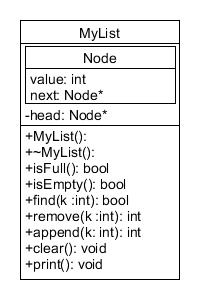
Class Attributes:
- Node is a nested struct. It's members are:
- value - stores an integer value.
- next - stores the memory address of the next node in the list.
- Head - The head pointer. Stores the memory address of the first node in the list.
- Constructor - initializes head to null.
- Destructor - frees all memory used by the list.
- isFull - returns true if there's NOT enough memory to create a new node, false otherwise.
- isEmpty - returns true if the list is empty, false otherwise.
- find - searches the list for it's argument. Returns true if it's found, false otherwise.
- remove - removes the first node found matching the argument passed to remove. Returns 0 if a node is removed, -1 otherwise.
- append - attempts to append it's argument to the list in a new node. Returns 0 if successful, -1 otherwise.
- clear - frees all memory used by the linked list, leaving head set to null.
- print - displays the contents of the list to the screen.
Notes:
- The class does not interact with the user in any way, so no cin or cout statements. (exception: print())
- All accessors should be marked const. My definition of accessor is any method that doesn't change the head pointer.
- struct Node is nested in class MyList and is private.
- Be sure to include preprocess guards( #ifndef, #define, #endif).
Hints:
- Save yourself from writing duplicate code by having the class destructor call the clear method.
MyList Node next Node* +find(k :int): bool +remove(k :int): int +append(k: int): int
Step by Step Solution
There are 3 Steps involved in it

Get step-by-step solutions from verified subject matter experts
 Study Help