







Question: Using the given circuit as a basis, design and implement a sequential circuit which calculates Fibonacci numbers. Think about the registers you will need, and
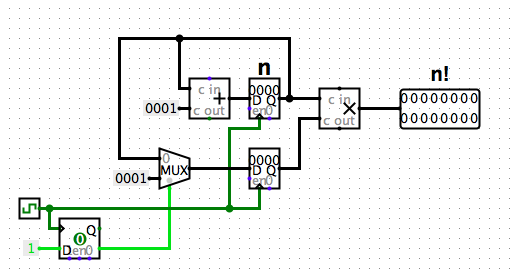
Using the given circuit as a basis, design and implement a sequential circuit which calculates Fibonacci numbers. Think about the registers you will need, and how they can be used to store parts of the Fibonacci sequence. When implementing the circuit, you can use register and adder modules, which work with multi-bit inputs. You can change the number of bits a component works with. Note: Your circuit does not have to produce the value of f(n) when n is 0 and 1. For example, if you build an 8-bit circuit, it can calculate the sequence 2, 3, 5, 8, 13, 21, ... , 89.
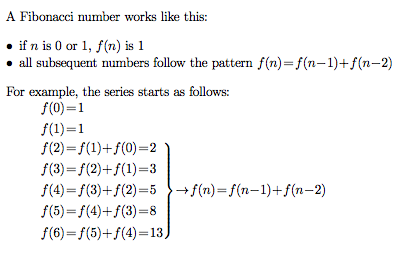
A Fibonacci number works like this: .f n is 0 or 1, f(n) is 1 . all subsequent numbers follow the pattern f(n)=f(n-1)+f(n-2) For example, the series starts as follows: f(0)-1 f(2)=f(1)+f(0)=2 f(3)=f(2)+f(1)-3 f(4)=f(3)+f(2)-5 f(n)=f(n-1)+f(n-2) f(5)=f(A)+f(3-8 f(6)=f(51+f(4)= 13
Step by Step Solution
There are 3 Steps involved in it

Get step-by-step solutions from verified subject matter experts
 Study Help