







Question: Using the information presented in the following table: Job Processing Time per Unit Units per Job Setup Time Due Date a .14 45 0.7 4
Using the information presented in the following table:
| Job | Processing Time per Unit | Units per Job | Setup Time | Due Date | |
| a | .14 | 45 | 0.7 | 4 | |
| b | .25 | 14 | 0.5 | 10 | |
| c | .10 | 18 | 0.2 | 12 | |
| d | .25 | 40 | 1.0 | 20 | |
| e | .10 | 75 | 0.5 | 15 | |
|
| |||||
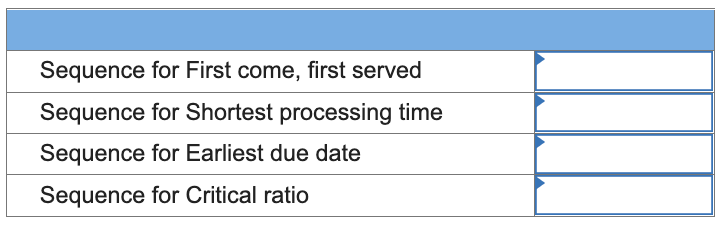
1. Identify the processing sequence that would result using (1) First come, first served, (2) Shortest processing time, (3) Earliest due date, and (4) Critical ratio. (Hint: First determine the total job time for each job by computing the total processing time for the job and then adding in the setup time. All times and due dates are in hours.)
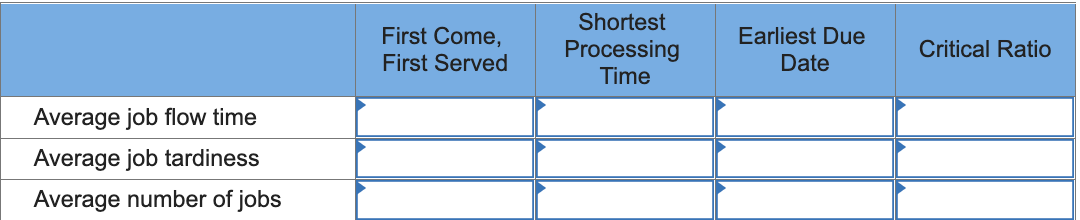
2. For each method, determine (1) average job flow time, (2) average job tardiness, and (3) average number of jobs in the system. Jobs are listed in order of arrival. (Round your intermediate calculations and final answers to 2 decimal places.)
Step by Step Solution
There are 3 Steps involved in it
1 Expert Approved Answer
Step: 1 Unlock

Question Has Been Solved by an Expert!
Get step-by-step solutions from verified subject matter experts
Step: 2 Unlock
Step: 3 Unlock
 Study Help