







Question: Using the lesson plan below to answer the reflection questions: LESSON PLAN TEMPLATE NAME: Cortney Johnson SUPERVISING Molly markos PRACTITIONER: SCHOOL: Moody River GRADE: Pre-K
Using the lesson plan below to answer the reflection questions:
LESSON PLAN TEMPLATE
NAME: Cortney Johnson | SUPERVISING Molly markos PRACTITIONER: |
SCHOOL: Moody River | GRADE: Pre-K | DATE: 6/01/2025 |
LESSON INFORMATION | |||||||||||
Subject Area | Mathematics | ||||||||||
Topic or Unit of Study | Counting and Number Recognition (Numbers 0-5) | ||||||||||
Allotted Time for Lesson | 35 minutes | ||||||||||
Instructional Setting (Check all that apply):
Instructional Group:
|
Stage 1 - DESIRED RESULTS | |||||
Big Idea - List the broad concept/topic or theory to be introduced | Numbers are symbols that represent quantities and help us describe, compare and make sense of the world. | ||||
Essential Question(s) |
| ||||
Content Standard(s) | PK.CC. A.1: Listen to and say the names of numbers in the correct order (from 0-10). PK.CC. A.3: Understand the relationships between numerals and quantities up to 5. PK.CC. A.4: Count up to 5 objects with one-to-one correspondence. SMP1: Make sense of problems and persevere in solving them. SMP6: Attend to precision. | ||||
Content Objective(s) Standard 1.a Essential Element 1.a.4 | The student will be able to count and recognize numbers from 0 to 5, match groups of objects to written numerals, and order the numbers correctly using manipulatives and visual supports, with 100% accuracy on 3 out of 3 counting tasks and successful matching of 5 numerals in the exit ticket.A ? Audience:The student B ? Behavior:will be able to count and recognize numbers from 0 to 5, match quantities with numerals, and order numbers correctly C ? Condition:using manipulatives, number cards, and visual aids during whole-group and small-group activities C ? Criteria for Success:with 100% accuracy on 3 out of 3 counting tasks and correct matching of 5 numbers during the exit ticket activity. | ||||
Language Objective(s) Standard 1.a, SEI a Essential Element 1. a.4 | Language Objective (ABCC + Language Function + Domain): The student will be able toname, repeat, and explain number words from 0 to 5by speaking and listeningduring songs, games, and group counting activitieswith correct number word usage in at least 3 different activitiesusing visual aids, gestures, and partner support. Common Language Functions:
|
Stage 2 - Assessments Standard 1.b Essential Element 1. b.2 | |
Criteria to Assess Understanding | Attach assessment toolyou will use to identify the assessment/record for evaluating student's understanding.
Attached:
|
Other Assessment Evidence | List or attach other forms of assessment that you will use in the lesson (check in, quiz, test, journal, observation, student self-assessment.)
|
Stage 3 - Learning Plan | |||||
Materials and Resources Standard 2.a and 2.d Essential Element 2.1.3 & 2. d.2 | List or describe the materials and resources needed - both by the teacher and the student.
| ||||
Identify Digital Resources and Technology MA Digital Literacy and Computer Science Curriculum Framework. - Grades Kindergarten to 12 (2016) Helpful Resource: Merrimack College Educational Resource Center Digital Literacy Computer Science |
MA DLCS PK-2.DTC.a.1- Use digital tools to explore and express patterns and ideas. | ||||
Classroom Management, Classroom Routines, Transitions and Layout Considerations Needed for This Lesson Standard 2.b, 2.f and SEI d Essential Element 1.a.4, 2.b.1, a | This section discusses the considerations for creating a safe learning environment.
| ||||
Differentiation * Identify types of strategies you are planning to use that will differentiate for learning needs/student interest/learning styles/student readiness/English proficiency (see Resource List below). | For English Language Learners (ELLs):
For Students with IEPs:
For Advanced Students:
Assessment Differentiation:
| ||||
Accommodations Accommodations allow learners with disabilities identified on a 504 or IEP access the curriculum. https://www.washington.edu/doit/what-difference-between-accommodation-and-modification-student-disability | Accommodations can be described as an alteration of presentation. setting, response, schedule/timing, that allows all learners to access the curriculum.
| ||||
Modifications *Modifications are the responsibility of the special education teacher, but coordination between the general education and special education teacher are essential. | Modifications are incorporated within the IEP and the teacher should reference the IEP as they prepare the lesson.
|
Diverse Learners Resource List * | ||
Learner Factors:How will you provide access to the curriculum for all students, including students with different strengths, abilities, & learning styles, students with IEPs and 504s, and English learners (ELs)? | ||
Use Multiple Modes of Representation (gestural, oral, pictorial, graphic, textual) Handout/Share Copy of Directions Model Directions Reread Directions Give Verbal Cues to Emphasize Main Ideas Allow for Student Choice (Ex: topic) Extend Time Handout/Share Copy of Board Notes | Give Additional Examples Post Visuals/Pictures Give Verbal Reminders Use Native Language Allow Oral or Signed Responses Allow Drawing, Labeling, or Pointing Responses Use Braille or Large Print Use Page Markers Give Frequent Breaks | Use Computer/Tablet Use Assistive Devices Group Students Intentionally Use Graphic Organizers Add Review Activities Adjust the Number of Problems/Exercises Provide an Adapted Text Provide Text at a Different Reading Level Create Differentiated Assignment/ Assessment |
LESSON DELIVERY | |||
| Timeline | What will the teacher do? | What will the students do? |
Introduction Make meaningful connections between lesson content and background knowledge, prior learning, real world. Check for Understanding:Assess prior knowledge/understanding of a topic | 5 Min |
|
|
Share Objectives with Students(Written/Oral) | 5 Min | Visual Objective Display: Today we will count 0-5 and match numbers to groups. Movement Counting Game:
|
|
Step by Step Sequence State detailed lesson procedures in sequential order incorporatingdifferentiationfrom above and assessment of all objectives. Check for Understanding: Assess students' progress toward objectives during the lesson | 15 min | Small Group Center Rotations: 5 mins each center:
Teacher circulates, prompting: "Can you count these for me?" Conduct brief individual conferences |
|
5 min | Counting Snack
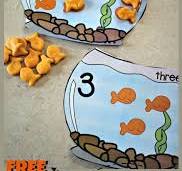 |
Step by Step Solution
There are 3 Steps involved in it

Get step-by-step solutions from verified subject matter experts
 Study Help