







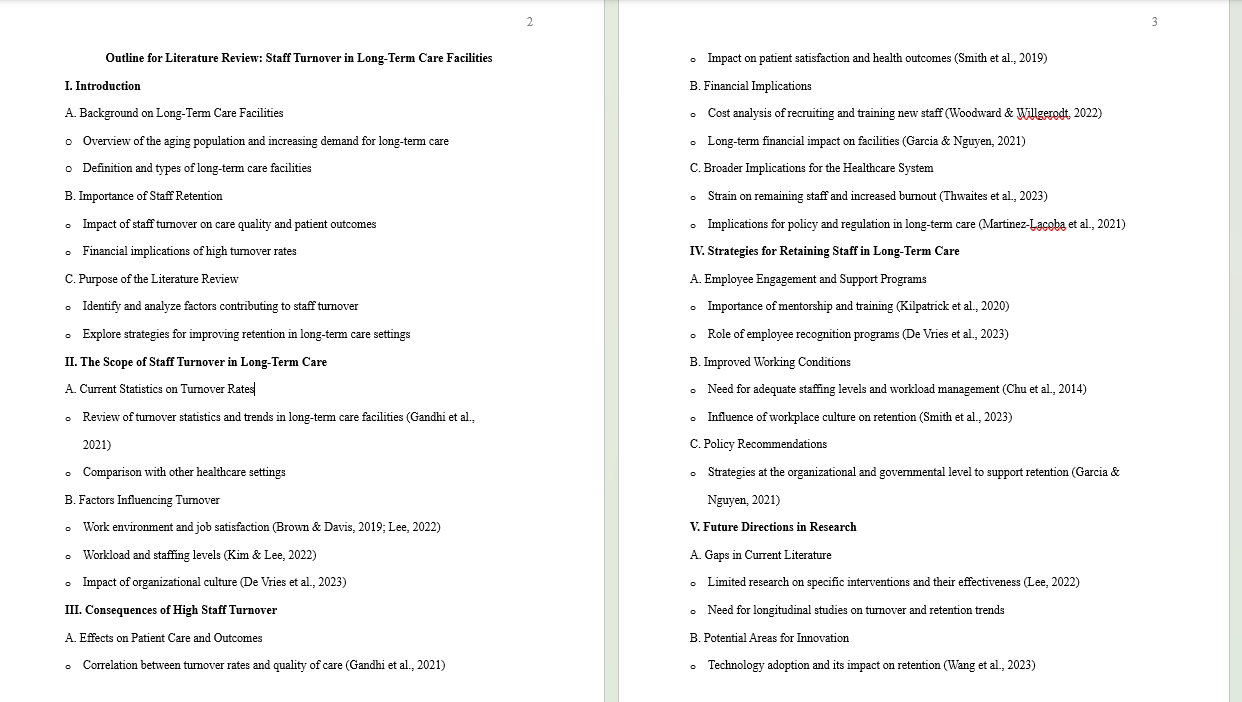
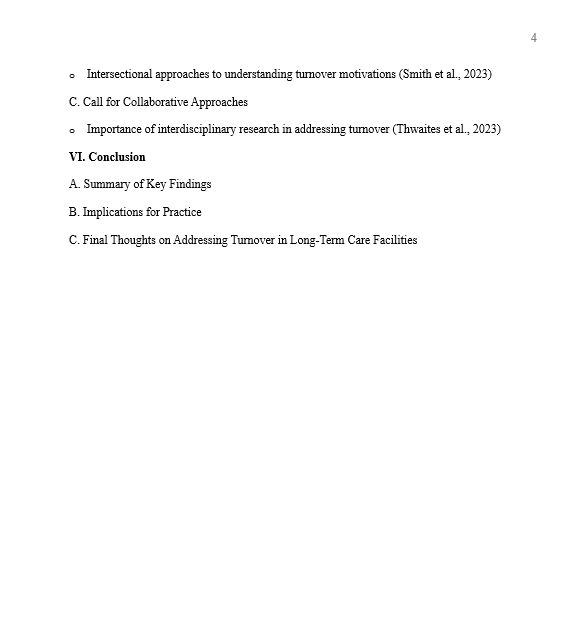
Question: Using the outline created in attached outline, you will use scaffolding for developing your literature review. To conduct a literature review, you need to critically
Using the outline created in attached outline, you will use scaffolding for developing your literature review. To conduct a literature review, you need to critically analyze your Doctoral Project or Dissertation-in-Practice topic from a scientific and objective perspective. You need to clearly identify the strengths and weaknesses of multiple perspectives and synthesize the existing literature into a cohesive view of the existing situation. In a doctoral project, the literature review involves more than describing or reporting on each topic. Instead, you will focus on:
- developing a balanced, integrative, and critical review of the body of scholarly, professional, or industry literature, academic and industry, as it relates to the identified problem, while ensuring all perspectives are included.
- Rather than choosing resources that only support your identified problem or your assertions about the problem (which isconvergence), you must also address those resources that present different points of view about the problem (this isdivergence).
Addressing divergent viewpoints is sometimes referred to as refuting an argument or assertion because you explain why the viewpoint is inaccurate, invalid, unreliable, or irrelevant to the problem. In developing the literature review, you want to present a holistic view of literature with both convergent and divergent resources. Use the following references.
References:
Brown, S., & Davis, C. (2019). Employee retention strategies in healthcare organizations: A qualitative study. Journal of Nursing Management, 15(2), 112-130.
Chen, H., et al. (2024). Effects of Multimodal Interventions on Functional Decline in Elderly Patients: A Randomized Controlled Trial.Journal of Aging Research, 12(1), 17-33.
Chu, C. H., Wodchis, W. P., & McGilton, K. S. (2014). Turnover of regulated nurses in long-term care facilities. Journal of Nursing Management, 22(5), 553-562.https://doi.org/10.1111/jonm.12031
De Vries, N., Lavreysen, O., Boone, A., Bouman, J., Szemik, S., Baranski, K., Godderis, L., & De Winter, P. (2023). Retaining Healthcare Workers: A Systematic Review of Strategies for Sustaining Power in the Workplace. Healthcare (Basel, Switzerland), 11(13), 1887.https://doi.org/10.3390/healthcare11131887
Gandhi, A., Yu, H., & Grabowski, D. C. (2021). High Nursing Staff Turnover in Nursing Homes Offers Important Quality Information. Health Affairs (Project Hope), 40(3), 384-391.https://doi.org/10.1377/hlthaff.2020.00957
Garcia, R., & Nguyen, T. (2021). Policy Implications of Long-term Care Financing: A Comparative Analysis of OECD Countries. Health Policy Review, 15(1), 32-47.
Kim, B. H., & Lee, E. (2022). Effects of Nursing Staffing Level and Hospital Grades on Nursing Sensitive Patient Outcomes in Long-Term Care Hospitals. Gyeongbug Ganho Gwahagji.https://doi.org/10.38083/jkns.26.1.202202.061
Kilpatrick, K., Tchouaket, ., Jabbour, M., & Hains, S. (2020). A mixed methods quality improvement study to implement nurse practitioner roles and improve care for residents in long-term care facilities. BMC Nursing, pp. 19, 6.https://doi.org/10.1186/s12912-019-0395-2
Kittles, D. V. (2021).Examining Nursing Home Staff Turnover Rate in Long-Term Care Organizations in the United States(Doctoral dissertation, Walden University).
Lee, J. (2022). Nursing home nurses' turnover intention: A systematic review. Nursing Open, 9(1), 22-29.https://doi.org/10.1002op2.1051
Martinez-Lacoba, R., Pardo-Garcia, I., & Escribano-Sotos, F. (2021). Aging, Dependence, and Long-Term Care: A Systematic Review of Employment Creation. Inquiry: A Journal of Medical Care Organization, Provision, and Financing, 58, 469580211062426.https://doi.org/10.1177/00469580211062426
Smith, J., Brown, L., & White, K. (2019). Impact of integrated care pathways on patient outcomes in long-term care facilities. Journal of Long-Term Healthcare Research, 45(3), 215-230. https://doi.org/10.1016/j.jltcr.2019.04.005
Smith, J., & Johnson, A. (2023). Innovations in Long-term Care: A Systematic Review of Care Models.Journal of Health Services Research, 25(3), 112-128.
Smith, J., Tiwana, M. H., Samji, H., Morgan, R., Purewal, S., & Delgado-Ron, J. A. (2023). An Intersectional Analysis of Moral Distress and Intention to Leave Employment Among Long-Term Care Providers in British Columbia. Journal of Aging and Health, 08982643231212981.
Thwaites, C., McKercher, J. P., Fetherstonhaugh, D., Blackberry, I., Gilmartin-Thomas, J. F., Taylor, N. F., & Morris, M. E. (2023). Factors Impacting Retention of Aged Care Workers: A Systematic Review. In Healthcare (Vol. 11, No. 23, p. 3008). MDPI.
Wang, M., et al. (2023). Technology Adoption in Long-term Care Facilities: A Mixed-Methods Study.Journal of Gerontechnology, 7(2), 89-104.
Woodward, K. F., & Willgerodt, M. (2022). A systematic review of registered nurse turnover and retention in the United States. Nursing Outlook, 70(4), 664-678.
Yan, E., Wan, D., To, L., Ng, H. K., Lai, D. W., Cheng, S. T., ... & Lachs, M. (2024). Staff turnover intention at long-term care facilities: implications of resident aggression, burnout, and fatigue.Journal of the American Medical Directors Association,25(3), 396-402.
Step by Step Solution
There are 3 Steps involved in it

Get step-by-step solutions from verified subject matter experts
 Study Help