







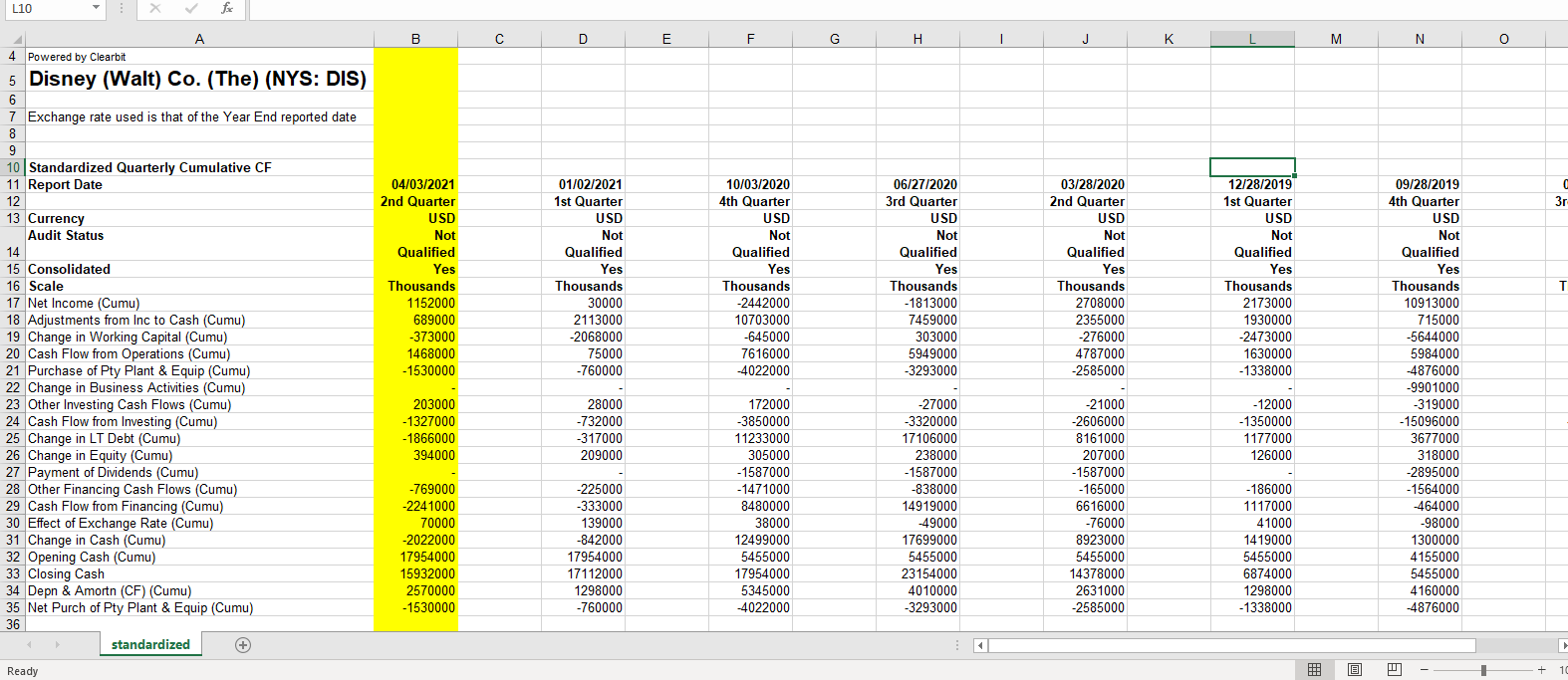
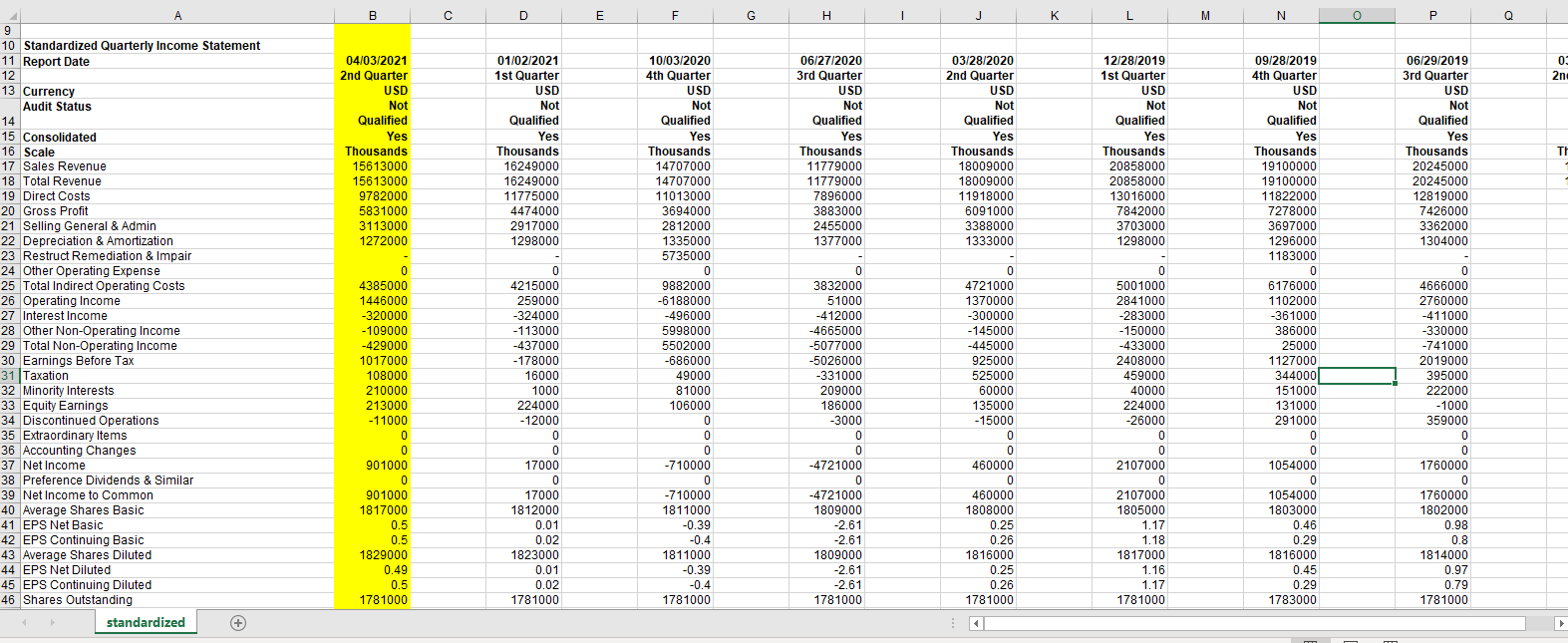
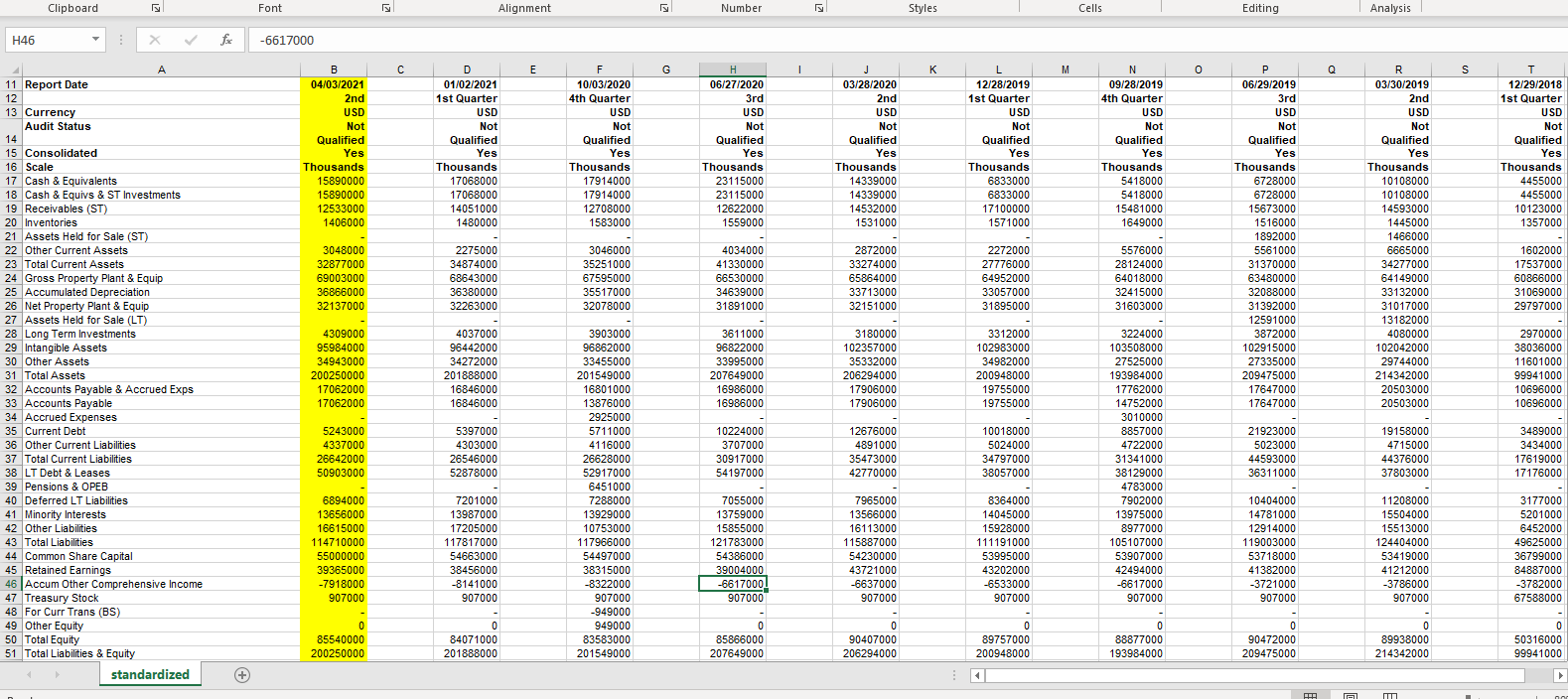
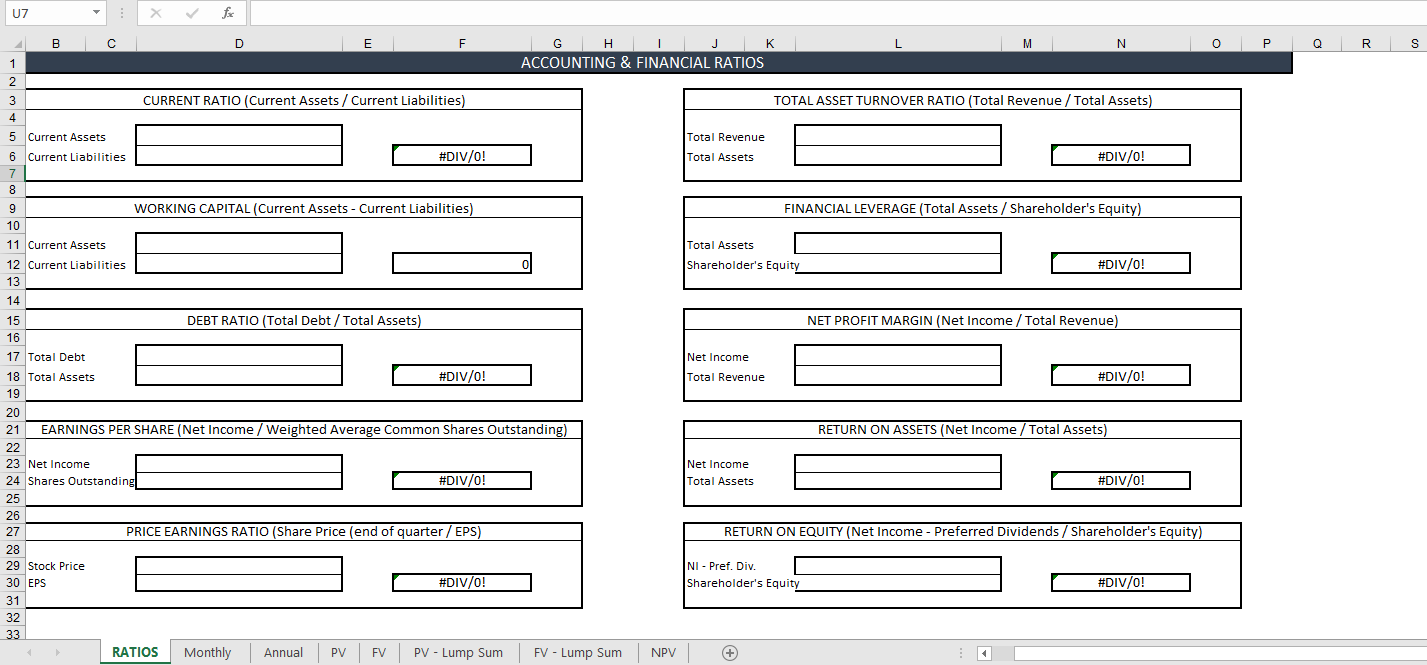
Question: Using the Project Two Financial Formulas spreadsheet and the balance sheet, income statement, and cash flow statement from Mergent Online for your chosen company, calculate
Using the Project Two Financial Formulas spreadsheet and the balance sheet, income statement, and cash flow statement from Mergent Online for your chosen company, calculate the financial ratios for the most recent fiscal quarter. Then, compare those ratios with the same ratios for the same fiscal quarter from one year prior in Mergent Online, and analyze your results.
Specifically, you must address the following rubric criteria:
- Financial Calculations: Calculate accurate financial ratios to assess the businesss current financial health. Specifically, calculate the following ratios:
- Working capital
- Current ratio
- Debt ratio
- Earnings per share
- Price/earnings ratio
- Total asset turnover ratio
- Financial leverage
- Net profit margin
- Return on assets
- Return on equity
- Fiscal Quarter Comparison: Using Mergent Online, summarize the differences between the results from your financial calculations of the most recent fiscal quarter and the results of the same financial calculations of the same fiscal quarter from a year before for your chosen business.
- For example, if the most recent fiscal quarter available is the 3rd quarter in 2020, then you will compare those results to the same financial calculations from the 3rd quarter in 2019.
U7 fx B B D E F L M N 0 0 R S 4 1 G H TJ ACCOUNTING & FINANCIAL RATIOS 2 3 4 CURRENT RATIO (Current Assets / Current Liabilities) TOTAL ASSET TURNOVER RATIO (Total Revenue / Total Assets) Total Revenue #DIV/0! Total Assets #DIV/0! 5 Current Assets 6 Current Liabilities 7 8 9 10 WORKING CAPITAL (Current Assets - Current Liabilities) FINANCIAL LEVERAGE (Total Assets / Shareholder's Equity) 11 Current Assets Total Assets Shareholder's Equity 0 #DIV/0! 12 Current Liabilities 13 14 15 16 DEBT RATIO (Total Debt/Total Assets) NET PROFIT MARGIN (Net Income / Total Revenue) 17 Total Debt Net Income #DIV/0! Total Revenue #DIV/0! 18 Total Assets 19 RETURN ON ASSETS (Net Income / Total Assets) Net Income Total Assets #DIV/0! 20 21 EARNINGS PER SHARE (Net Income / Weighted Average Common Shares Outstanding) 22 23 Net Income 24 Shares Outstanding #DIV/0! 25 26 27 PRICE EARNINGS RATIO (Share Price (end of quarter / EPS) 28 29 Stock Price 30 EPS #DIV/0! 31 32 33 RATIOS Monthly Annual PV FV PV - Lump Sum FV - Lump Sum RETURN ON EQUITY (Net Income - Preferred Dividends / Shareholder's Equity) NI - Pref. Div. Shareholder's Equity #DIV/0! NPV +
Step by Step Solution
There are 3 Steps involved in it

Get step-by-step solutions from verified subject matter experts
 Study Help