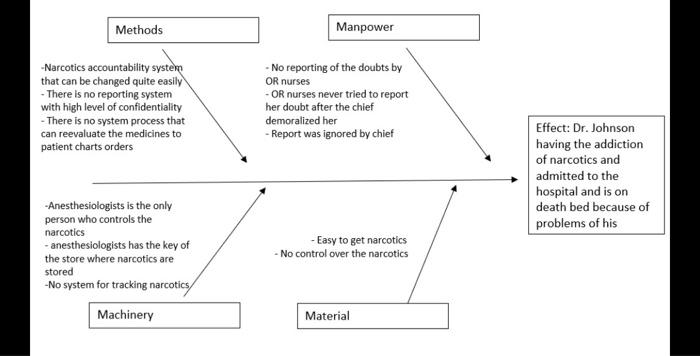
Question: Using the root cause analysis and diagrams, discuss how the hospital can prevent similar situations. Methods Manpower -Narcotics accountability system that can be changed quite
Using the root cause analysis and diagrams, discuss how the hospital can prevent similar situations. Using the root cause analysis and diagrams,
Using the root cause analysis and diagrams,
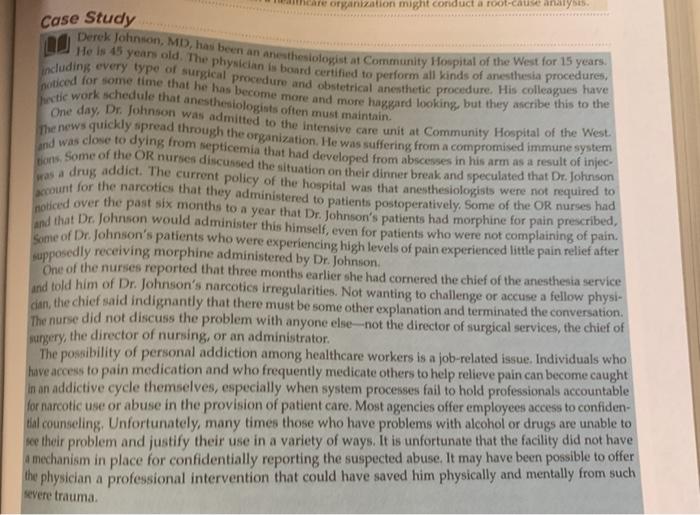
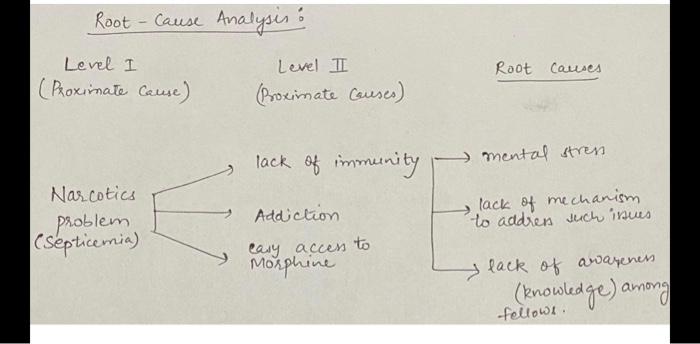
Methods Manpower -Narcotics accountability system that can be changed quite easily There is no reporting system with high level of confidentiality There is no system process that can reevaluate the medicines to patient charts orders - No reporting of the doubts by OR nurses - OR nurses never tried to report her doubt after the chief demoralized her - Report was ignored by chief Effect: Dr. Johnson having the addiction of narcotics and admitted to the hospital and is on death bed because of problems of his -Anesthesiologists is the only person who controls the narcotics - anesthesiologists has the key of the store where narcotics are stored -No system for tracking narcotics Machinery - Easy to get narcotics -No control over the narcotics Material Root - Cause Analysis a Root causes Level I (Proximate Cause) Level I (Proximate Causes) lack of immunity mental stren Nas.coties problem, (Septicemia) Addiction lack of mechanism to address such issues easy access to Morphine lack of awareness (knowledge) among follows. care organization might conduct a root cause analysis. Case Study Derek Johnson, MD, has been an Anesthesiologist at Community Hospital of the West for 15 years including every type of surgical procedure and obstetrical anesthetic procedure. His colleagues have noticed for some time that he has become more and more haggard looking, but they ascribe this to the hectic work schedule that anesthesiologists often must maintain We lovely cold. The physician is board certified to perform all kinds of anesthesia procedures bons. Some of the OR nurses discussed the situation on their dinner break and speculated that Dr. Johnson account for the narcotics that they administered to patients postoperatively. Some of the OR nurses had One day, Dr. Johnson was admitted to the intensive care unit at Community Hospital of the West The news quickly spread through the organization. He was suffering from a compromised immune system was a drug addict. The current policy of the hospital was that anesthesiologists were not required to noticed over the past six months to a year that Dr. Johnson's patients had morphine for pain prescribed and that Dr. Johnson would administer this himself, even for patients who were not complaining of pain. Some of Dr. Johnson's patients who were experiencing high levels of pain experienced little pain relief after supposedly receiving morphine administered by Dr. Johnson One of the nurses reported that three months earlier she had cornered the chief of the anesthesia service and told him of Dr. Johnson's narcotics irregularities. Not wanting to challenge or accuse a fellow physi- dan, the chief said indignantly that there must be some other explanation and terminated the conversation. The nurse did not discuss the problem with anyone else--not the director of surgical services, the chief of surgery, the director of nursing, or an administrator. The possibility of personal addiction among healthcare workers is a job-related issue. Individuals who have access to pain medication and who frequently medicate others to help relieve pain can become caught In an addictive cycle themselves, especially when system processes fail to hold professionals accountable for narcotic use or abuse in the provision of patient care. Most agencies offer employees access to confiden- Hal counseling. Unfortunately, many times those who have problems with alcohol or drugs are unable to see their problem and justify their use in a variety of ways. It is unfortunate that the facility did not have a mechanism in place for confidentially reporting the suspected abuse. It may have been possible to offer the physician a professional intervention that could have saved him physically and mentally from such severe trauma

Step by Step Solution

There are 3 Steps involved in it

1 Expert Approved Answer
Step: 1 Unlock blur-text-image

Question Has Been Solved by an Expert!

Get step-by-step solutions from verified subject matter experts

Step: 2 Unlock
Step: 3 Unlock

Students Have Also Explored These Related General Management Questions!