







Question: Using You - Voice, We - Voice, I - Voice, and Impersonal Voice In many cases, the subject of your sentences establishes the tone. By
Using YouVoice, WeVoice, IVoice, and Impersonal Voice
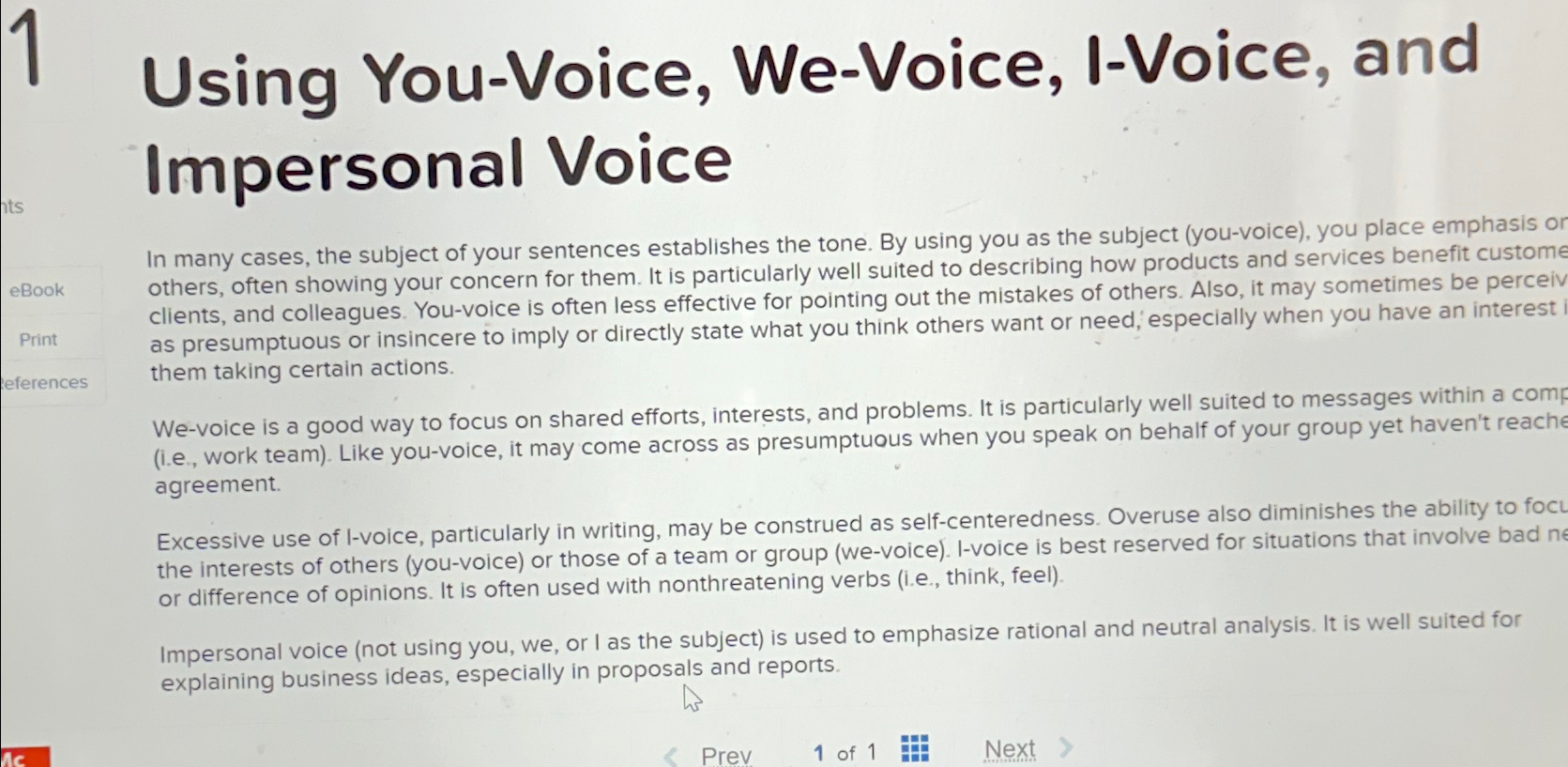
In many cases, the subject of your sentences establishes the tone. By using you as the subject youvoice you place emphasis or others, often showing your concern for them. It is particularly well suited to describing how products and services benefit custome clients, and colleagues. Youvoice is often less effective for pointing out the mistakes of others. Also, it may sometimes be perceiv as presumptuous or insincere to imply or directly state what you think others want or need; especially when you have an interest them taking certain actions.
Wevoice is a good way to focus on shared efforts, interests, and problems. It is particularly well suited to messages within a comp ie work team Like youvoice, it may come across as presumptuous when you speak on behalf of your group yet haven't reache agreement.
Excessive use of Ivoice, particularly in writing, may be construed as selfcenteredness. Overuse also diminishes the ability to foct the interests of others youvoice or those of a team or group wevoice Ivoice is best reserved for situations that involve bad ne or difference of opinions. It is often used with nonthreatening verbs ie think, feel
Impersonal voice not using you, we or I as the subject is used to emphasize rational and neutral analysis. It is well suited for explaining business ideas, especially in proposals and reports.
Ac
Prev
of
Next
Step by Step Solution
There are 3 Steps involved in it
1 Expert Approved Answer
Step: 1 Unlock

Question Has Been Solved by an Expert!
Get step-by-step solutions from verified subject matter experts
Step: 2 Unlock
Step: 3 Unlock
 Study Help