







Question: UTF8 to Binary in C 1/A simple linked list implementation. Each element should represent a unique character. struct llist { //Variables are: /ext llist element
UTF8 to Binary in C
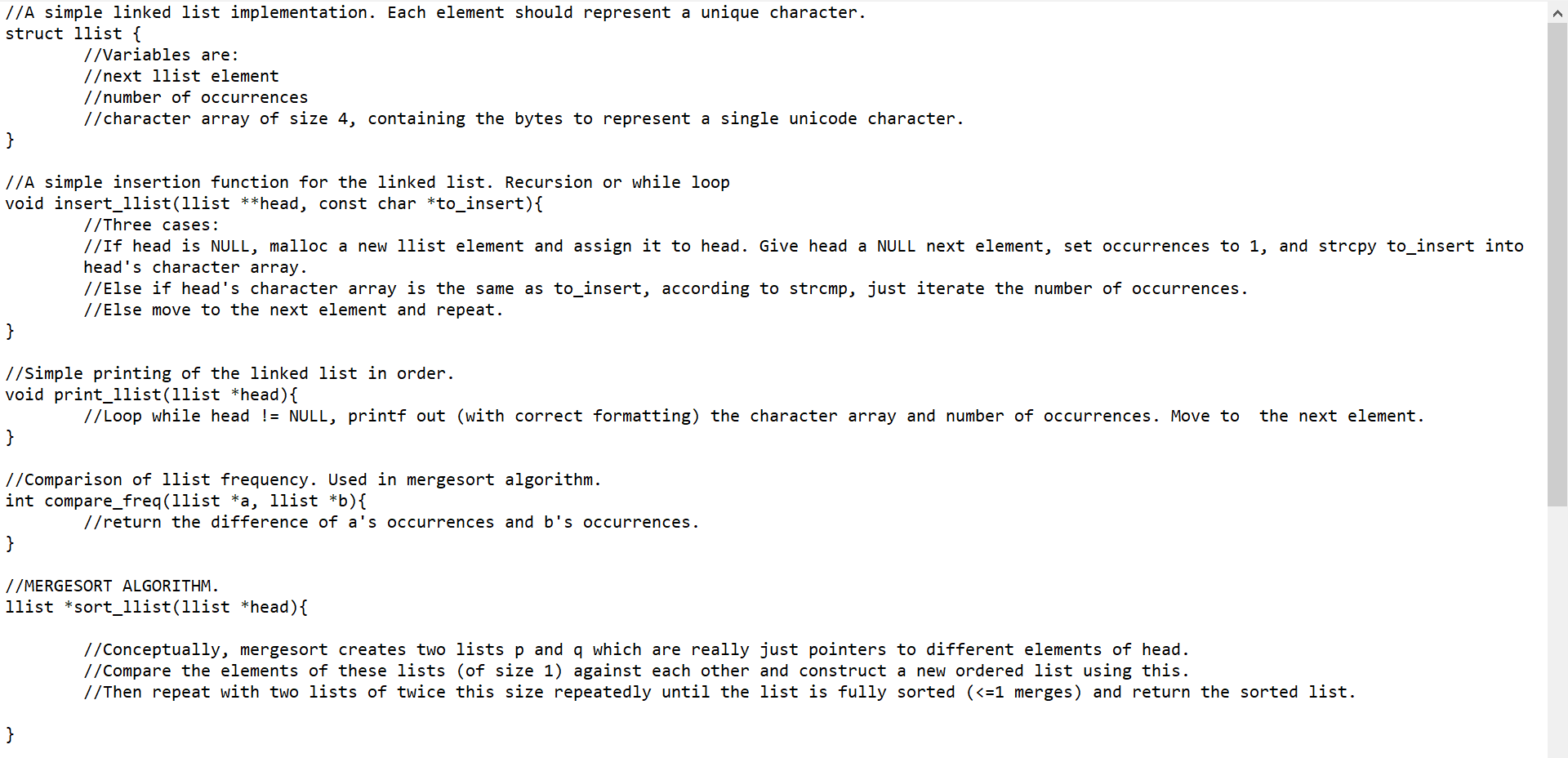
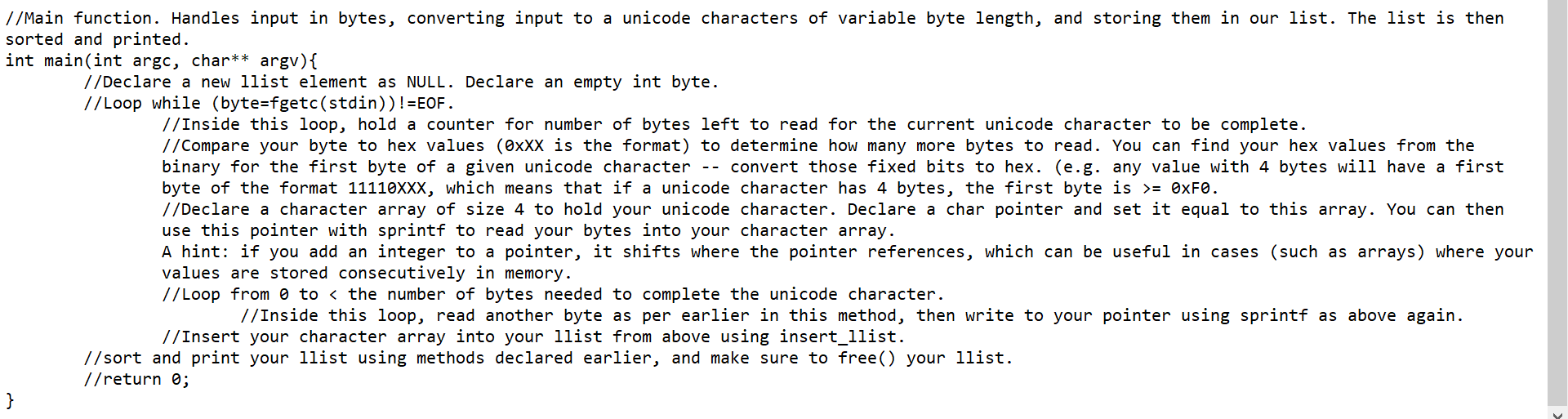
1/A simple linked list implementation. Each element should represent a unique character. struct llist { //Variables are: /ext llist element /umber of occurrences // character array of size 4, containing the bytes to represent a single unicode character. I/A simple insertion function for the linked list. Recursion or while loop void insert_llist(llist **head, const char *to_insert){ //Three cases: //If head is NULL, malloc a new llist element and assign it to head. Give head a NULL next element, set occurrences to 1, and strcpy to_insert into head's character array. //Else if head's character array is the same as to_insert, according to strcmp, just iterate the number of occurrences. //Else move to the next element and repeat. 7/Simple printing of the linked list in order. void print_llist(llist *head) { // Loop while head != NULL, printf out (with correct formatting) the character array and number of occurrences. Move to the next element. / / 1/Comparison of llist frequency. Used in mergesort algorithm. int compare_freq(ilist *a, llist *b){ //return the difference of a's occurrences and b's occurrences. //MERGESORT ALGORITHM. llist *sort_llist(llist *head) { //Conceptually, mergesort creates two lists p and a which are really just pointers to different elements of head. //Compare the elements of these lists (of size 1) against each other and construct a new ordered list using this. //Then repeat with two lists of twice this size repeatedly until the list is fully sorted (= OxFO. 1/Declare a character array of size 4 to hold your unicode character. Declare a char pointer and set it equal to this array. You can then use this pointer with sprintf to read your bytes into your character array. A hint: if you add an integer to a pointer, it shifts where the pointer references, which can be useful in cases (such as arrays) where your values are stored consecutively in memory. //Loop from 0 to
Step by Step Solution
There are 3 Steps involved in it

Get step-by-step solutions from verified subject matter experts
 Study Help