







Question: valid_layer (i, j, m, n) = i and ci = N) or (n - m + 1 = 2 (j - i + 1) and
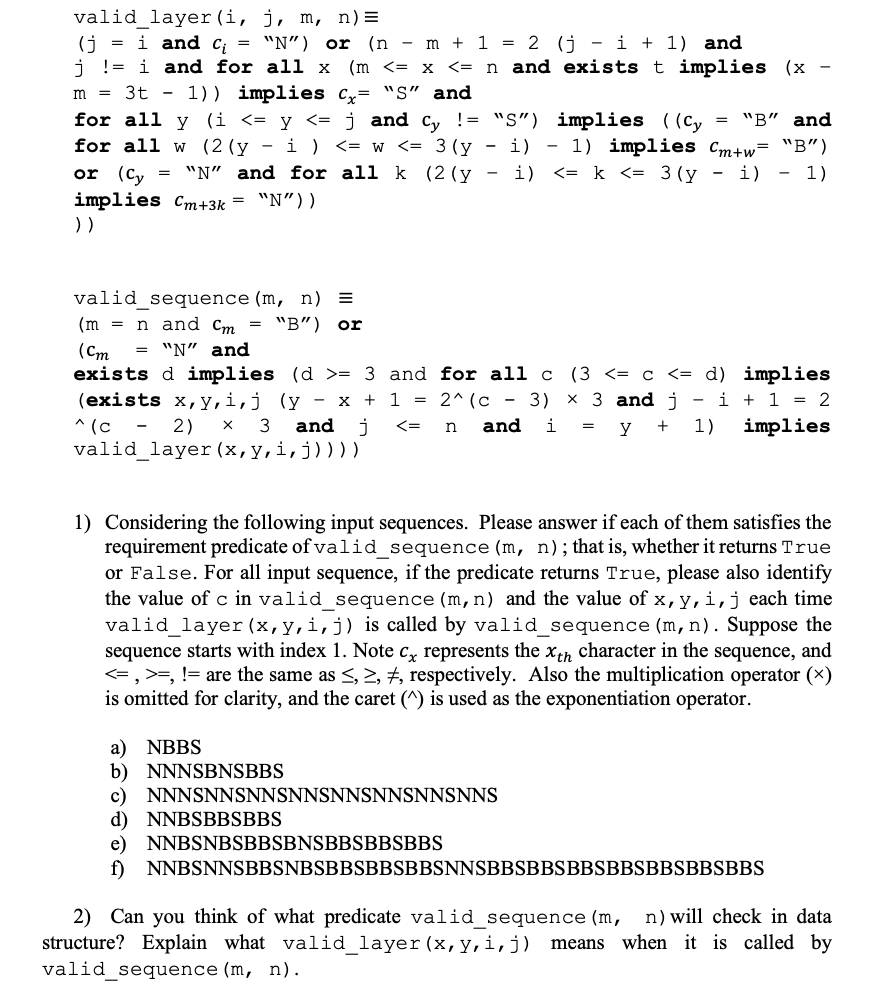
valid_layer (i, j, m, n) = i and ci = "N") or (n - m + 1 = 2 (j - i + 1) and j != i and for all x (m = 3 and for all c (3 = != are the same as 5, 2, #, respectively. Also the multiplication operator (x) is omitted for clarity, and the caret () is used as the exponentiation operator. a) NBBS b) NNNSBNSBBS c) NNNSNNSNNSNNSNNSNNSNNSNNS d) NNBSBBSBBS e) NNBSNBSBBSBNSBBSBBSBBS f) NNBSNNSBBSNBSBBSBBSBBSNNSBBSBBSBBSBBSBBSBBSBBS 2) Can you think of what predicate valid_sequence (m, n) will check in data structure? Explain what valid_layer (x, y, i, j) means when it is called by valid_sequence (m, n). valid_layer (i, j, m, n) = i and ci = "N") or (n - m + 1 = 2 (j - i + 1) and j != i and for all x (m = 3 and for all c (3 = != are the same as 5, 2, #, respectively. Also the multiplication operator (x) is omitted for clarity, and the caret () is used as the exponentiation operator. a) NBBS b) NNNSBNSBBS c) NNNSNNSNNSNNSNNSNNSNNSNNS d) NNBSBBSBBS e) NNBSNBSBBSBNSBBSBBSBBS f) NNBSNNSBBSNBSBBSBBSBBSNNSBBSBBSBBSBBSBBSBBSBBS 2) Can you think of what predicate valid_sequence (m, n) will check in data structure? Explain what valid_layer (x, y, i, j) means when it is called by valid_sequence (m, n)
Step by Step Solution
There are 3 Steps involved in it

Get step-by-step solutions from verified subject matter experts
 Study Help