







Question: We design the following experiment: We select a random sample of students from Shoreline and show them a picture of another student from Shoreline along
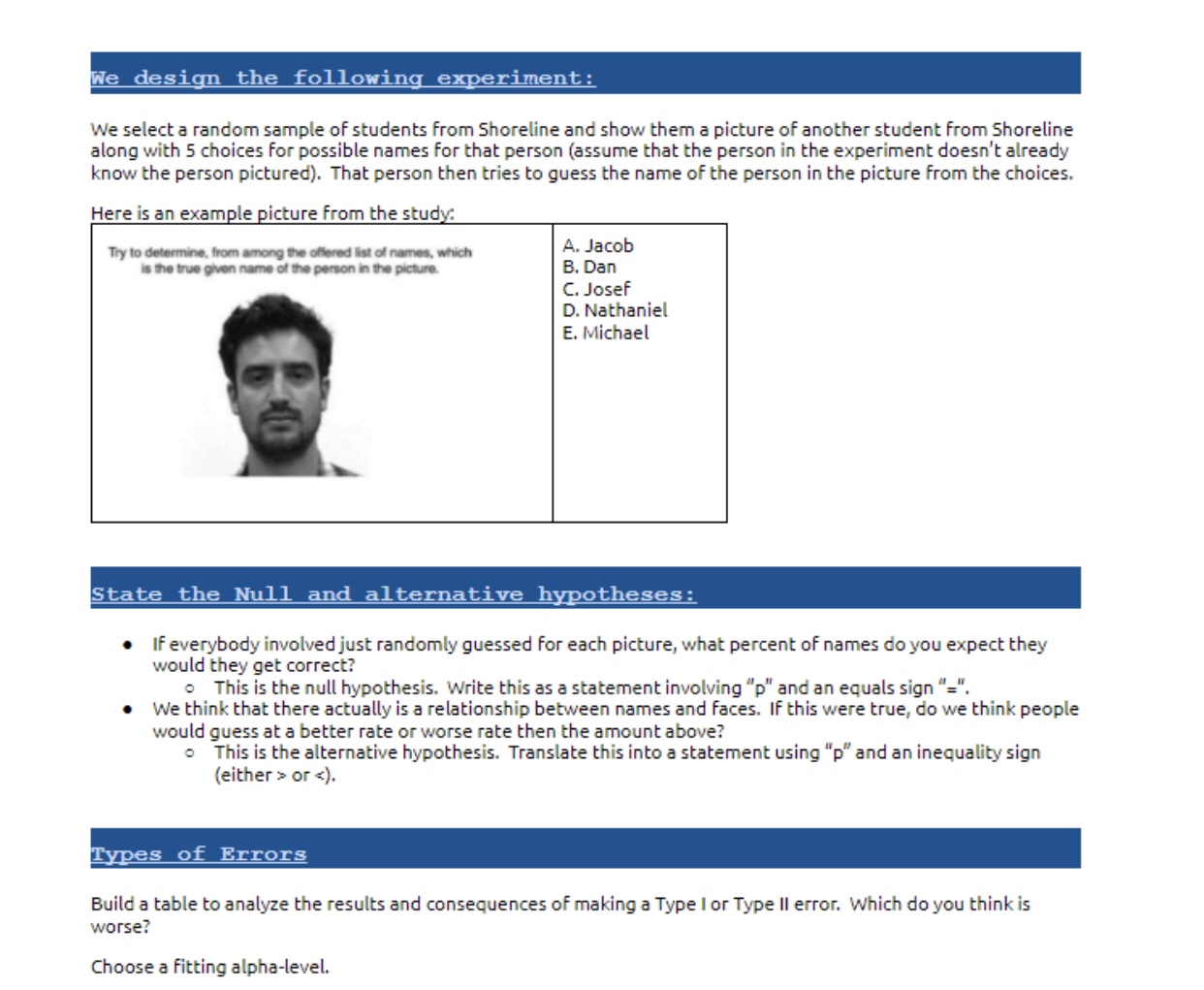
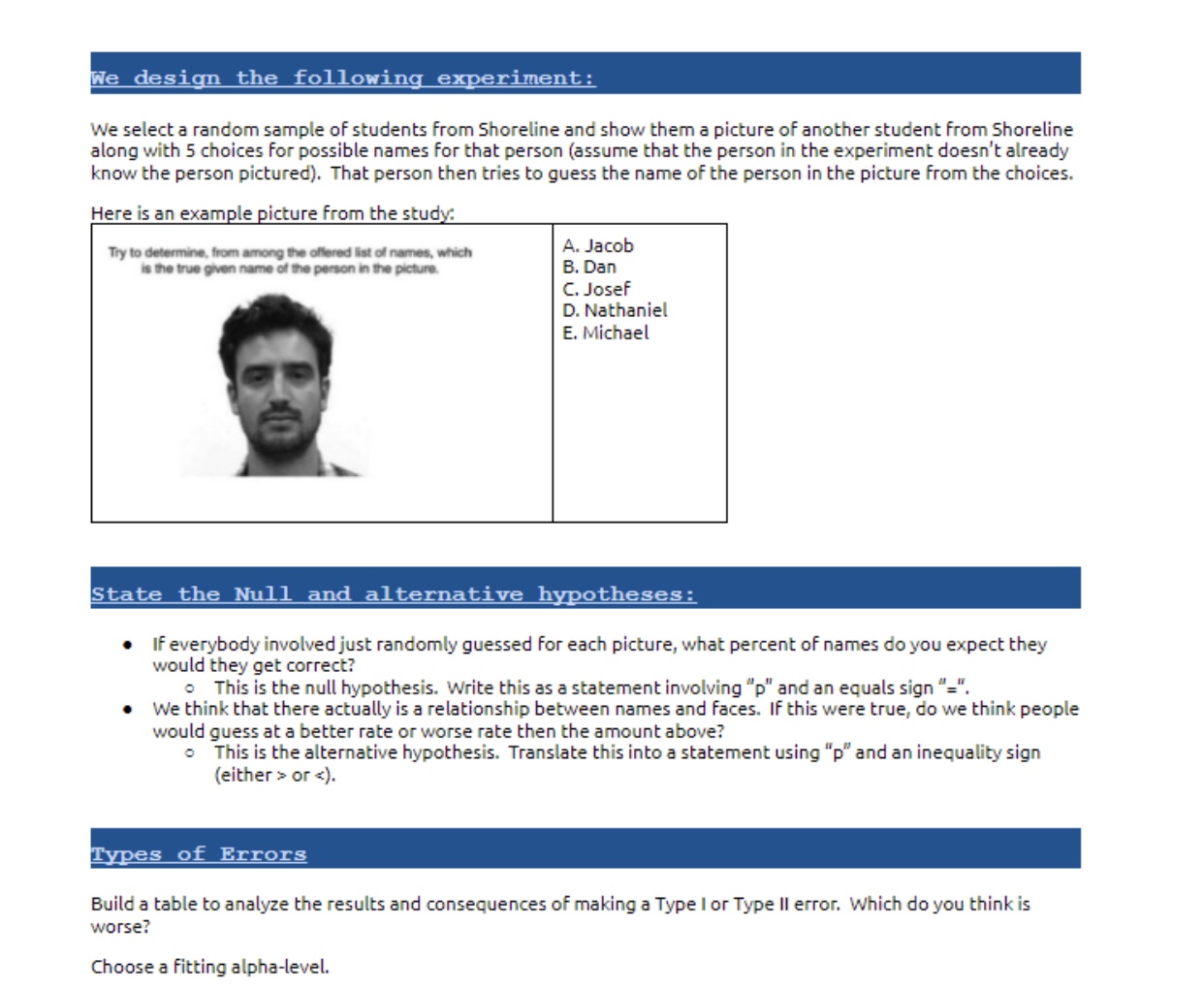
We design the following experiment: We select a random sample of students from Shoreline and show them a picture of another student from Shoreline along with 5 choices for possible names for that person (assume that the person in the experiment doesn't already know the person pictured). That person then tries to guess the name of the person in the picture from the choices. Here is an example picture from the study: Try to determine, from among the offered list of names, which A. Jacob is the true given name of the person in the picture. B. Dan C. Josef D. Nathaniel E. Michael State the Null and alternative hypotheses: If everybody involved just randomly guessed for each picture, what percent of names do you expect they would they get correct? o This is the null hypothesis. Write this as a statement involving "p" and an equals sign "=". We think that there actually is a relationship between names and faces. If this were true, do we think people would guess at a better rate or worse rate then the amount above? This is the alternative hypothesis. Translate this into a statement using "p" and an inequality sign (either > or
Step by Step Solution
There are 3 Steps involved in it

Get step-by-step solutions from verified subject matter experts
 Study Help