







Question: WeBWork 3 - Topics 6 - 7: Problem 8 (1 point) Evaluate the limit, using L'Hopital's Rule. Enter INF for co, -INF for -oo, or
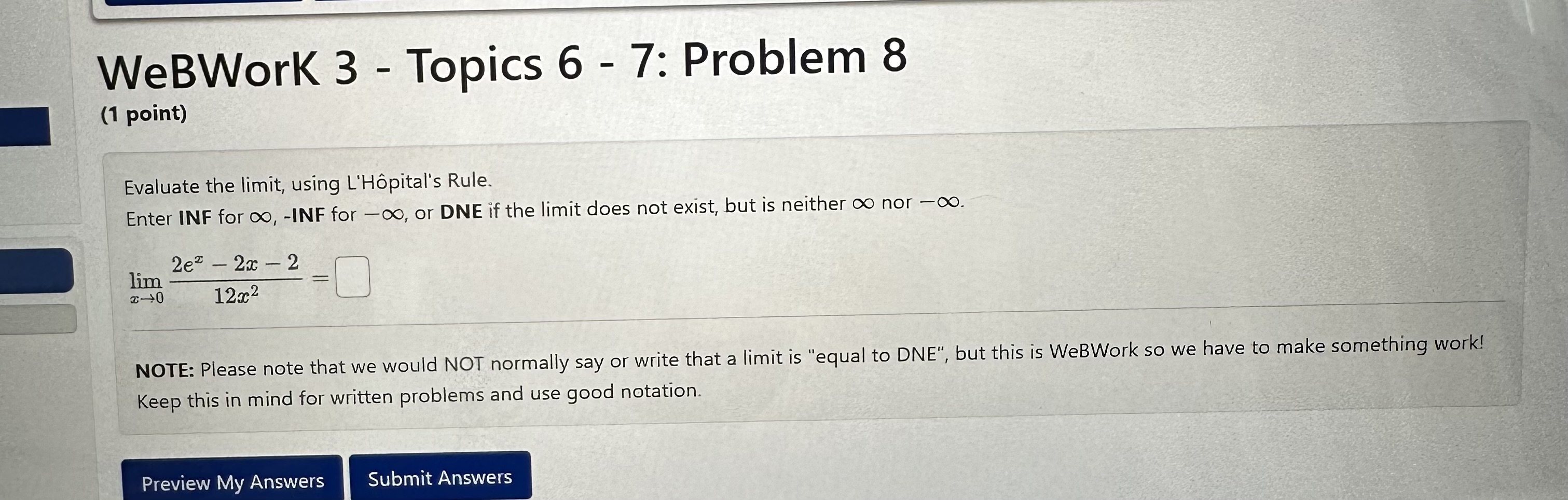
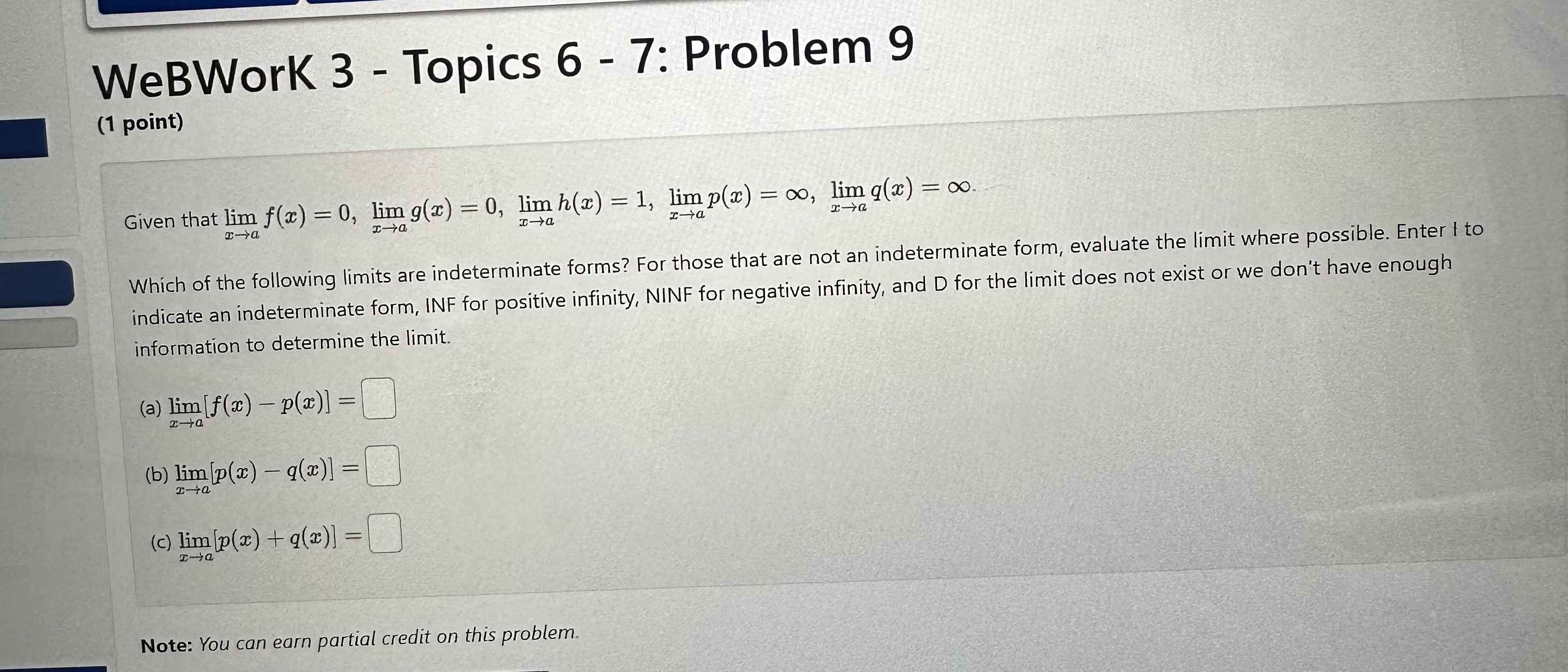
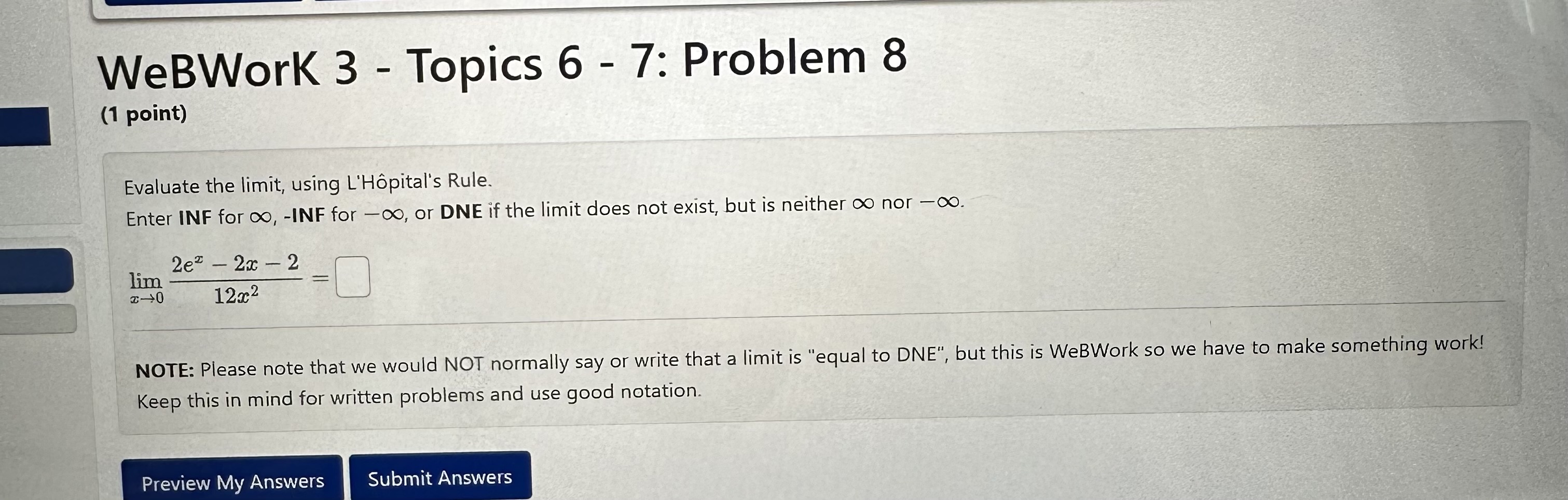
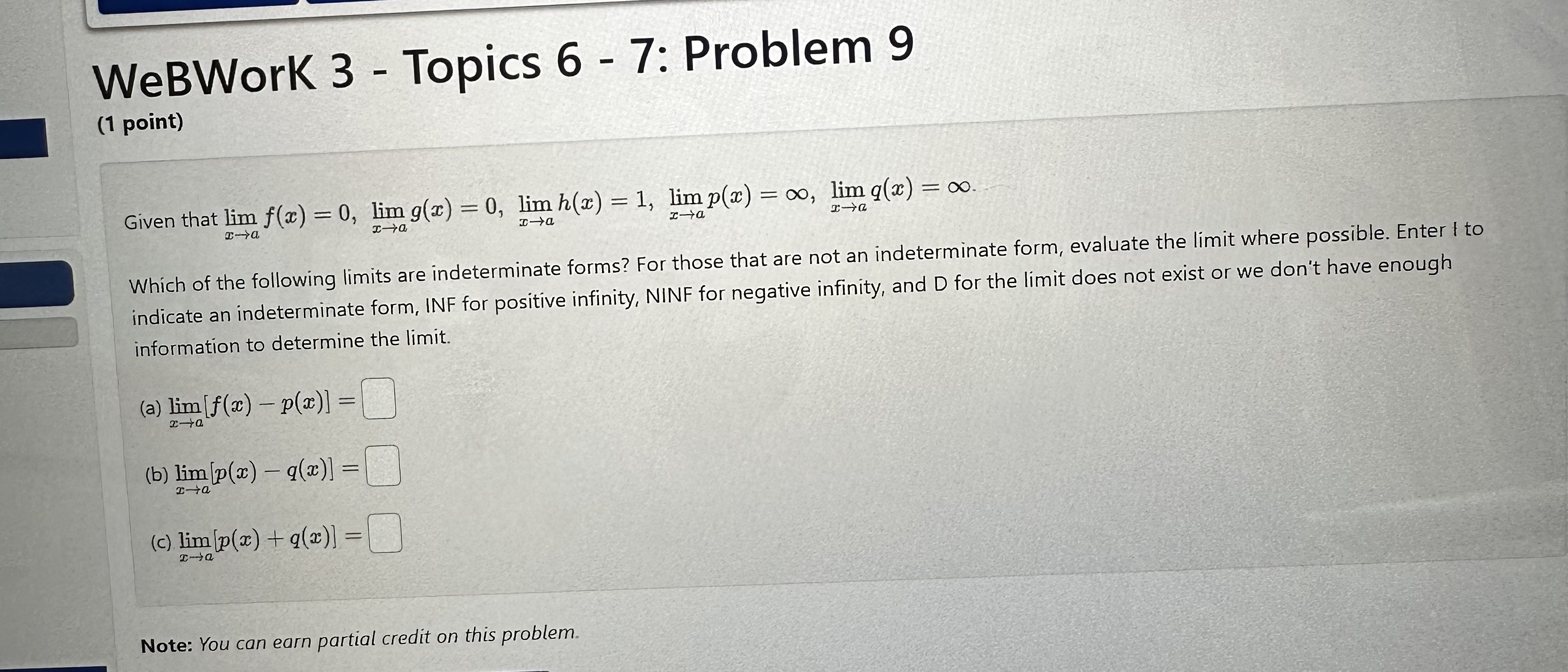
WeBWork 3 - Topics 6 - 7: Problem 8 (1 point) Evaluate the limit, using L'Hopital's Rule. Enter INF for co, -INF for -oo, or DNE if the limit does not exist, but is neither oo nor -Co. 2ez - 2x - 2 lim 12x2 NOTE: Please note that we would NOT normally say or write that a limit is "equal to DNE", but this is WeBWork so we have to make something work! Keep this in mind for written problems and use good notation. Preview My Answers Submit AnswersWeBWork 3 - Topics 6 - 7: Problem 9 (1 point) Given that lim f(x) = 0, lim g(x) = 0, lim h(x) = 1, limp(x) = co, lim q(x) = co. I -+ a I+a I + a r - a Which of the following limits are indeterminate forms? For those that are not an indeterminate form, evaluate the limit where possible. Enter | to indicate an indeterminate form, INF for positive infinity, NINF for negative infinity, and D for the limit does not exist or we don't have enough information to determine the limit. (a) lim f(ac) - p(x)] = (b) lim p(x) - q(x)] = (c) lim [p(x) + q(2)] = Note: You can earn partial credit on this
Step by Step Solution
There are 3 Steps involved in it

Get step-by-step solutions from verified subject matter experts
 Study Help