







Question: what Are the Differences Between Depository and Non-Depository Institutions? The financial services industry in the United States has undergone major changes over the years. For
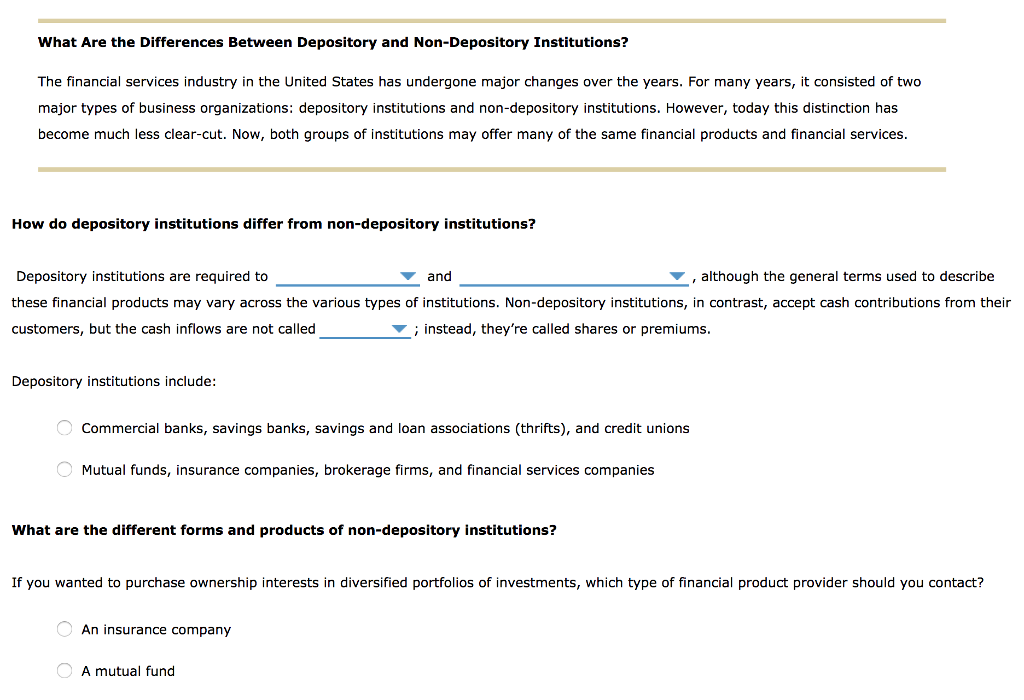
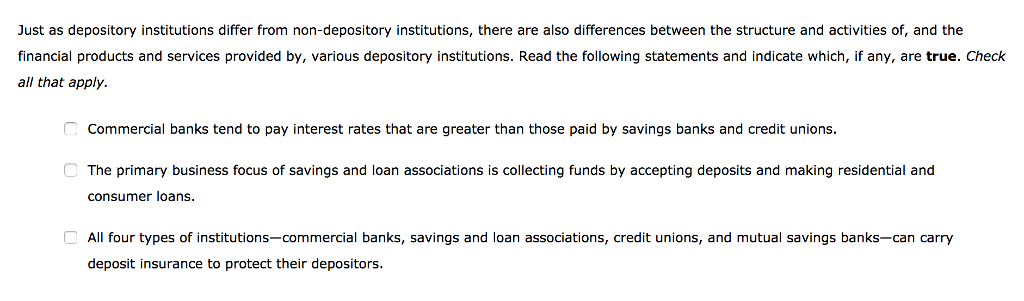
what Are the Differences Between Depository and Non-Depository Institutions? The financial services industry in the United States has undergone major changes over the years. For many years, it consisted of two major types of business organizations: depository institutions and non-depository institutions. However, today this distinction has become much less clear-cut. Now, both groups of institutions may offer many of the same financial products and financial services How do depository institutions differ from non-depository institutions? Depository institutions are required to and although the general terms used to describe these financial products may vary across the various types of institutions. Non-depository institutions, in contrast, accept cash contributions from their customers, but the cash inflows are not called instead, they're called shares or premiums. Depository institutions include: o Commercial banks, savings banks, savings and loan associations (thrifts), and credit unions Mutual funds, insurance companies, brokerage firms, and financial services companies What are the different forms and products of non-depository institutions? If you wanted to purchase ownership interests in diversified portfolios of investments, which type of financial product provider should you contact? An insurance company A mutual fund
Step by Step Solution
There are 3 Steps involved in it

Get step-by-step solutions from verified subject matter experts
 Study Help