







Question: What else is needed to help with this assignment? Dr . Paul Moore, Esq. HMG 6 6 9 7 Hospitality Law Case Brief Outline
What else is needed to help with this assignment?
Dr Paul Moore, Esq.
HMG Hospitality Law
Case Brief Outline & Rubric: Total Points
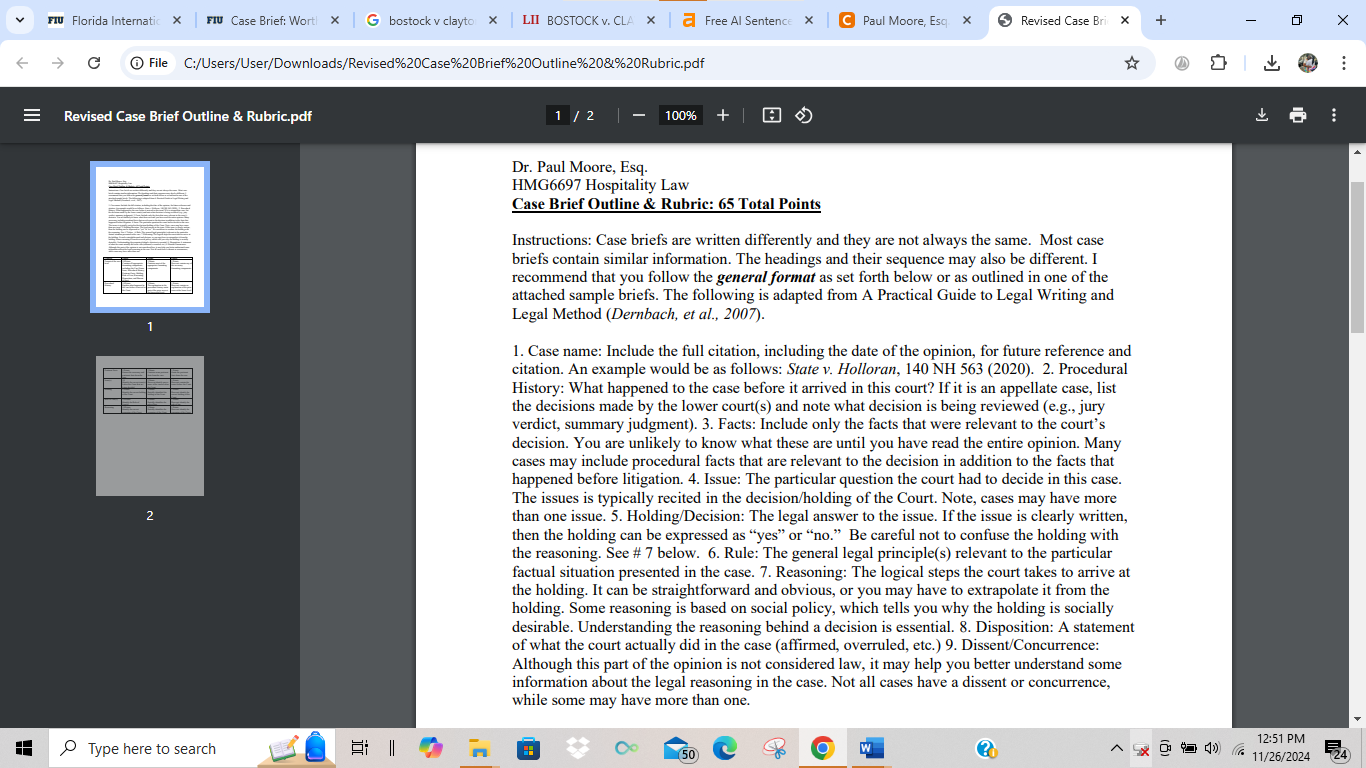
Instructions: Case briefs are written differently and they are not always the same. Most case briefs contain similar information. The headings and their sequence may also be different. I recommend that you follow the general format as set forth below or as outlined in one of the attached sample briefs. The following is adapted from A Practical Guide to Legal Writing and Legal Method Dernbach et al
Case name: Include the full citation, including the date of the opinion, for future reference and citation. An example would be as follows: State v Holloran, NH Procedural History: What happened to the case before it arrived in this court? If it is an appellate case, list the decisions made by the lower courts and note what decision is being reviewed eg jury verdict, summary judgment Facts: Include only the facts that were relevant to the court's decision. You are unlikely to know what these are until you have read the entire opinion. Many cases may include procedural facts that are relevant to the decision in addition to the facts that happened before litigation. Issue: The particular question the court had to decide in this case. The issues is typically recited in the decisionholding of the Court. Note, cases may have more than one issue. HoldingDecision: The legal answer to the issue. If the issue is clearly written, then the holding can be expressed as "yes" or no Be careful not to confuse the holding with the reasoning. See # below. Rule: The general legal principles relevant to the particular factual situation presented in the case. Reasoning: The logical steps the court takes to arrive at the holding. It can be straightforward and obvious, or you may have to extrapolate it from the holding. Some reasoning is based on social policy, which tells you why the holding is socially desirable. Understanding the reasoning behind a decision is essential. Disposition: A statement of what the court actually did in the case affirmed overruled, etc. DissentConcurrence: Although this part of the opinion is not considered law, it may help you better understand some information about the legal reasoning in the case. Not all cases have a dissent or concurrence, while some may have more than one.
Step by Step Solution
There are 3 Steps involved in it
1 Expert Approved Answer
Step: 1 Unlock

Question Has Been Solved by an Expert!
Get step-by-step solutions from verified subject matter experts
Step: 2 Unlock
Step: 3 Unlock
 Study Help