







Question: what ethical principles are involved in this mini case study? What laws or regulations are involved? below is the mini case study attached MINI-CASE STUDY:
what ethical principles are involved in this mini case study? What laws or regulations are involved?
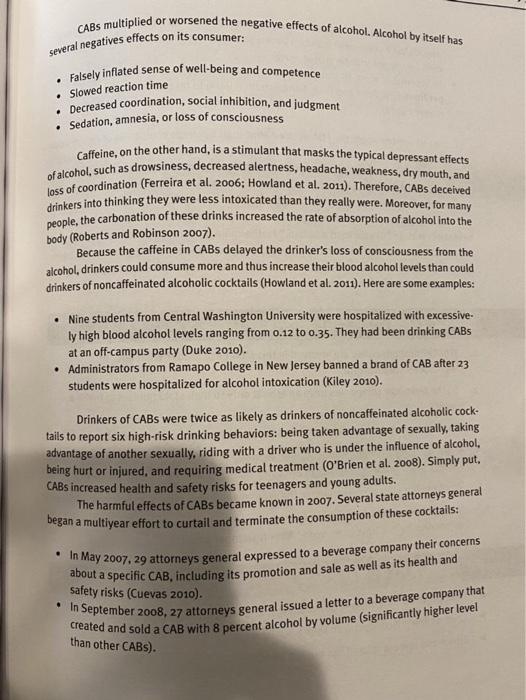
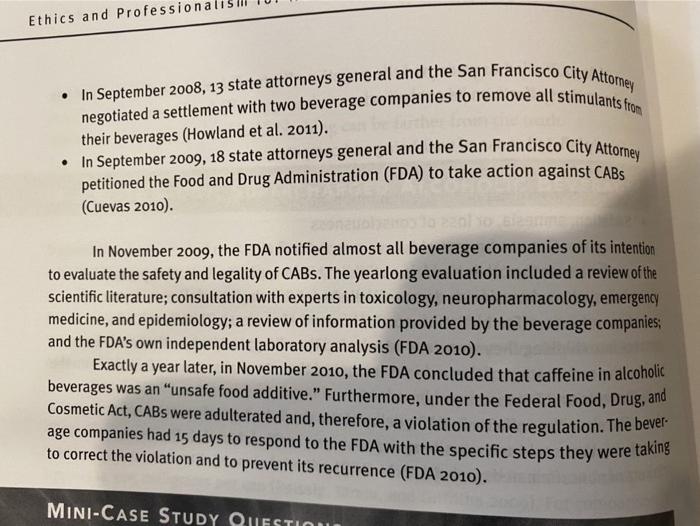
MINI-CASE STUDY: SUPERCHARGED ALCOHOLIC BEVERAGES Supercharged caffeinated cocktails first became available around 2000. Beverage compa nies combined nonalcoholic energy drinks, additives, and alcohol to create drinks known as caffeinated alcoholic beverages (CABs), alcoholic energy drinks, and alcohol mixed with energy drinks. The alcohol used could be malt (beer) or distilled spirits (often vodka), so the alcohol content-which ranged from 6 percent to 9.9 percent-usually exceeded that Nonalcoholic energy drinks dated back to the mid-1980s and contained caffeine, pany had more than six different beverages-nonalcoholic and alcoholic-all packaged graphics of the nonalcoholic and alcoholic versions were extremely alike. In fact, one com- Similarly. For customers, grocery and convenience store clerks, parents, and law enforce ment officers, distinguishing the nonalcoholic version from the alcoholic one was difficult statement, "If it's legal, it's eth of beer (CDC 2014). other plant-based stimulants, carbohydrates and sugar derivatives, taurine (amino acis of metabolism), B-vitamins, and other proprietary ingredients (Ferreira et al. 2006). The "energy" in these beverages came from the caffeine, which ranged in amount from 50 ml. ligrams to 505 milligrams per can (Reissig, Strain, and Griffiths 2009). For comparison, a cup of coffee contains between 80 milligrams and 175 milligrams of caffeine (Weldy 2010). In the early 2000s, the market share of nonalcoholic energy drinks exploded. Between 2001 and 2006, their sales increased a whopping 516 percent (adjusted for inflation) (Simon and Mosher 2007). In 2011, energy drinks accounted for approximately 66 percent of the soft drink market (Itzkoff 2011). The core consumers of nonalcoholic energy drinks were teenagers and young adults (Simon and Mosher 2007). Thirty-one percent of 12- to 17-year- olds and 34 percent of 18-to 24-year olds regularly consumed these beverages (Simon and Mosher 2007). These teenagers and young adults became the targeted market for CABs. CAB marketers used catchy and racy names; bright packaging and bold graphics: websites and social media presence; distribution of free samples; and sponsorships of extreme sport events, such as motocross, wakeboarding, and skateboarding. A particu- larly aggressive marketing ploy was the pricing strategy. CABs ranged in price from $1.53 to $1.59-cheaper than nonalcoholic energy drinks, which cost between $2.03 and $2.07 (Simon and Mosher 2007). Beverage companies created brand confusion between their nonalcoholic energy drinks and their caffeinated cocktails (Simon and Mosher 2007). The bright colors and (Simon and Mosher 2007). Slowed reaction time CABs multiplied or worsened the negative effects of alcohol. Alcohol by itself has several negatives effects on its consumer: Falsely inflated sense of well-being and competence Decreased coordination, social inhibition, and judgment Sedation, amnesia, or loss of consciousness of alcohol, such as drowsiness, decreased alertness, headache, weakness, dry mouth, and In September 2008, 27 attorneys general issued a letter to a beverage company that loss of coordination (Ferreira et al. 2006: Howland et al. 2011). Therefore, CABs deceived drinkers into thinking they were less intoxicated than they really were. Moreover, for many people, the carbonation of these drinks increased the rate of absorption of alcohol into the body (Roberts and Robinson 2007). Because the caffeine in CABs delayed the drinker's loss of consciousness from the alcohol, drinkers could consume more and thus increase their blood alcohol levels than could drinkers of noncaffeinated alcoholic cocktails (Howland et al. 2011). Here are some examples: Nine students from Central Washington University were hospitalized with excessive ly high blood alcohol levels ranging from 0.12 to 0.35. They had been drinking CABS at an off-campus party (Duke 2010). Administrators from Ramapo College in New Jersey banned a brand of CAB after 23 students were hospitalized for alcohol intoxication (Kiley 2010). Drinkers of CABs were twice as likely as drinkers of noncaffeinated alcoholic cock- tails to report six high-risk drinking behaviors: being taken advantage of sexually, taking advantage of another sexually, riding with a driver who is under the influence of alcohol, being hurt or injured, and requiring medical treatment (O'Brien et al. 2008). Simply put, CABs increased health and safety risks for teenagers and young adults. The harmful effects of CABs became known in 2007. Several state attorneys general began a multiyear effort to curtail and terminate the consumption of these cocktails: In May 2007, 29 attorneys general expressed to a beverage company their concerns about a specific CAB, including its promotion and sale as well as its health and safety risks (Cuevas 2010). created and sold a CAB with 8 percent alcohol by volume (significantly higher level than other CABS). Ethics and Profession In September 2008, 13 state attorneys general and the San Francisco City Attorney negotiated a settlement with two beverage companies to remove all stimulants from In September 2009, 18 state attorneys general and the San Francisco City Attorney petitioned the Food and Drug Administration (FDA) to take action against CABS (Cuevas 2010). their beverages (Howland et al. 2011). In November 2009, the FDA notified almost all beverage companies of its intention to evaluate the safety and legality of CABs. The yearlong evaluation included a review of the scientific literature; consultation with experts in toxicology, neuropharmacology, emergency medicine, and epidemiology; a review of information provided by the beverage companies: and the FDA's own independent laboratory analysis (FDA 2010). Exactly a year later, in November 2010, the FDA concluded that caffeine in alcoholic beverages was an unsafe food additive." Furthermore, under the Federal Food, Drug, and Cosmetic Act, CABs were adulterated and therefore, a violation of the regulation. The bever- age companies had 15 days to respond to the FDA with the specific steps they were taking to correct the violation and to prevent its recurrence (FDA 2010). MINI-CASE STUDY QUESTIONS
below is the mini case study attached 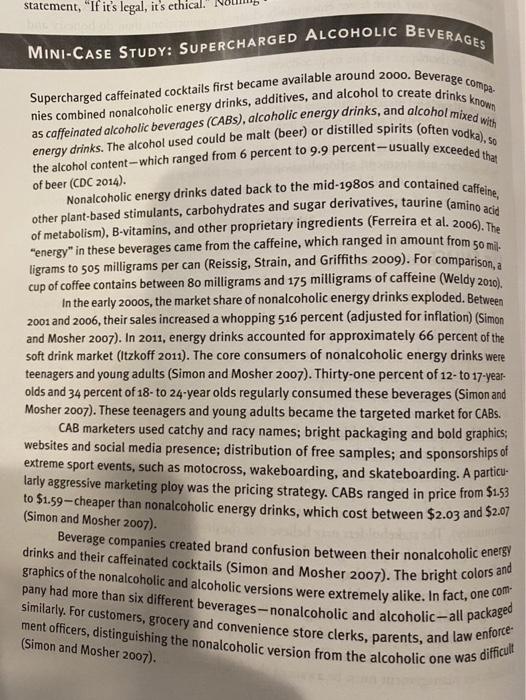
Step by Step Solution
There are 3 Steps involved in it
1 Expert Approved Answer
Step: 1 Unlock

Question Has Been Solved by an Expert!
Get step-by-step solutions from verified subject matter experts
Step: 2 Unlock
Step: 3 Unlock
 Study Help