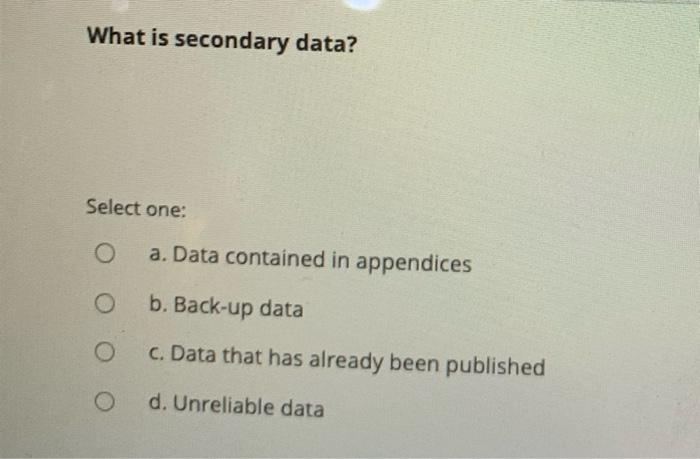
Question: What is secondary data? Select one: a. Data contained in appendices b. Back-up data O c. Data that has already been published d. Unreliable data
What is secondary data? Select one: a. Data
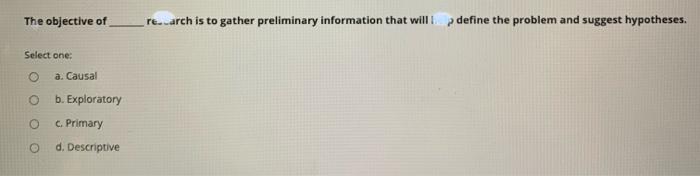
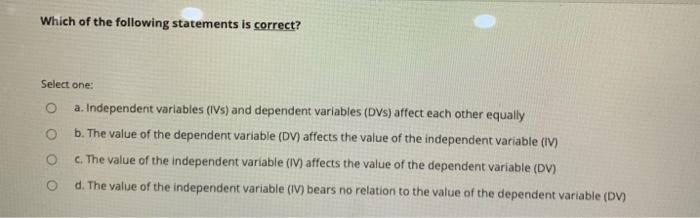
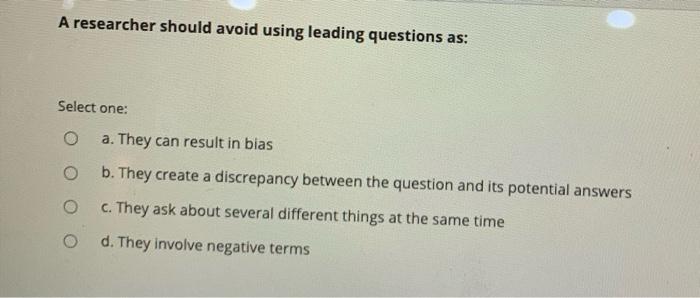
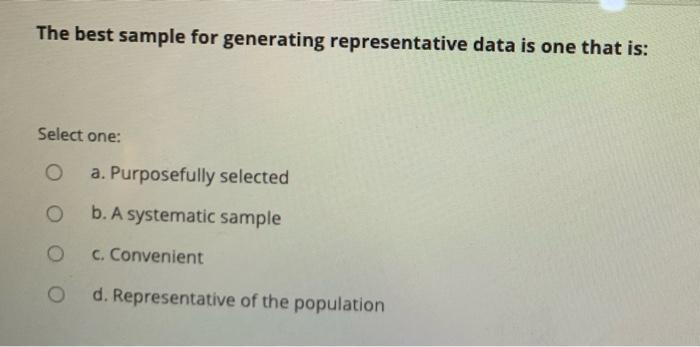
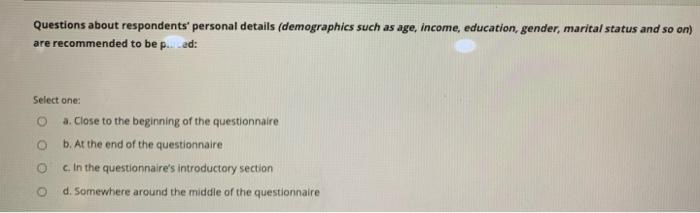
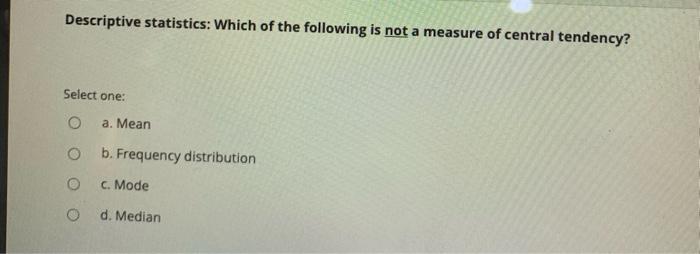
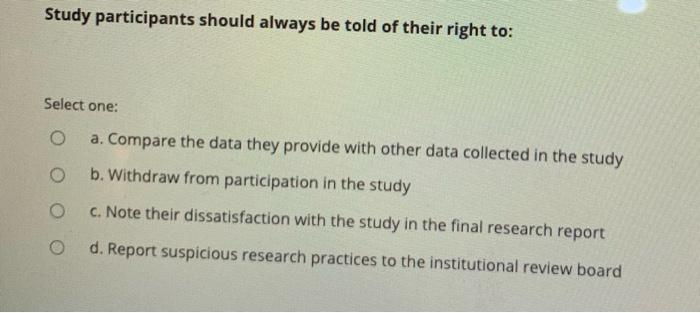
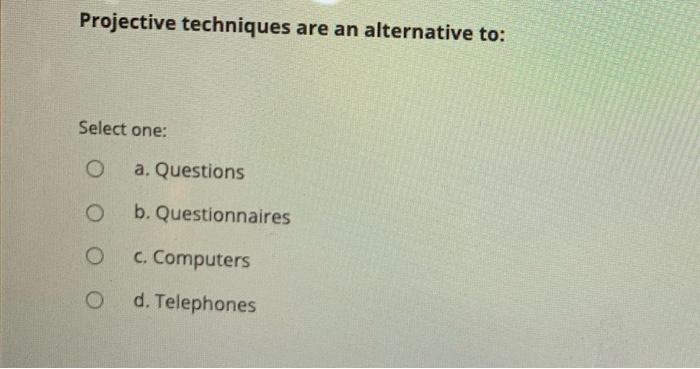
What is secondary data? Select one: a. Data contained in appendices b. Back-up data O c. Data that has already been published d. Unreliable data Study participants should always be told of their right to: Select one: O a. Compare the data they provide with other data collected in the study b. Withdraw from participation in the study C. Note their dissatisfaction with the study in the final research report O d. Report suspicious research practices to the institutional review board Projective techniques are an alternative to: Select one: a. Questions O b. Questionnaires c. Computers d. Telephones The objective of re_arch is to gather preliminary information that will lp define the problem and suggest hypotheses. Select one: a. Causal b. Exploratory c. Primary d. Descriptive Which of the following statements is correct? Select one: O a. Independent variables (IVs) and dependent variables (DVS) affect each other equally b. The value of the dependent variable (DV) affects the value of the independent variable (IV) O c. The value of the independent variable (IV) affects the value of the dependent variable (DV) d. The value of the independent variable (IV) bears no relation to the value of the dependent variable (DV) A researcher should avoid using leading questions as: Select one: a. They can result in bias O b. They create a discrepancy between the question and its potential answers o c. They ask about several different things at the same time d. They involve negative terms The best sample for generating representative data is one that is: Select one: O a. Purposefully selected b. A systematic sample O c. Convenient d. Representative of the population Questions about respondents' personal details (demographics such as age, income, education, gender, marital status and so on) are recommended to be pad: Select one: a. Close to the beginning of the questionnaire b. At the end of the questionnaire oc. In the questionnaire's introductory section d. Somewhere around the middle of the questionnaire Descriptive statistics: Which of the following is not a measure of central tendency? Select one: a. Mean b. Frequency distribution C. Mode d. Median
Step by Step Solution

There are 3 Steps involved in it

1 Expert Approved Answer
Step: 1 Unlock blur-text-image

Question Has Been Solved by an Expert!

Get step-by-step solutions from verified subject matter experts

Step: 2 Unlock
Step: 3 Unlock

Students Have Also Explored These Related General Management Questions!