







Question: What would be the following output using Java? Activity 1. Implement the hierarchy of classes shown in the UML diagram below: Person -id: int Employee
What would be the following output using Java?
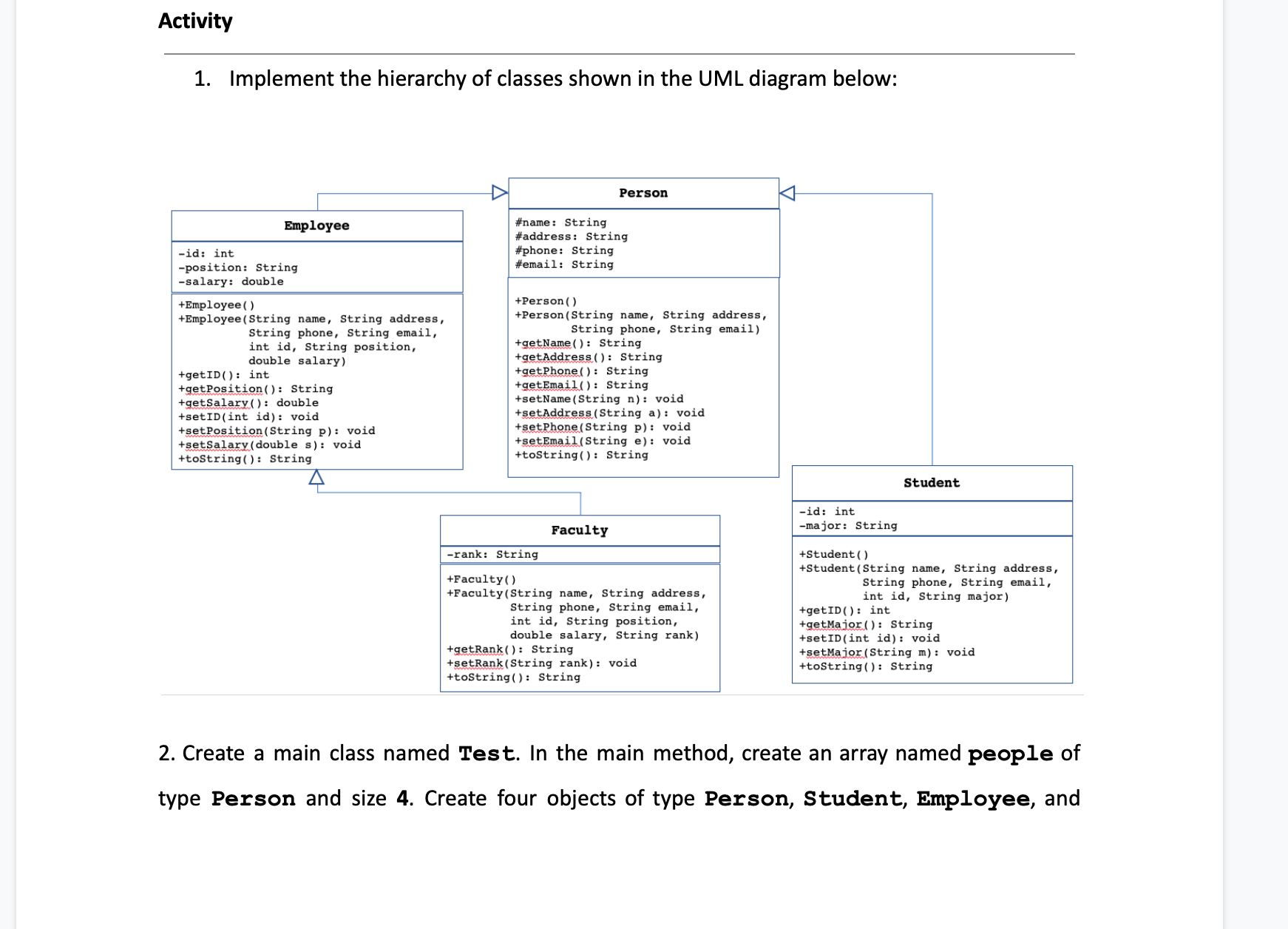
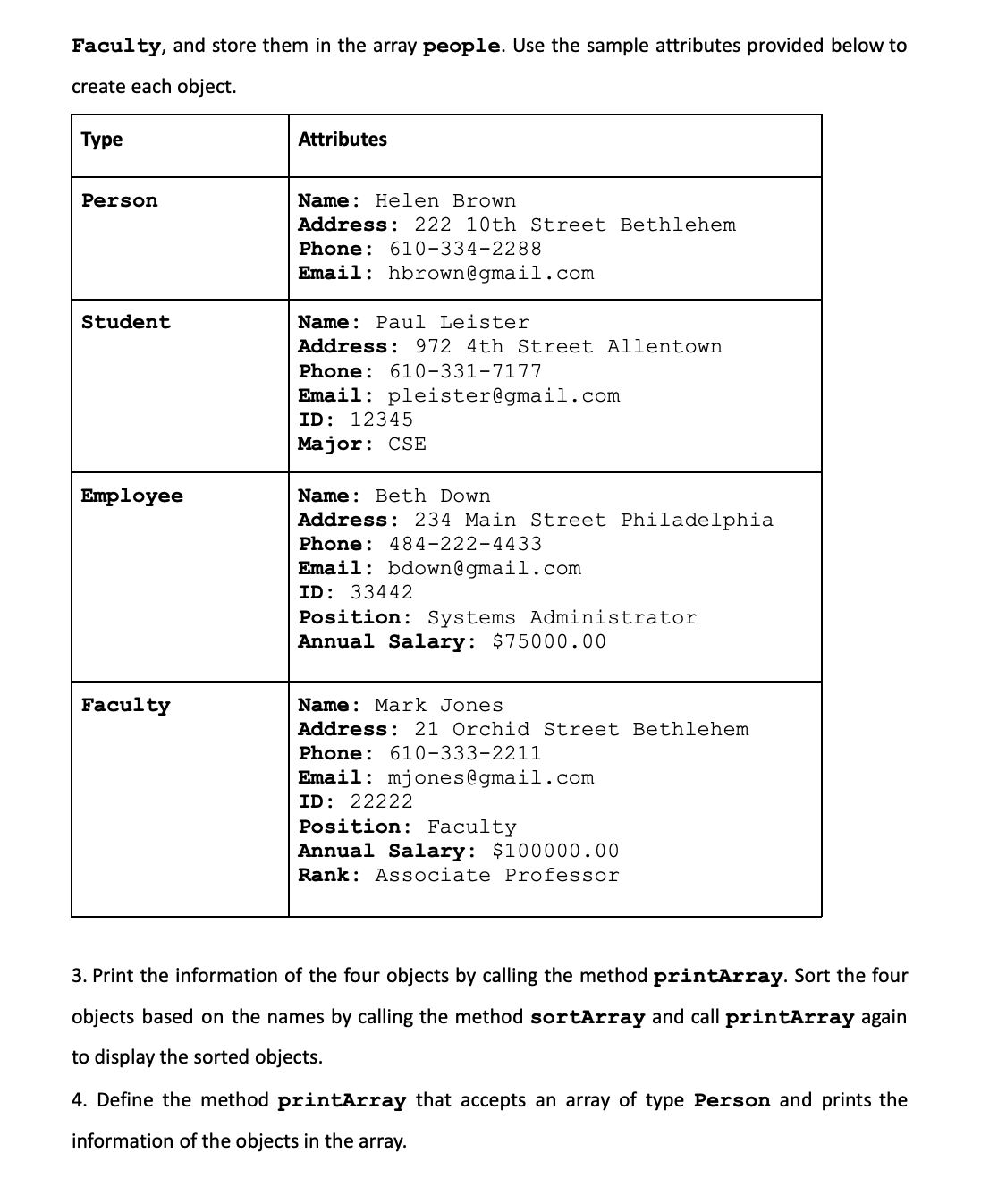
Activity 1. Implement the hierarchy of classes shown in the UML diagram below: Person -id: int Employee -position: String -salary: double +Employee() +Employee (String name, String address, String phone, String email, int id, String position, double salary) +getID(): int +getPosition(): String +getSalary(): double +setID (int id): void +setPosition(String p): void +setSalary (double s): void +toString(): String #name: String #address: String #phone: String #email: String +Person() +Person(String name, String address, String phone, String email) +getName(): String +getAddress(): String +getPhone(): String +getEmail(): String +setName(String n): void +setAddress (String a): void +setPhone(String p): void +setEmail (String e): void +toString(): String Student -rank: String +Faculty() Faculty +Faculty (String name, String address, String phone, String email, int id, String position, double salary, String rank) +getRank(): String +setRank(String rank): void +toString(): String -id: int -major: String +Student() +Student (String name, String address, String phone, String email, int id, String major) +getID(): int +getMajor(): String +setID (int id): void +setMajor(String m): void +toString(): String 2. Create a main class named Test. In the main method, create an array named people of type Person and size 4. Create four objects of type Person, Student, Employee, and
Step by Step Solution
There are 3 Steps involved in it
Based on the provided information and the given UML diagram heres the implementation of the classes class Person String name String address String pho... View full answer

Get step-by-step solutions from verified subject matter experts
 Study Help