







Question: When a bond sells for more than its face amount, the difference between the selling price and the face amount is called a . A
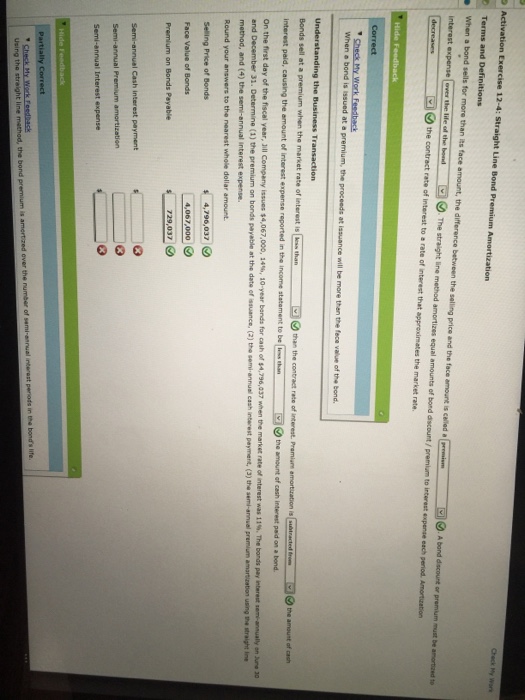
When a bond sells for more than its face amount, the difference between the selling price and the face amount is called a . A bond discount or premium must be authorized to interest expense . The straight line method amortizes equal amounts of bond discount/premium to interest expense each period. Amortization the contract rate of interest to a rate of interest that approximates the market rate. Bond sell at a premium when the market rate of interest is that the contract rate of interest. Premeium amortination is the amount of cash interest paid, causing the amount of interest expense reported in the income statement to be the amount of cash interest paid on a bond. On the first day of the fiscal year, Jill company issues $4,067,000, 14%, 10-year bonds for cash of $4,796,037 when the market rate of interest was 11%. The bonds pay interest semi-annually on June 20 and December 31. Determine the premium on bonds payable at the date of issuance, the semi-annual cash interest payment the semi-annual premium amartization using the straight line method, and the semi-annual interest expense
Step by Step Solution
There are 3 Steps involved in it

Get step-by-step solutions from verified subject matter experts
 Study Help