







Question: When executing a handbrake turn, a car's front wheels continue to roll (static friction) while the back wheels slide (kinetic friction). The velocity and mass
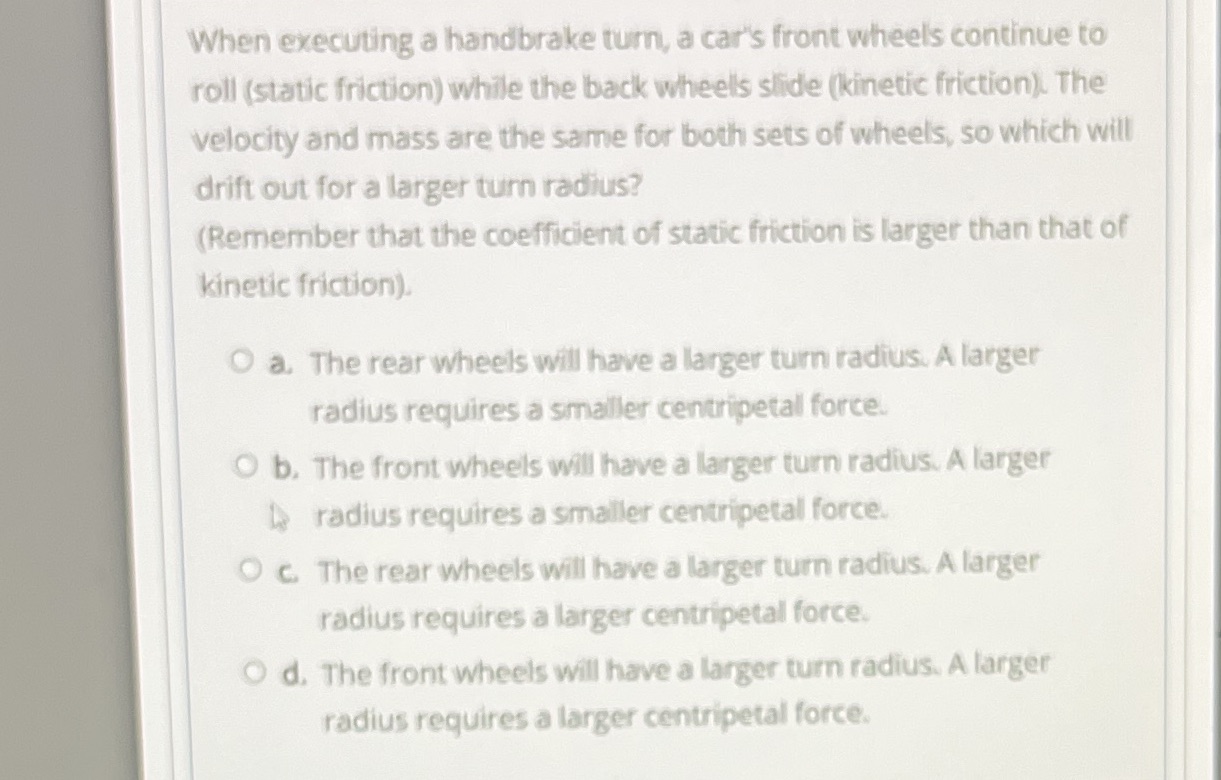
When executing a handbrake turn, a car's front wheels continue to roll (static friction) while the back wheels slide (kinetic friction). The velocity and mass are the same for both sets of wheels, so which will drift out for a larger turn radius? (Remember that the coefficient of static friction is larger than that of kinetic friction) O a. The rear wheels will have a larger turn radius. A larger radius requires a smaller centripetal force. O b. The front wheels will have a larger turn radius. A larger 1 radius requires a smaller centripetal force. O c. The rear wheels will have a larger turn radius. A larger radius requires a larger centripetal force. O d. The front wheels will have a larger turn radius. A larger radius requires a larger centripetal force
Step by Step Solution
There are 3 Steps involved in it

Get step-by-step solutions from verified subject matter experts
 Study Help