







Question: When responding to a case study or scenario, it is important to ensure that the human resources practitioner is able to use a consistent, fact-based,
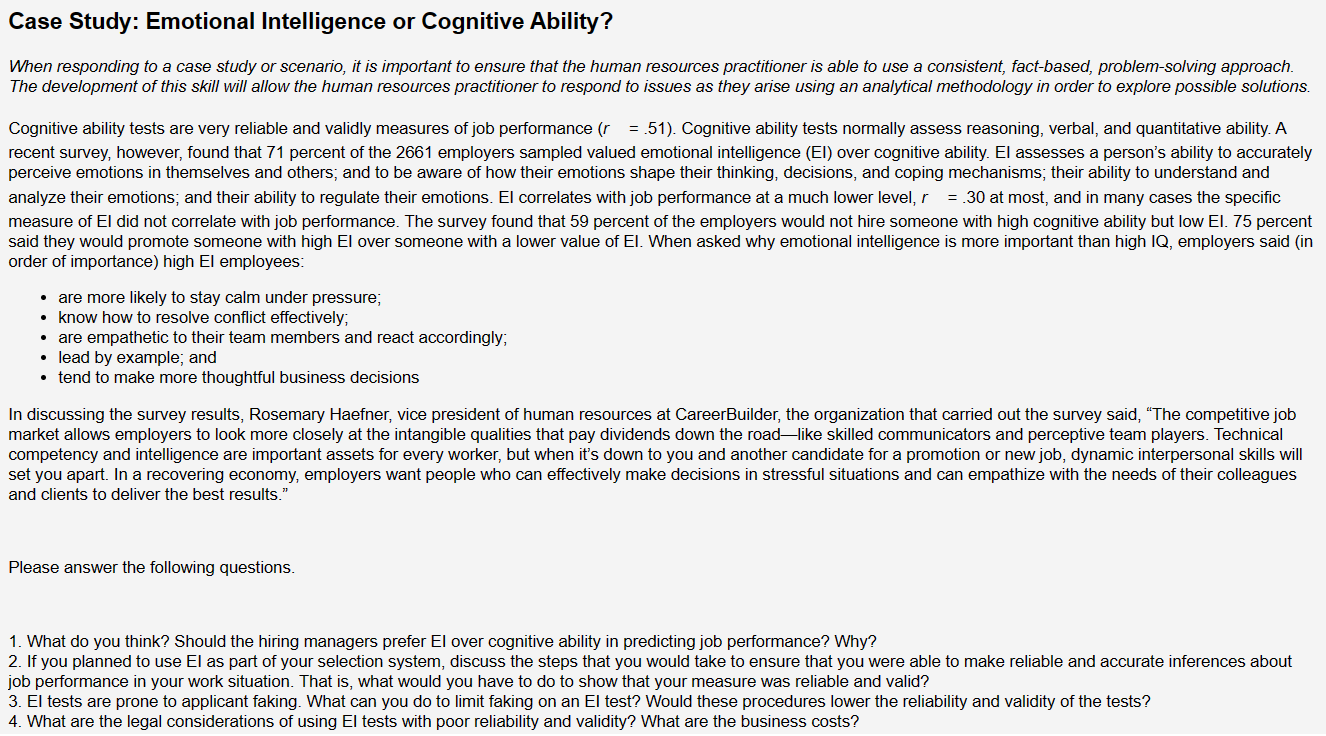
When responding to a case study or scenario, it is important to ensure that the human resources practitioner is able to use a consistent, fact-based, problem-solving approach. The development of this skill will allow the human resources practitioner to respond to issues as they arise using an analytical methodology in order to explore possible solutions. Cognitive ability tests are very reliable and validly measures of job performance ( r=.51). Cognitive ability tests normally assess reasoning, verbal, and quantitative ability. A recent survey, however, found that 71 percent of the 2661 employers sampled valued emotional intelligence (EI) over cognitive ability. El assesses a person's ability to accurately perceive emotions in themselves and others; and to be aware of how their emotions shape their thinking, decisions, and coping mechanisms; their ability to understand and analyze their emotions; and their ability to regulate their emotions. El correlates with job performance at a much lower level, r=.30 at most, and in many cases the specific measure of El did not correlate with job performance. The survey found that 59 percent of the employers would not hire someone with high cognitive ability but low El. 75 percent said they would promote someone with high EI over someone with a lower value of EI. When asked why emotional intelligence is more important than high IQ, employers said (in order of importance) high El employees: - are more likely to stay calm under pressure; - know how to resolve conflict effectively; - are empathetic to their team members and react accordingly; - lead by example; and - tend to make more thoughtful business decisions In discussing the survey results, Rosemary Haefner, vice president of human resources at CareerBuilder, the organization that carried out the survey said, "The competitive job market allows employers to look more closely at the intangible qualities that pay dividends down the road-like skilled communicators and perceptive team players. Technical competency and intelligence are important assets for every worker, but when it's down to you and another candidate for a promotion or new job, dynamic interpersonal skills will set you apart. In a recovering economy, employers want people who can effectively make decisions in stressful situations and can empathize with the needs of their colleagues and clients to deliver the best results." Please answer the following questions. 1. What do you think? Should the hiring managers prefer El over cognitive ability in predicting job performance? Why? 2. If you planned to use El as part of your selection system, discuss the steps that you would take to ensure that you were able to make reliable and accurate inferences about job performance in your work situation. That is, what would you have to do to show that your measure was reliable and valid? 3. El tests are prone to applicant faking. What can you do to limit faking on an El test? Would these procedures lower the reliability and validity of the tests? 4. What are the legal considerations of using El tests with poor reliability and validity? What are the business costs
Step by Step Solution
There are 3 Steps involved in it

Get step-by-step solutions from verified subject matter experts
 Study Help