







Question: When we write the demand function for a good as Q = D(p), which variable, Q or p, is endogenous and which is exogenous? (b)
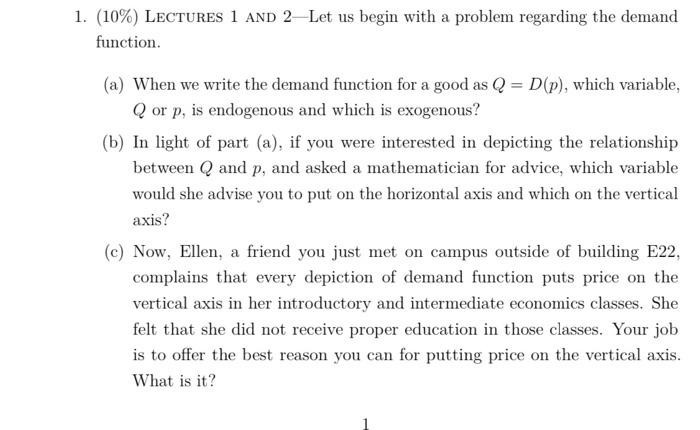
1. (10%) LECTURES 1 AND 2-Let us begin with a problem regarding the demand function. (a) When we write the demand function for a good as Q = D(p), which variable, Q or p, is endogenous and which is exogenous? (b) In light of part (a), if you were interested in depicting the relationship between Q and p, and asked a mathematician for advice, which variable would she advise you to put on the horizontal axis and which on the vertical axis? (C) Now, Ellen, a friend you just met on campus outside of building E22, complains that every depiction of demand function puts price on the vertical axis in her introductory and intermediate economics classes. She felt that she did not receive proper education in those classes. Your job is to offer the best reason you can for putting price on the vertical axis. What is it
Step by Step Solution
There are 3 Steps involved in it

Get step-by-step solutions from verified subject matter experts
 Study Help