







Question: When you have finished reading assignment 1, provide a list (500-750 word) of three innovations that you feel changed the world but were not included
When you have finished reading assignment 1, provide a list (500-750 word) of three innovations that you feel changed the world but were not included in this article (in other words, they should have been included). Do not just list the innovations, but provide reasons to support your belief these three innovations should have made the list of 12.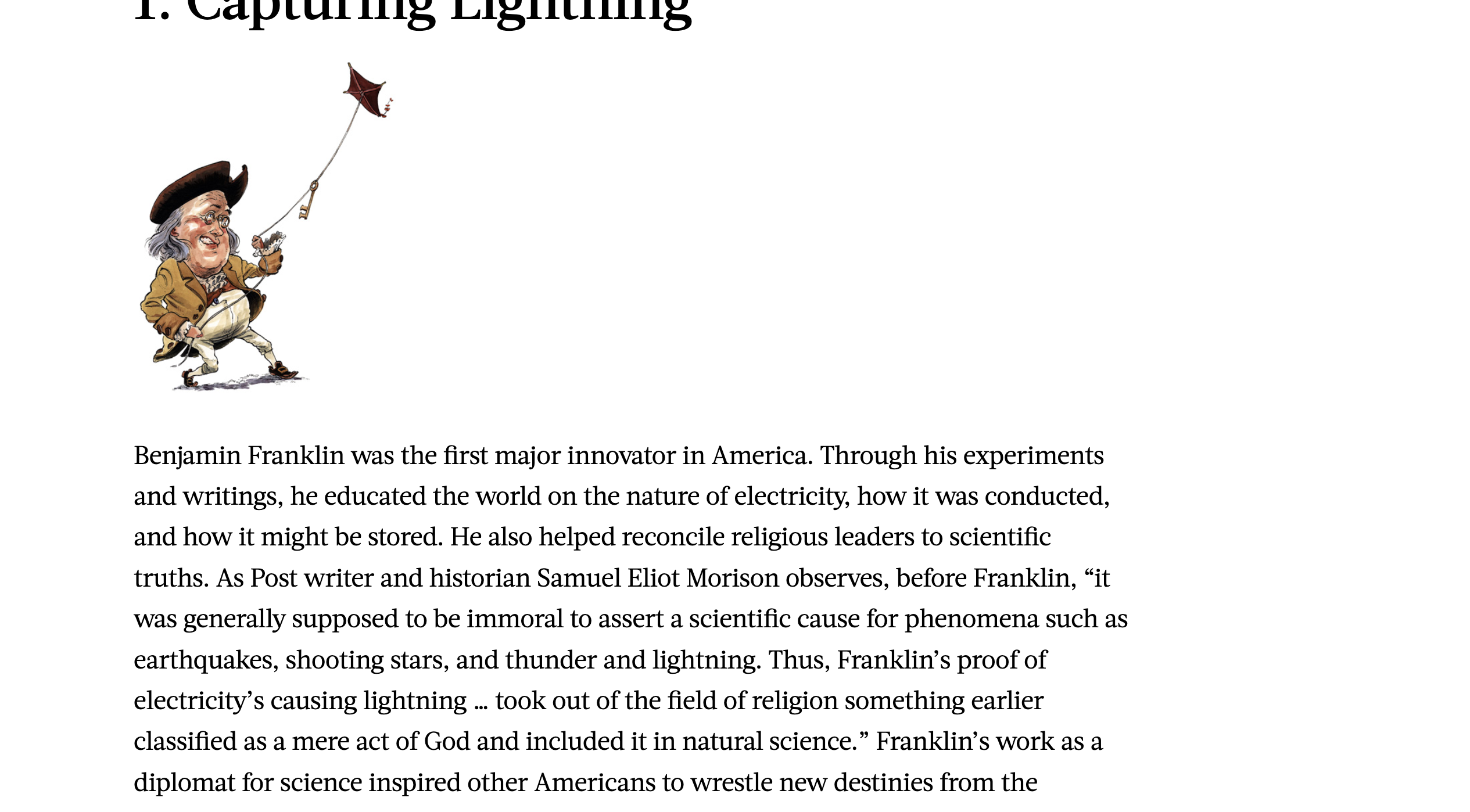
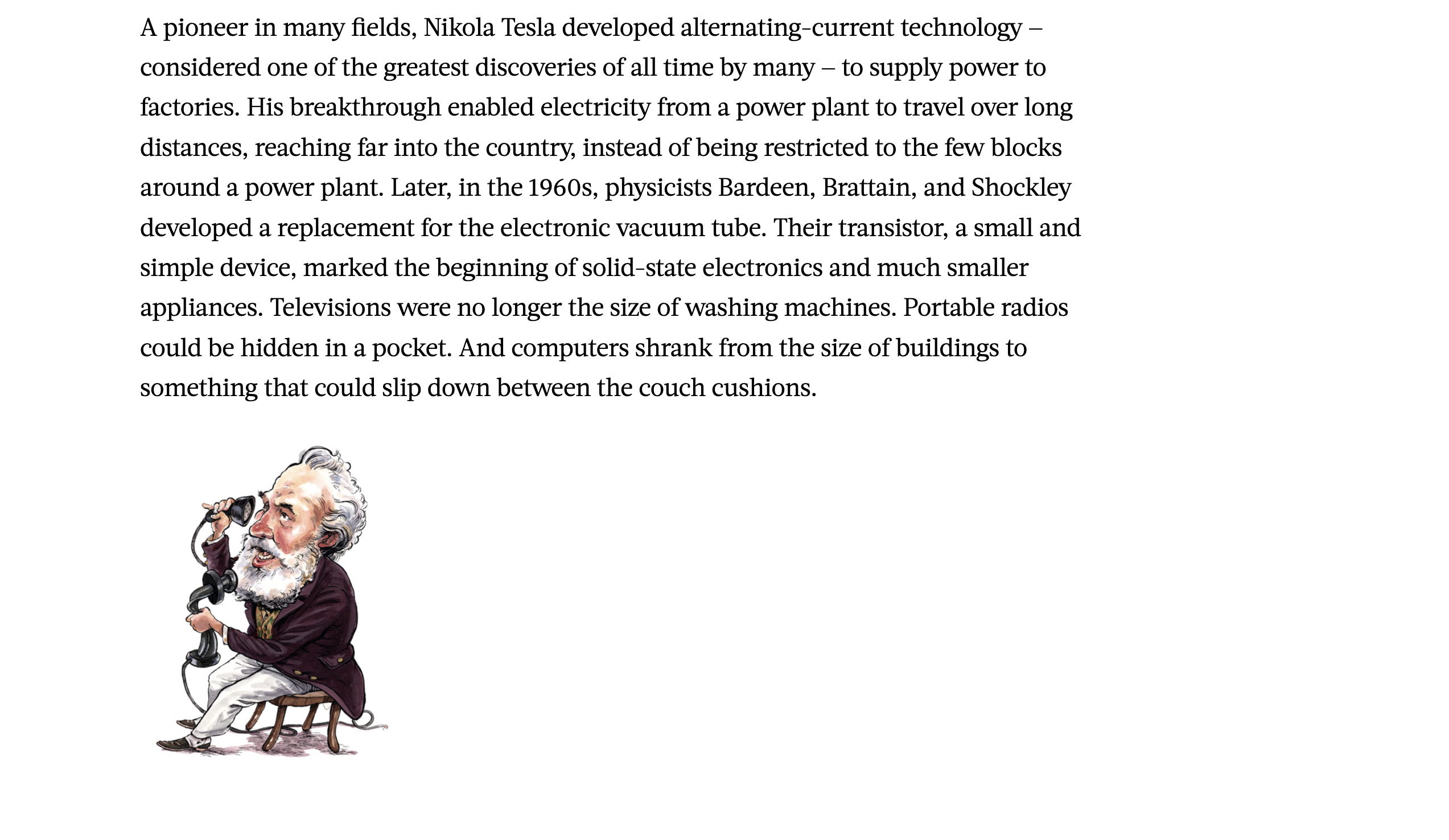
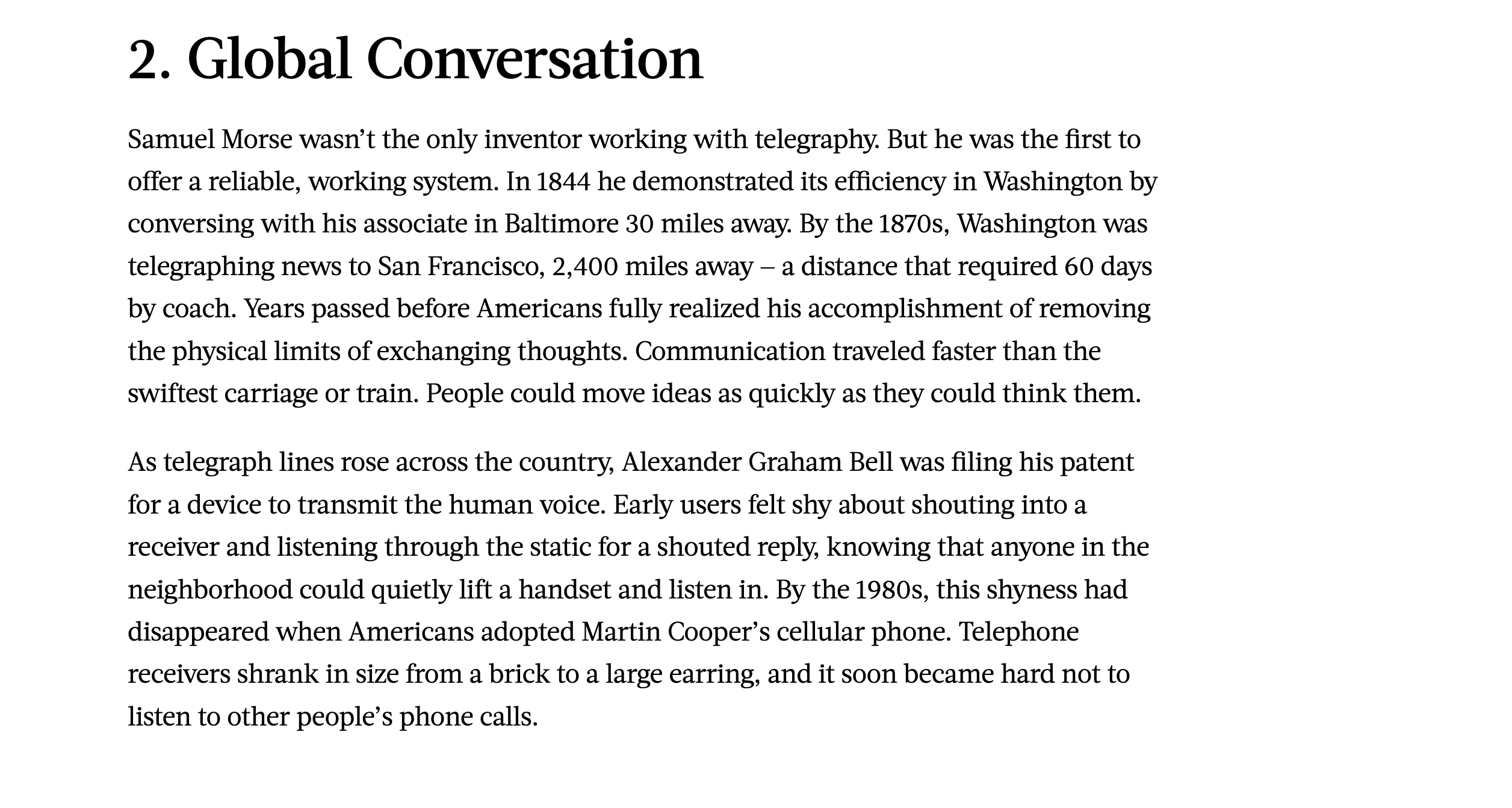
A pioneer in many fields, Nikola Tesla developed alternating-current technology considered one of the greatest discoveries of all time by many - to supply power to factories. His breakthrough enabled electricity from a power plant to travel over long distances, reaching far into the country, instead of being restricted to the few blocks around a power plant. Later, in the 1960s, physicists Bardeen, Brattain, and Shockley developed a replacement for the electronic vacuum tube. Their transistor, a small and simple device, marked the beginning of solid-state electronics and much smaller appliances. Televisions were no longer the size of washing machines. Portable radios could be hidden in a pocket. And computers shrank from the size of buildings to something that could slip down between the couch cushions. 2. Global Conversation Samuel Morse wasn't the only inventor working with telegraphy. But he was the first to offer a reliable, working system. In 1844 he demonstrated its efficiency in Washington by conversing with his associate in Baltimore 30 miles away. By the 1870s, Washington was telegraphing news to San Francisco, 2,400 miles away - a distance that required 60 days by coach. Years passed before Americans fully realized his accomplishment of removing the physical limits of exchanging thoughts. Communication traveled faster than the swiftest carriage or train. People could move ideas as quickly as they could think them. As telegraph lines rose across the country, Alexander Graham Bell was filing his patent for a device to transmit the human voice. Early users felt shy about shouting into a receiver and listening through the static for a shouted reply, knowing that anyone in the neighborhood could quietly lift a handset and listen in. By the 1980s, this shyness had disappeared when Americans adopted Martin Cooper's cellular phone. Telephone receivers shrank in size from a brick to a large earring, and it soon became hard not to listen to other people's phone calls. 1. Laptuinty Ligntiming Benjamin Franklin was the first major innovator in America. Through his experiments and writings, he educated the world on the nature of electricity, how it was conducted, and how it might be stored. He also helped reconcile religious leaders to scientific truths. As Post writer and historian Samuel Eliot Morison observes, before Franklin, "it was generally supposed to be immoral to assert a scientific cause for phenomena such as earthquakes, shooting stars, and thunder and lightning. Thus, Franklin's proof of electricity's causing lightning ... took out of the field of religion something earlier classified as a mere act of God and included it in natural science. Franklin's work as a diplomat for science inspired other Americans to wrestle new destinies from the
Step by Step Solution
There are 3 Steps involved in it

Get step-by-step solutions from verified subject matter experts
 Study Help