



Question: Where did they get the 0.975 from in step 3 of 15-20. ASSIGNMENT MATERIAL 65 15-19 Support-department cost allocation; direct and step-down methods. Phoenix Partners
Where did they get the 0.975 from in step 3 of 15-20.
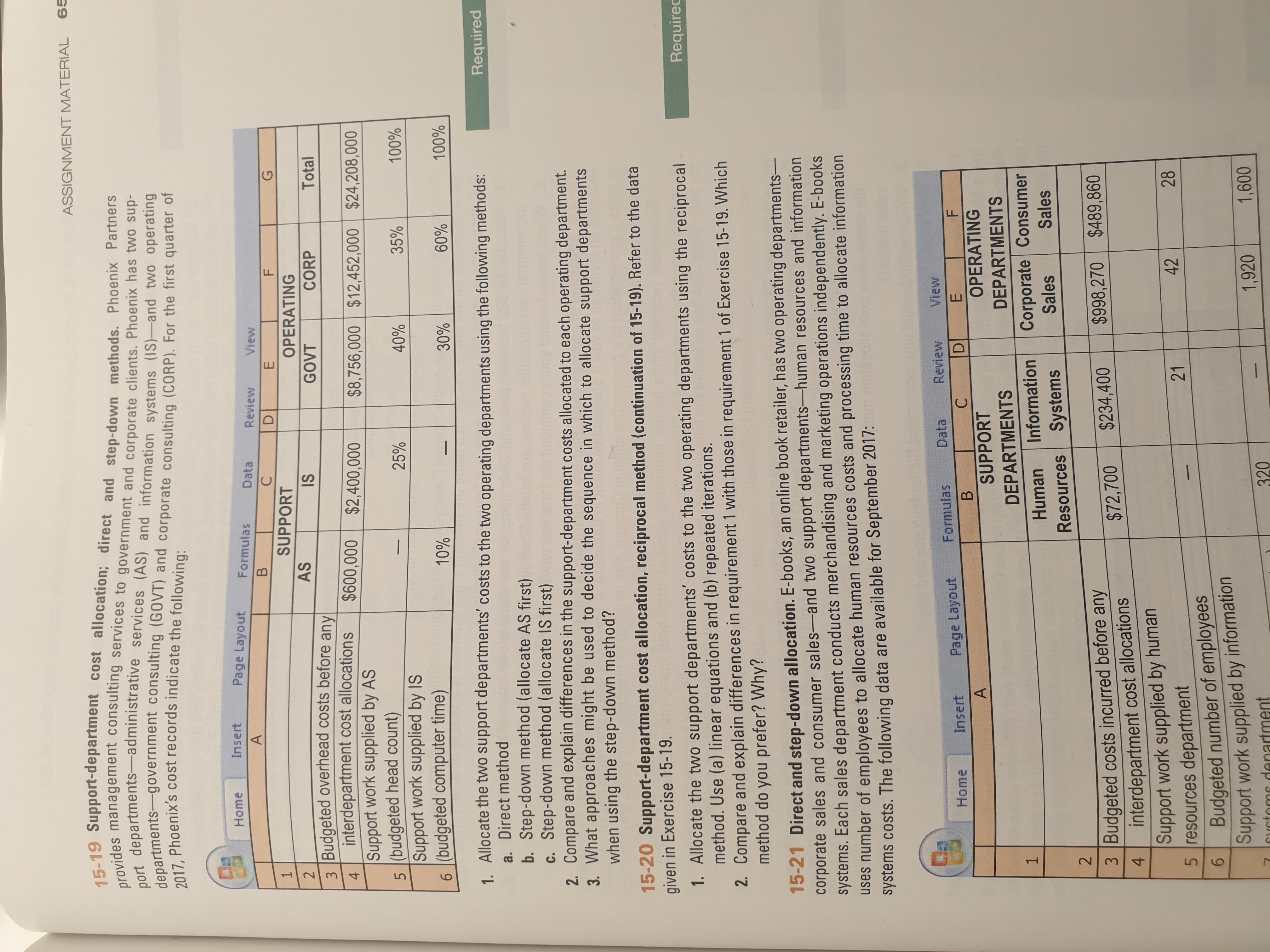
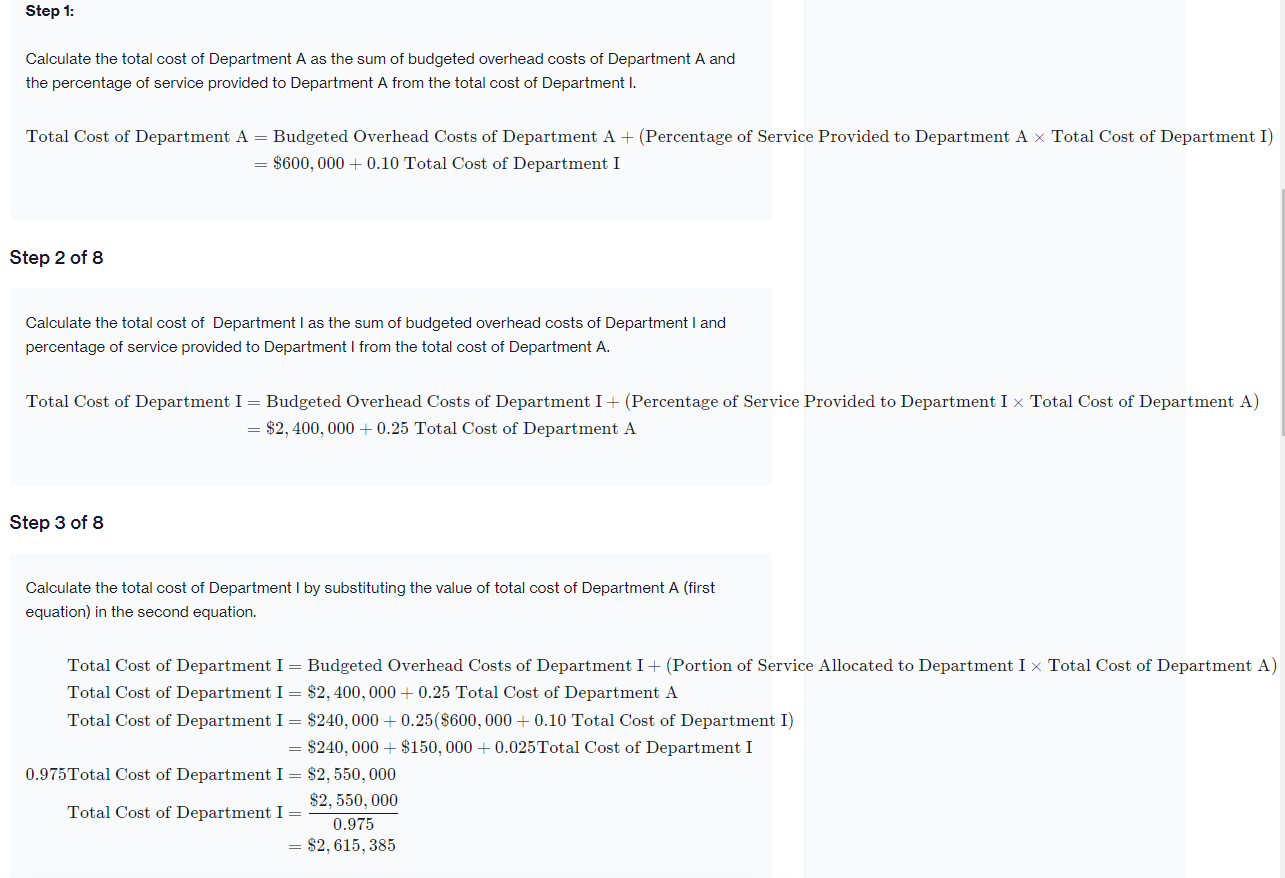
ASSIGNMENT MATERIAL 65 15-19 Support-department cost allocation; direct and step-down methods. Phoenix Partners provides management consulting services to government and corporate clients. Phoenix has two sup- port departments-administrative services (AS) and information systems (IS)-and two operating departments-government consulting (GOVT) and corporate consulting (CORP). For the first quarter of 2017, Phoenix's cost records indicate the following: Home Insert Page Layout A Formulas Data B Review View 1 D E SUPPORT G 2 AS OPERATING IS 3 Budgeted overhead costs before any GOVT CORP Total 4 interdepartment cost allocations $600,000 Support work supplied by AS $2,400,000 $8,756,000 $12,452,000 $24,208,000 5 (budgeted head count) Support work supplied by IS 25% 40% 35% 100% (budgeted computer time) 10% 30% 60% 100% 1. Allocate the two support departments' costs to the two operating departments using the following methods: a. Direct method Required b. Step-down method (allocate AS first) c. Step-down method (allocate IS first) 2. Compare and explain differences in the support-department costs allocated to each operating department. 3. What approaches might be used to decide the sequence in which to allocate support departments when using the step-down method? 15-20 Support-department cost allocation, reciprocal method (continuation of 15-19). Refer to the data given in Exercise 15-19. 1. Allocate the two support departments' costs to the two operating departments using the reciprocal Require method. Use (a) linear equations and (b) repeated iterations. 2. Compare and explain differences in requirement 1 with those in requirement 1 of Exercise 15-19. Which method do you prefer? Why? 15-21 Direct and step-down allocation. E-books, an online book retailer, has two operating departments- corporate sales and consumer sales-and two support departments-human resources and information systems. Each sales department conducts merchandising and marketing operations independently. E-books uses number of employees to allocate human resources costs and processing time to allocate information systems costs. The following data are available for September 2017: Formulas Data Review View Home Insert Page Layout B C D E A SUPPORT OPERATING DEPARTMENTS DEPARTMENTS 1 Human Information Corporate Consumer Resources Systems Sales Sales 2 3 Budgeted costs incurred before any $72,700 $234,400 $998,270 $489,860 4 interdepartment cost allocations Support work supplied by human 5 resources department 21 42 28 6 Budgeted number of employees Support work supplied by information 1,920 1,600 320Step 1: Calculate the total cost of Department A as the sum of budgeted overhead costs of Department A and the percentage of service provided to Department A from the total cost of Department |. Total Cost of Department A = Budgeted Overhead Costs of Department A + (Percentage of Service Provided to Department A x Total Cost of Department I) 2 $600, 000 + 0.10 Total Cost of Department I Step 2 of 8 Calculate the total cost of Department l as the sum of budgeted overhead costs of Department | and percentage of service provided to Department I from the total cost of Department A. Total Cost of Department I = Budgeted Overhead Costs of Department I -l (Percentage of Service Provided to Department I x Total Cost of Department A) = $2, 400, 000 + 0.25 Total Cost of Department A Step 3 of 8 Calculate the total cost of Department | by substituting the value of total cost of Department A (first equation) in the second equation. Total Cost of Department I = Budgeted Overhead Costs of Department I + (Portion of Service Allocated to Department I x Total Cost of Department A] Total Cost of Department I = $2,400,000 + 0.25 Total Cost of Department A Total Cost of Department I 2 $240,000 0.25[$600,000 -l 0.10 Total Cost of Department I) = $240,000 -- $150, 000 -l- 0.025Total Cost of Department I 0.975Total Cost of Department I = $2,550,000 $2, 550, 000 0.975 2 $2,615, 385 Total Cost of Department I =
Step by Step Solution
There are 3 Steps involved in it

Get step-by-step solutions from verified subject matter experts