



Question: While we are not working in teams for our portfolio projects, we are working in teams throughout our weekly discussions. Think about the Tuckmans four
While we are not working in teams for our portfolio projects, we are working in teams throughout our weekly discussions. Think about the Tuckmans four stages as explained in chapter three: forming, storming, norming, and performing. Looking back at the discussions in this class or in your previous classes, identify the ways you have seen the class working one or more of these stages. If you have not seen this playing out in your course discussions, describe a time when you have seen these stages playing out in your professional or personal experiences.
How might your awareness of these stages help you in future collaborative projects? Give examples and justify your response.
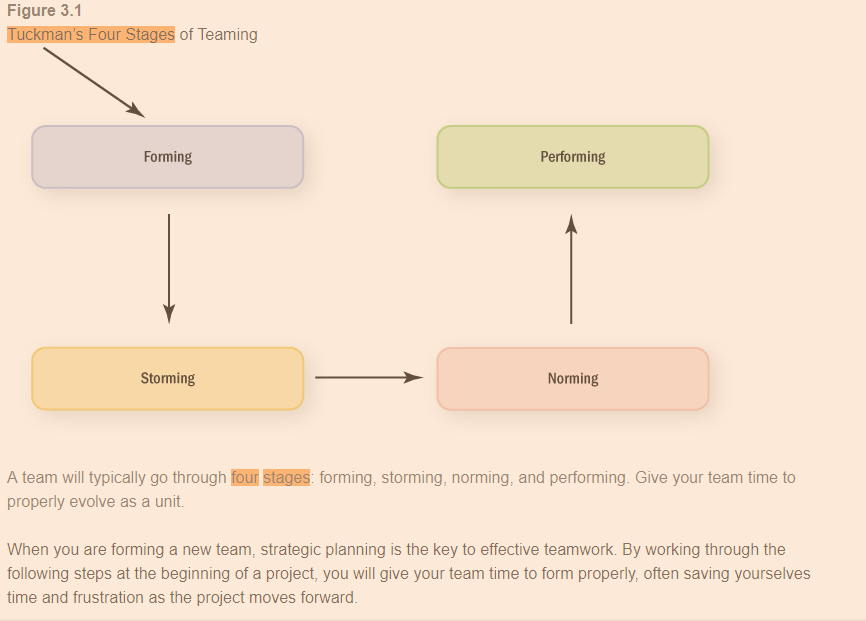
Forming: Strategic Planning 3.2 Use strategic planning to form a team and begin a project. During the forming stage, your team should define its mission and objectives, divide up the tasks, and establish a calendar. When a team is first created, the members are usually excited and optimistic about the new project. They are often a little anxious, because each person is uncertain about the others' expectations. So, in the forming stage, members should spend time getting to know each other and assessing each other's strengths and abilities. Figure 3.1 Tuckman's Four Stages of Teaming Figure 3.1 Tuckman's Four Stages of Teaming Forming Performing Storming Norming A team will typically go through four stages: forming, storming, norming, and performing. Give your team time to properly evolve as a unit. When you are forming a new team, strategic planning is the key to effective teamwork. By working through the following steps at the beginning of a project, you will give your team time to form properly, often saving yourselves time and frustration as the project moves forward. Forming: Strategic Planning 3.2 Use strategic planning to form a team and begin a project. During the forming stage, your team should define its mission and objectives, divide up the tasks, and establish a calendar. When a team is first created, the members are usually excited and optimistic about the new project. They are often a little anxious, because each person is uncertain about the others' expectations. So, in the forming stage, members should spend time getting to know each other and assessing each other's strengths and abilities. Figure 3.1 Tuckman's Four Stages of Teaming Figure 3.1 Tuckman's Four Stages of Teaming Forming Performing Storming Norming A team will typically go through four stages: forming, storming, norming, and performing. Give your team time to properly evolve as a unit. When you are forming a new team, strategic planning is the key to effective teamwork. By working through the following steps at the beginning of a project, you will give your team time to form properly, often saving yourselves time and frustration as the project moves forward
Step by Step Solution
There are 3 Steps involved in it

Get step-by-step solutions from verified subject matter experts