



Question: With specific solution, thanks 1. Marc graduates with $10,000 in debt, on which he must make monthly payments. The annual interest rate is 6.6% (compounded
 With specific solution, thanks
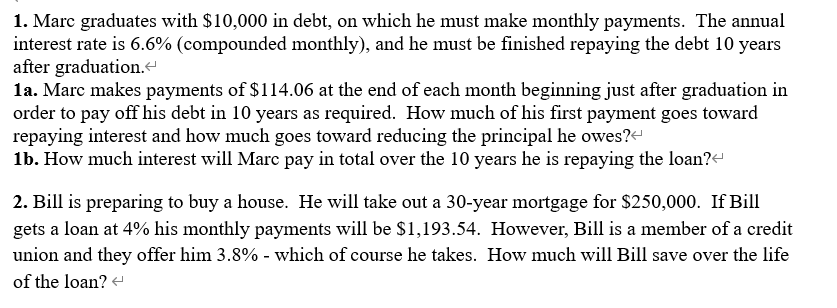
1. Marc graduates with $10,000 in debt, on which he must make monthly payments. The annual interest rate is 6.6% (compounded monthly), and he must be finished repaying the debt 10 years after graduation. 1a. Marc makes payments of $114.06 at the end of each month beginning just after graduation in order to pay off his debt in 10 years as required. How much of his first payment goes toward repaying interest and how much goes toward reducing the principal he owes?" 1b. How much interest will Marc pay in total over the 10 years he is repaying the loan? 2. Bill is preparing to buy a house. He will take out a 30-year mortgage for $250,000. If Bill gets a loan at 4% his monthly payments will be $1,193.54. However, Bill is a member of a credit union and they offer him 3.8% - which of course he takes. How much will Bill save over the life of the loan? 1. Marc graduates with $10,000 in debt, on which he must make monthly payments. The annual interest rate is 6.6% (compounded monthly), and he must be finished repaying the debt 10 years after graduation. 1a. Marc makes payments of $114.06 at the end of each month beginning just after graduation in order to pay off his debt in 10 years as required. How much of his first payment goes toward repaying interest and how much goes toward reducing the principal he owes?" 1b. How much interest will Marc pay in total over the 10 years he is repaying the loan? 2. Bill is preparing to buy a house. He will take out a 30-year mortgage for $250,000. If Bill gets a loan at 4% his monthly payments will be $1,193.54. However, Bill is a member of a credit union and they offer him 3.8% - which of course he takes. How much will Bill save over the life of the loan
Step by Step Solution
There are 3 Steps involved in it

Get step-by-step solutions from verified subject matter experts