Question: Work teams are designed to represent the diverse perspectives, knowledge, and expertise of an organization to meet strategic objectives. To increase the likelihood of team
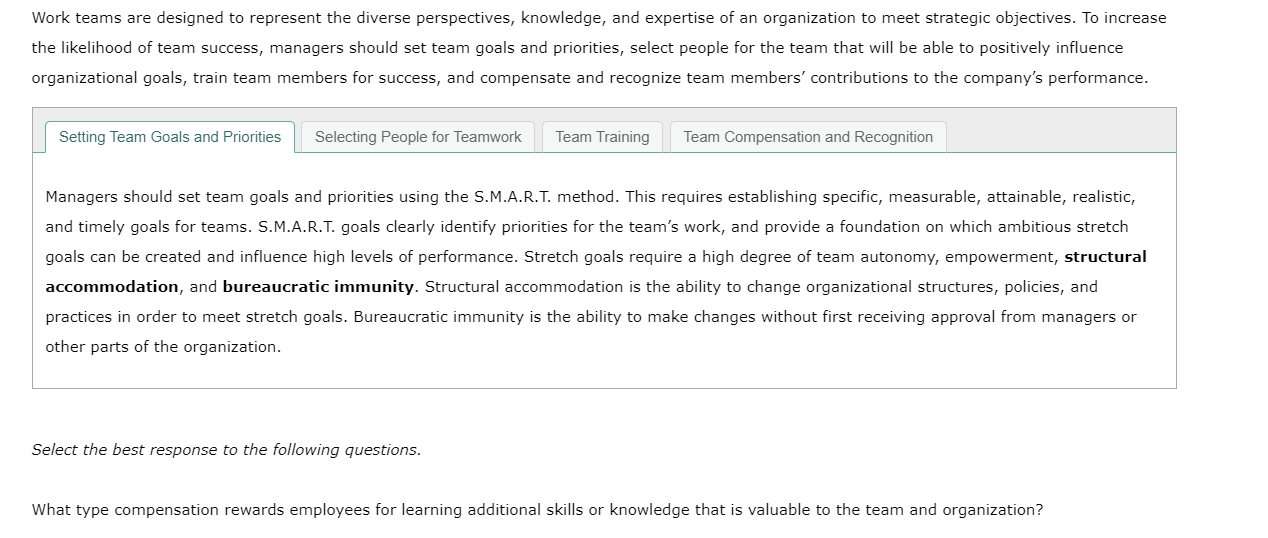
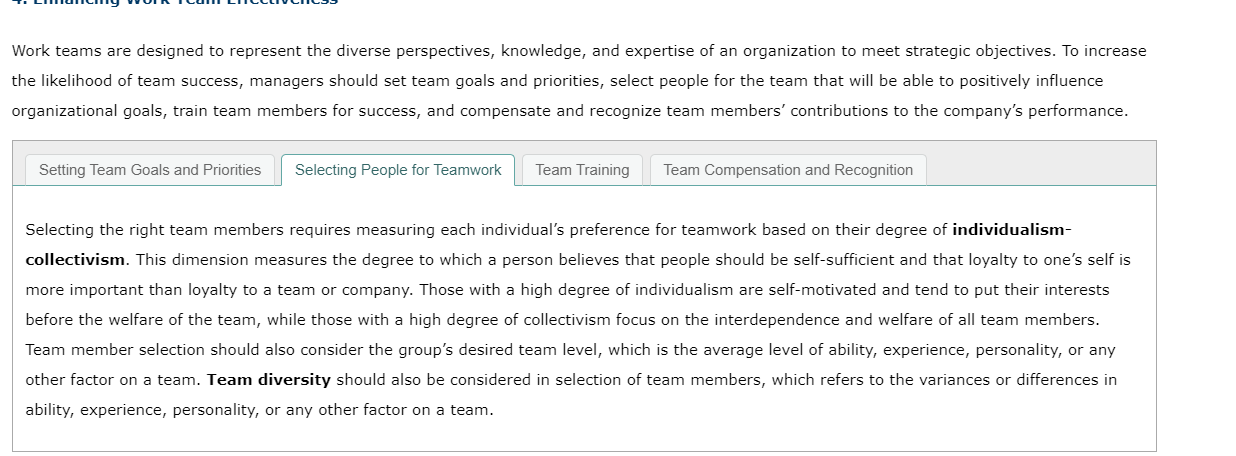
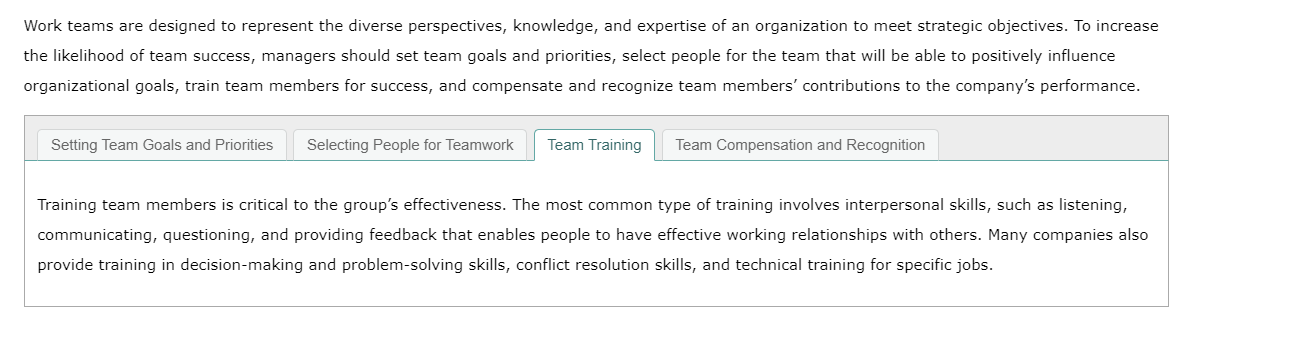
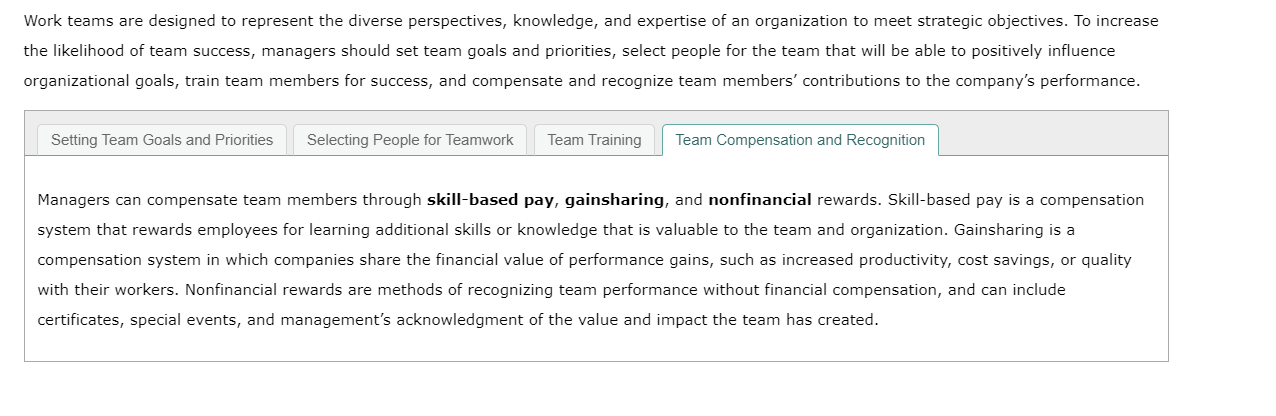
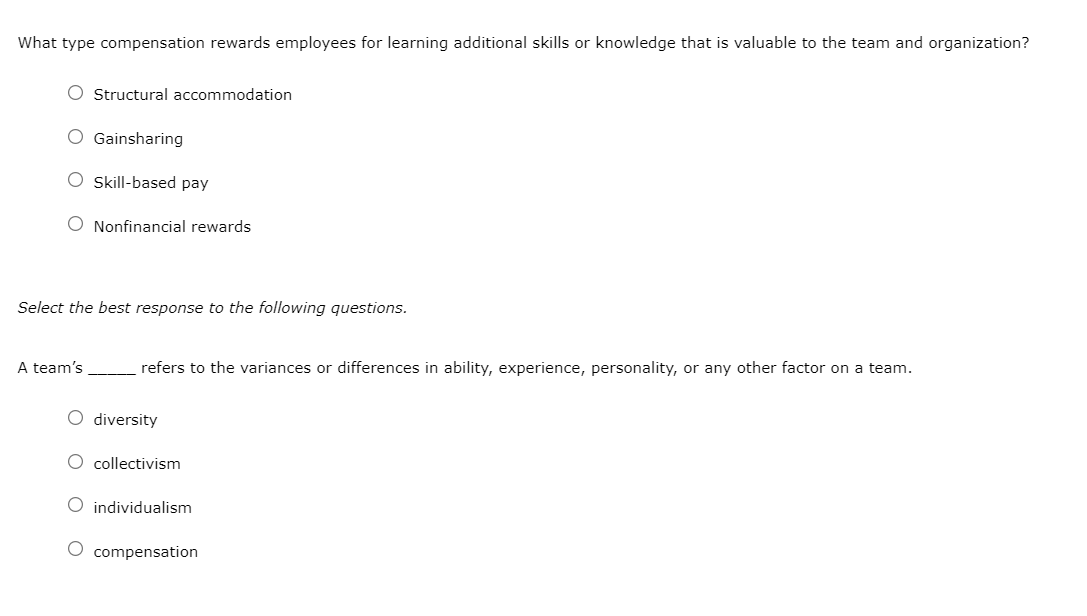
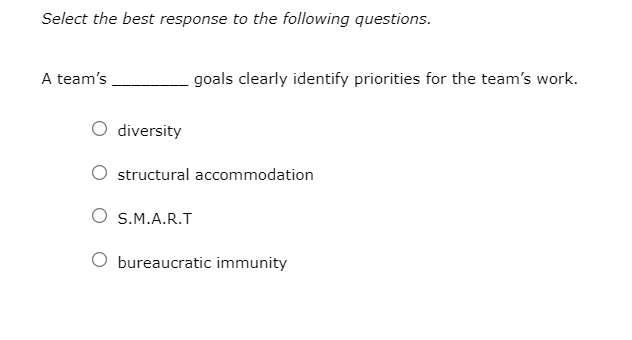
Work teams are designed to represent the diverse perspectives, knowledge, and expertise of an organization to meet strategic objectives. To increase the likelihood of team success, managers should set team goals and priorities, select people for the team that winfluence organizational goals, train team members for success, and compensate and recognize team members' contributions to the company's performance. Managers should set team goals and priorities using the S.M.A.R.T. method. This requires establishing specific, measurable, attainable, realistic, goals can be created and influence high levels of performance. Stretch goals require a high degree of team autonomy, empowerment, structural practices in order to meet stretch goals. Bureaucratic immunity is the ability to make changes without first receiving approval from mangers other parts of the organization. Select the best response to the following questions. What type compensation rewards employees for learning additional skills or knowledge that is valuable to the team and organization? Work teams are designed to represent the diverse perspectives, knowledge, and expertise of an organization to meet strategic objectives. To increase the likelihood of team success, managers should set team goals and priorities, select people for the team that will be able to positively influence organizational goals, train team members for success, and compensate and recognize team members' contributions to the company's performance. Selecting the right team members requires measuring each individual's preference for teamwork based on their degree of individualismcollectivism. This dimension measures the degree to which a person believes that people should be self-sufficient and that loyalty to one's self is more important than loyalty to a team or company. Those with a high degree of individualism are self-motivated and tend to put their interests before the welfare of the team, while those with a high degree of collectivism focus on the interdependence and welfare of all team members. Team member selection should also consider the group's desired team level, which is the average level of ability, experience, personality, or any other factor on a team. Team diversity should also be considered in selection of team members, which refers to the variances or differences in ability, experience, personality, or any other factor on a team. Work teams are designed to represent the diverse perspectives, knowledge, and expertise of an organization to meet strategic objectives. To increase the likelihood of team success, managers should set team goals and priorities, select people for the team that will be able to positively influence organizational goals, train team members for success, and compensate and recognize team members' contributions to the company's performance. Training team members is critical to the group's effectiveness. The most common type of training involves interpersonal sking, provide training in decision-making and problem-solving skills, conflict resolution skills, and technical training for specific jobs. Work teams are designed to represent the diverse perspectives, knowledge, and expertise of an organization to meet strategic objectives. To increase the likelihood of team success, managers should set team goals and priorities, select people for the team that will be able to positively influence organizational goals, train team members for success, and compensate and recognize team members' contributions to the company's performance. compensation system in which companies share the financial value of performance gains, such as increased productivity with their workers. Nonfinancial rewards are methods of recognizing team performance without financial compensation, and can include certificates, special events, and management's acknowledgment of the value and impact the team has created. What type compensation rewards employees for learning additional skills or knowledge that is valuable to the team and organization? Structural accommodation Gainsharing Skill-based pay Nonfinancial rewards Select the best response to the following questions. A team's refers to the variances or differences in ability, experience, personality, or any other factor on a team. diversity collectivism individualism compensation Select the best response to the following questions. A team's goals clearly identify priorities for the team's work. diversity structural accommodation S.M.A.R.T bureaucratic immunity









 Study Help