







Question: Working Capital Ratio (Current Ratio)= Current Asset/ Current Liabilities Current Assets= $17,000+$22,000+$3,000+$56,000+$43,000+$4,000= $145,000 Current Liabilities= $38,000+$3,000+$2,000= $43,000 Year 3: $145,000/$43,000= 3.37 Current Assets= $20,000+$20,000+$4,000+$50,000+$70,000+$4,000=
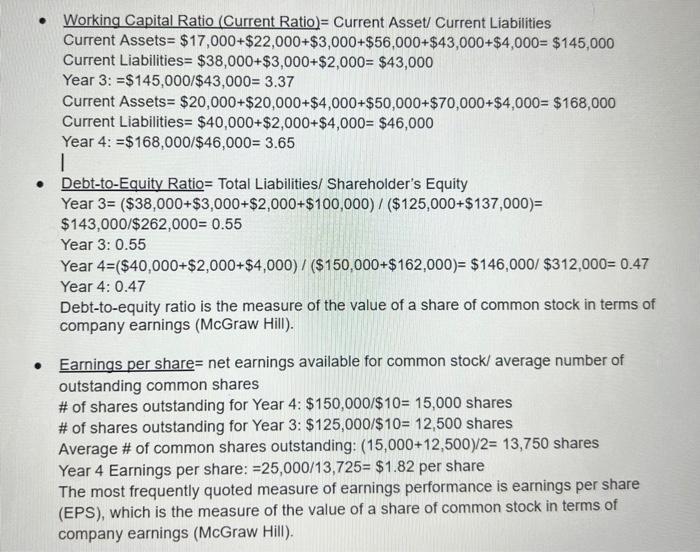
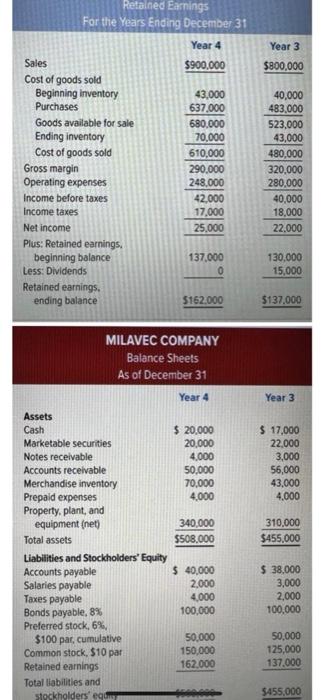
Working Capital Ratio (Current Ratio)= Current Asset/ Current Liabilities Current Assets= $17,000+$22,000+$3,000+$56,000+$43,000+$4,000= $145,000 Current Liabilities= $38,000+$3,000+$2,000= $43,000 Year 3: $145,000/$43,000= 3.37 Current Assets= $20,000+$20,000+$4,000+$50,000+$70,000+$4,000= $168,000 Current Liabilities= $40,000+$2,000+$4,000= $46,000 Year 4: $168,000/$46,000= 3.65 | Debt-to-Equity Ratio= Total Liabilities/ Shareholder's Equity Year 3 ($38,000+$3,000+$2,000+$100,000) / ($125,000+$137,000)= $143,000/$262,000= 0.55 Year 3: 0.55 Year 4 ($40,000+$2,000+$4,000) / ($150,000+$162,000)= $146,000/ $312,000= 0.47 Year 4: 0.47 Debt-to-equity ratio is the measure of the value of a share of common stock in terms of company earnings (McGraw Hill). Earnings per share= net earnings available for common stock/ average number of outstanding common shares # of shares outstanding for Year 4: $150,000/$10= 15,000 shares # of shares outstanding for Year 3: $125,000/$10= 12,500 shares Average # of common shares outstanding: (15,000+12,500)/2= 13,750 shares Year 4 Earnings per share: =25,000/13,725= $1.82 per share The most frequently quoted measure of earnings performance is earnings per share (EPS), which is the measure of the value of a share of common stock in terms of company earnings (McGraw Hill).
Step by Step Solution
There are 3 Steps involved in it

Get step-by-step solutions from verified subject matter experts
 Study Help