







Question: Would you like to work under an ABC system? How would you feel about using the ABC for a group of your own subordinates? (can
Would you like to work under an ABC system?
How would you feel about using the ABC for a group of your own subordinates?
(can you not use other people answers from this app. thank you)
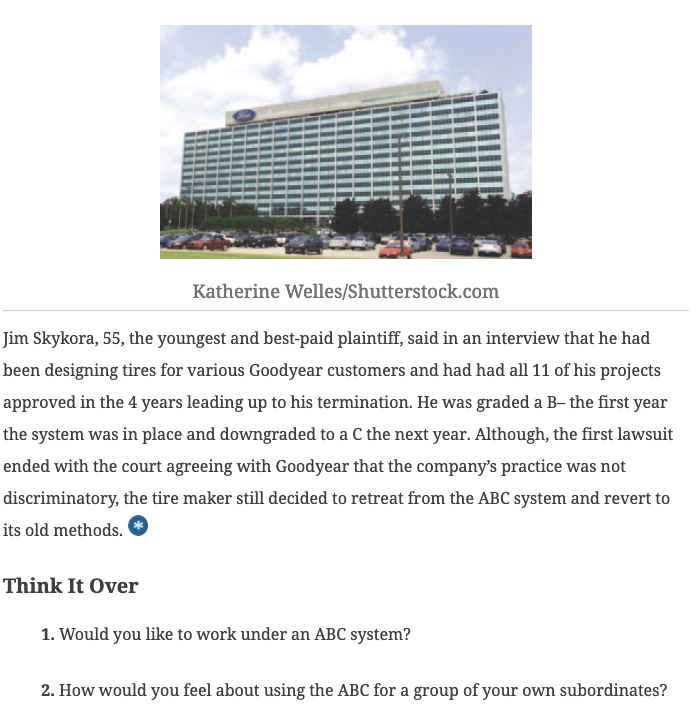
Contemporary Challenges in HR When Is Acceptable Unacceptable? For years, General Electric (GE) had used a ruthlessly efficient method for evaluating the performance of its employees. The system was widely known informally as the ABC approach. Each year, managers were required to sort all of their subordinates into one of three categories. The best, as much as 10 percent of the workforce, made up the A group; the next set, as much as 80 percent, included those in the middle and was called the B group (this large group subsequently were broken down into smaller groups). The lowest 10 percent, though, was called the C group-and these workers lost their jobs even if they were generally seen as exhibiting acceptable performance! GE executives argued that this allowed the firm to continuously elevate the quality of the firm's human capital. Moreover, they noted, everyone knew the rules when they signed on, and no one had ever sued the company over this practice. It is no surprise, then, that a few other companies have tried to follow in GE's footsteps. Goodyear was one of the first. Its first efforts identified 2,800 employees making up the worst performers in the company. These workers were then given their walking papers. Not too long afterward, though, Goodyear said it was abandoning the ABC method. Why? The tire maker became the target of an age-discrimination lawsuit that claimed that it singled out too many older employees as bad workers. Another big company that experimented with-but quickly dropped-the ABC method was Ford Motor Company. The firm paid handsomely for its brief experiment when it agreed to pay $10.6 million to settle an age-discrimination suit filed by a group of fired employees. Since then, most other recent adopters of the ABC system have also dropped it. One catalyst for the quick demise of the ABC system was when AARP, an advocacy group for Americans 50 years of age and older committed itself to providing legal resources to those suing Goodyear. The lawsuit named eight plaintiffs aged 55-59, whose annual salaries ranged from $48,700 to $71,700. The lawsuit claimed that hundreds of workers in more than 10 states could join if the case was granted class-action status. Katherine Welles/Shutterstock.com Jim Skykora, 55, the youngest and best-paid plaintiff, said in an interview that he had been designing tires for various Goodyear customers and had had all 11 of his projects approved in the 4 years leading up to his termination. He was graded a B- the first year the system was in place and downgraded to a C the next year. Although, the first lawsuit ended with the court agreeing with Goodyear that the company's practice was not discriminatory, the tire maker still decided to retreat from the ABC system and revert to its old methods. Think It Over 1. Would you like to work under an ABC system? 2. How would you feel about using the ABC for a group of your own subordinates
Step by Step Solution
There are 3 Steps involved in it

Get step-by-step solutions from verified subject matter experts
 Study Help