Question: WRITE 2-3 PRAGRAPHS FOR YOUR RESPONSE. MAKE SURE YOUR EACH PARAGRAPH SHOULD HAVE AT LEAST 5 SENTENCES: Your Comments/Thoughts For Information Below Exceptions to the
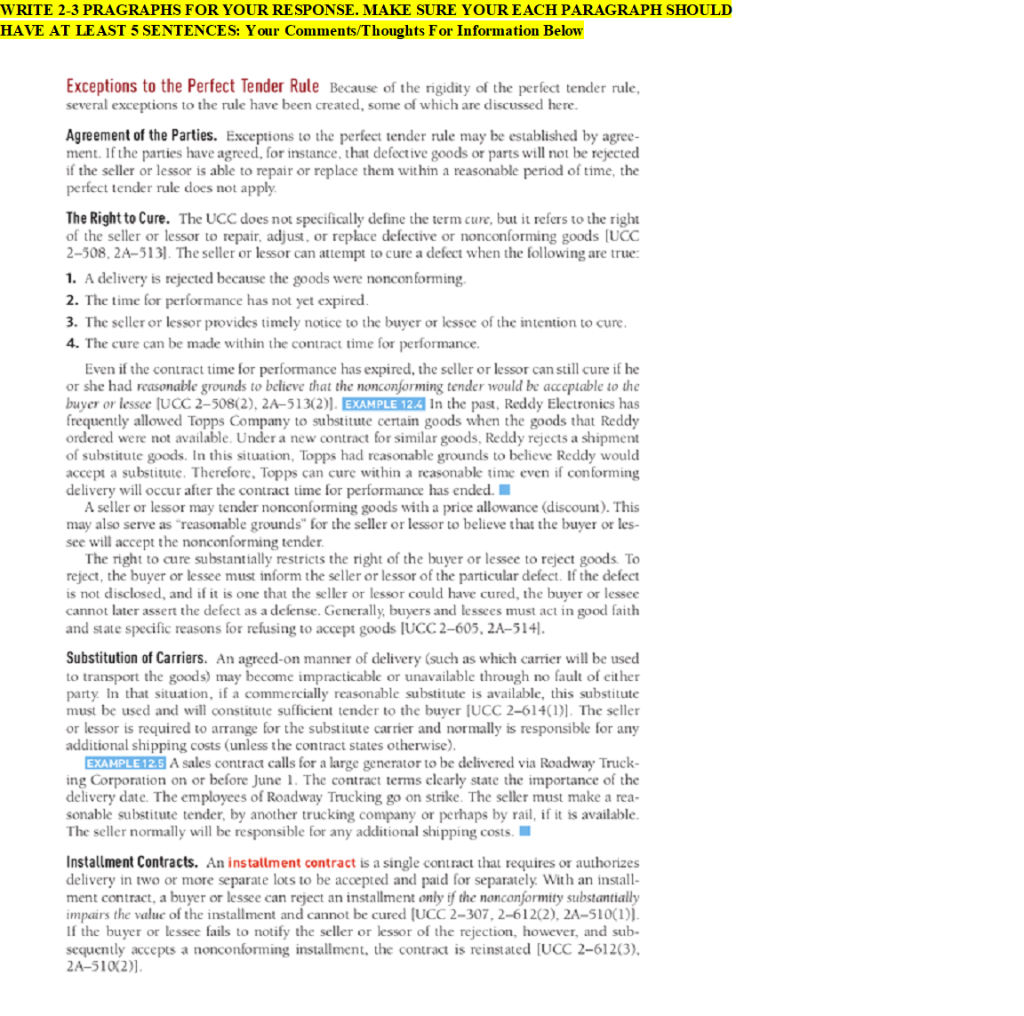
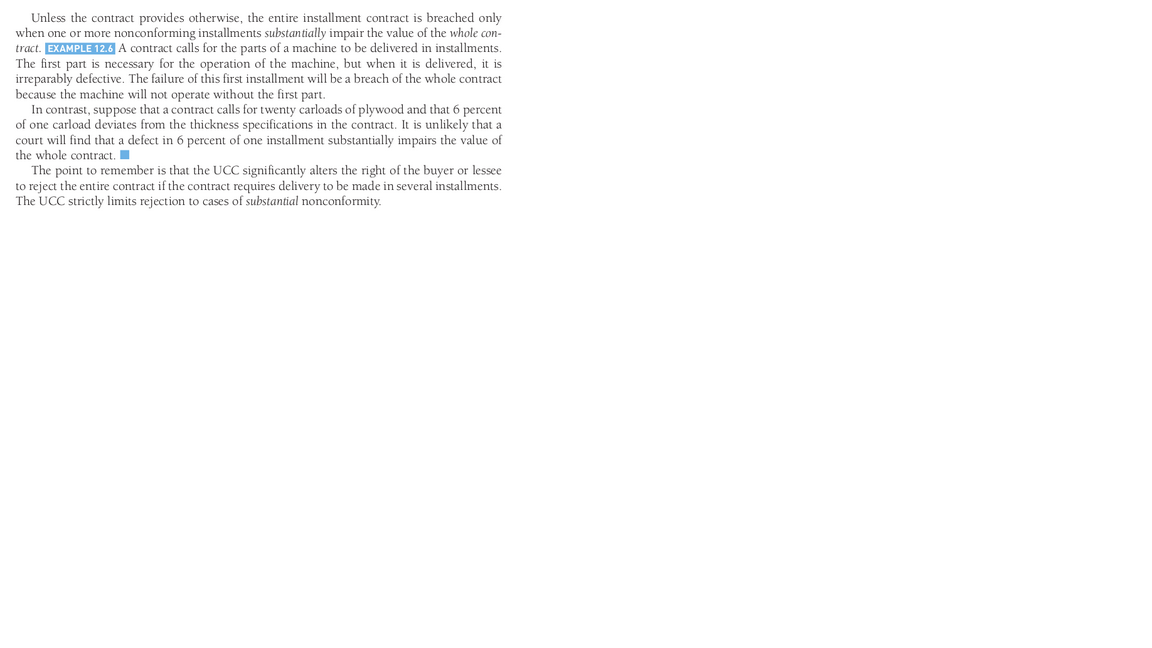
WRITE 2-3 PRAGRAPHS FOR YOUR RESPONSE. MAKE SURE YOUR EACH PARAGRAPH SHOULD HAVE AT LEAST 5 SENTENCES: Your Comments/Thoughts For Information Below Exceptions to the Perfect Tender Rule Because of the rigidity of the perfect tender rule, several exceptions to the rule have been created, some of which are discussed here. Agreement of the Parties. Exceptions to the perfect tender rule may be established by agree- ment. If the parties have agreed, for instance, that defective goods or parts will not be rejected if the seller or lessor is able to repair or replace them within a reasonable period of time, the perfect tender rule does not apply. The Right to Cure. The UCC does not specifically define the term cure, but it refers to the right of the seller or lessor to repair, adjust, or replace defective or nonconforming goods (UCC 2-508, 2A-513). The seller or lessor can attempt to cure a defect when the following are true: 1. A delivery is rejected because the goods were nonconforming 2. The time for performance has not yet expired. 3. The seller or lessor provides timely notice to the buyer or lessce of the intention to cure 4. The cure can be made within the contract time for performance. Even if the contract time for performance has expired, the seller or lessor can still cure if he or she had reasonable grounds to believe that the nonconforming tender would be acceptable to the buyer or lessee (UCC 2-508(2), 2A-513(2) EXAMPLE 12.4 In the past, Reddy Electronics has frequently allowed Topps Company to substitute certain goods when the goods that Reddy ordered were not available. Under a new contract for similar goods, Reddy rejects a shipment of substitute goods. In this situation, Topps had reasonable grounds to believe Reddy would accept a substitute. Therefore, Topps can cure within a reasonable time even if conforming delivery will occur after the contract time for performance has ended. A seller or lessor may tender nonconforming goods with a price allowance (discount). This may also serve as reasonable grounds for the seller or lessor to believe that the buyer or les- see will accept the nonconforming tender. The right to cure substantially restricts the right of the buyer or lessee to reject goods. To reject, the buyer or lessee must inform the seller or lessor of the particular defect. If the defect is not disclosed, and if it is one that the seller or lessor could have cured, the buyer or lessee cannot later assert the defect as a defense. Generally, buyers and lessees must act in good faith and state specific reasons for refusing to accept goods (UCC 2-605, 2A-514). Substitution of Carriers. An agreed-on manner of delivery (such as which carrier will be used to transport the goods) may become impracticable or unavailable through no fault of either party. In that situation, if a commercially reasonable substitute is available, this substitute must be used and will constitute sufficient tender to the buyer (UCC 2-614(1)]. The seller or lessor is required to arrange for the substitute carrier and normally is responsible for any additional shipping costs (unless the contract states otherwise). EXAMPLE 125 A sales contrad calls for a large generator to be delivered via Roadway Truck- ing Corporation on or before June 1. The contract terms clearly state the importance of the delivery date. The employees of Roadway Trucking go on strike. The seller must make a rea- sonable substitute tender, by another trucking company or perhaps by rail, if it is available. The seller normally will be responsible for any additional shipping costs. Installment Contracts. An installment contract is a single contract that requires or authorizes delivery in two or more separate lots to be accepted and paid for separately. With an install- ment contract, a buyer or lessee can reject an installment only if the nonconformity substantially impairs the value of the installment and cannot be cured (UCC 2-307, 2-612(2), 2A-510(1) If the buyer or lessee fails to notify the seller or lessor of the rejection, however, and sub- sequently accepts a nonconforming installment, the contract is reinstated (UCC 2-612(3), 2A-510(2) Unless the contract provides otherwise, the entire installment contract is breached only when one or more nonconforming installments substantially impair the value of the whole con- tract. EXAMPLE 126 A contract calls for the parts of a machine to be delivered in installments. The first part is necessary for the operation of the machine, but when it is delivered, it is irreparably defective. The failure of this first installment will be a breach of the whole contract because the machine will not operate without the first part In contrast, suppose that a contract calls for twenty carloads of plywood and that 6 percent of one carload deviates from the thickness specifications in the contract. It is unlikely that a court will find that a defect in 6 percent of one installment substantially impairs the value of the whole contract. The point to remember is that the UCC significantly alters the right of the buyer or lessee to reject the entire contract if the contract requires delivery to be made in several installments. The UCC strictly limits rejection to cases of substantial nonconformity. WRITE 2-3 PRAGRAPHS FOR YOUR RESPONSE. MAKE SURE YOUR EACH PARAGRAPH SHOULD HAVE AT LEAST 5 SENTENCES: Your Comments/Thoughts For Information Below Exceptions to the Perfect Tender Rule Because of the rigidity of the perfect tender rule, several exceptions to the rule have been created, some of which are discussed here. Agreement of the Parties. Exceptions to the perfect tender rule may be established by agree- ment. If the parties have agreed, for instance, that defective goods or parts will not be rejected if the seller or lessor is able to repair or replace them within a reasonable period of time, the perfect tender rule does not apply. The Right to Cure. The UCC does not specifically define the term cure, but it refers to the right of the seller or lessor to repair, adjust, or replace defective or nonconforming goods (UCC 2-508, 2A-513). The seller or lessor can attempt to cure a defect when the following are true: 1. A delivery is rejected because the goods were nonconforming 2. The time for performance has not yet expired. 3. The seller or lessor provides timely notice to the buyer or lessce of the intention to cure 4. The cure can be made within the contract time for performance. Even if the contract time for performance has expired, the seller or lessor can still cure if he or she had reasonable grounds to believe that the nonconforming tender would be acceptable to the buyer or lessee (UCC 2-508(2), 2A-513(2) EXAMPLE 12.4 In the past, Reddy Electronics has frequently allowed Topps Company to substitute certain goods when the goods that Reddy ordered were not available. Under a new contract for similar goods, Reddy rejects a shipment of substitute goods. In this situation, Topps had reasonable grounds to believe Reddy would accept a substitute. Therefore, Topps can cure within a reasonable time even if conforming delivery will occur after the contract time for performance has ended. A seller or lessor may tender nonconforming goods with a price allowance (discount). This may also serve as reasonable grounds for the seller or lessor to believe that the buyer or les- see will accept the nonconforming tender. The right to cure substantially restricts the right of the buyer or lessee to reject goods. To reject, the buyer or lessee must inform the seller or lessor of the particular defect. If the defect is not disclosed, and if it is one that the seller or lessor could have cured, the buyer or lessee cannot later assert the defect as a defense. Generally, buyers and lessees must act in good faith and state specific reasons for refusing to accept goods (UCC 2-605, 2A-514). Substitution of Carriers. An agreed-on manner of delivery (such as which carrier will be used to transport the goods) may become impracticable or unavailable through no fault of either party. In that situation, if a commercially reasonable substitute is available, this substitute must be used and will constitute sufficient tender to the buyer (UCC 2-614(1)]. The seller or lessor is required to arrange for the substitute carrier and normally is responsible for any additional shipping costs (unless the contract states otherwise). EXAMPLE 125 A sales contrad calls for a large generator to be delivered via Roadway Truck- ing Corporation on or before June 1. The contract terms clearly state the importance of the delivery date. The employees of Roadway Trucking go on strike. The seller must make a rea- sonable substitute tender, by another trucking company or perhaps by rail, if it is available. The seller normally will be responsible for any additional shipping costs. Installment Contracts. An installment contract is a single contract that requires or authorizes delivery in two or more separate lots to be accepted and paid for separately. With an install- ment contract, a buyer or lessee can reject an installment only if the nonconformity substantially impairs the value of the installment and cannot be cured (UCC 2-307, 2-612(2), 2A-510(1) If the buyer or lessee fails to notify the seller or lessor of the rejection, however, and sub- sequently accepts a nonconforming installment, the contract is reinstated (UCC 2-612(3), 2A-510(2) Unless the contract provides otherwise, the entire installment contract is breached only when one or more nonconforming installments substantially impair the value of the whole con- tract. EXAMPLE 126 A contract calls for the parts of a machine to be delivered in installments. The first part is necessary for the operation of the machine, but when it is delivered, it is irreparably defective. The failure of this first installment will be a breach of the whole contract because the machine will not operate without the first part In contrast, suppose that a contract calls for twenty carloads of plywood and that 6 percent of one carload deviates from the thickness specifications in the contract. It is unlikely that a court will find that a defect in 6 percent of one installment substantially impairs the value of the whole contract. The point to remember is that the UCC significantly alters the right of the buyer or lessee to reject the entire contract if the contract requires delivery to be made in several installments. The UCC strictly limits rejection to cases of substantial nonconformity









 Study Help