







Question: Write a Case study report by answering questions and include these topics in the report Introduction; main issue; other issues; assumptions; SWOT analysis; recommendations. RISHARDSON
Write a Case study report by answering questions and include these topics in the report
Introduction; main issue; other issues; assumptions; SWOT analysis; recommendations.
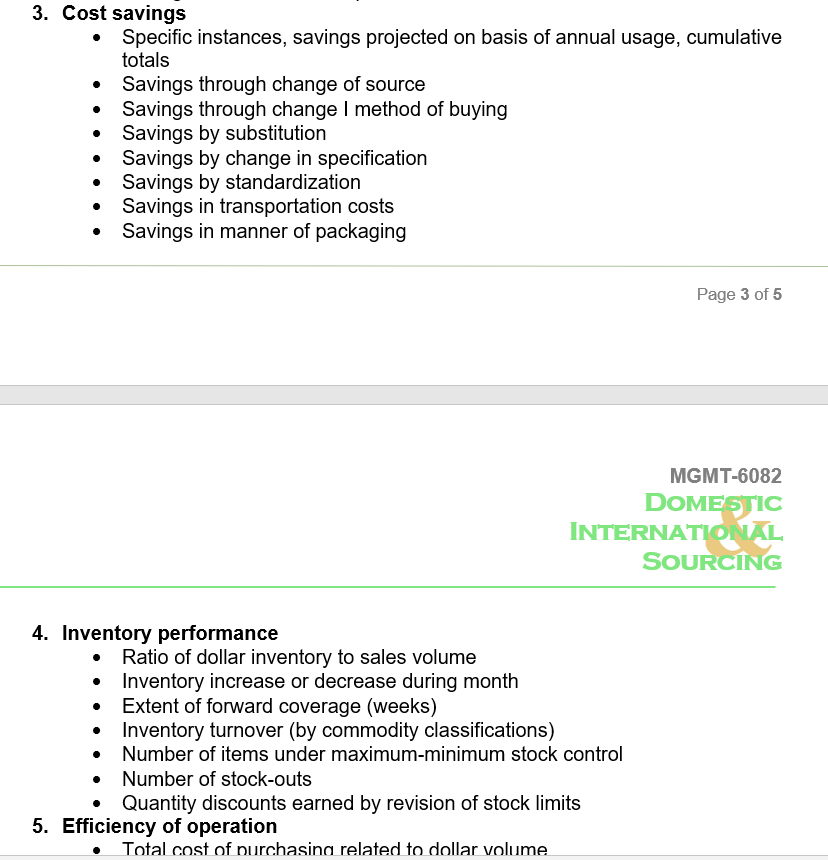
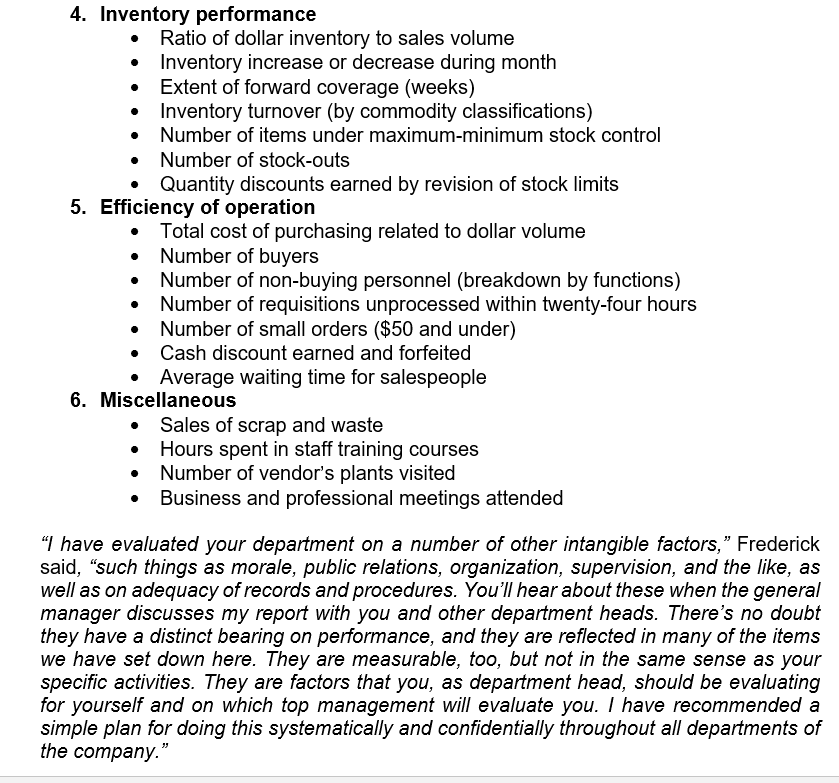
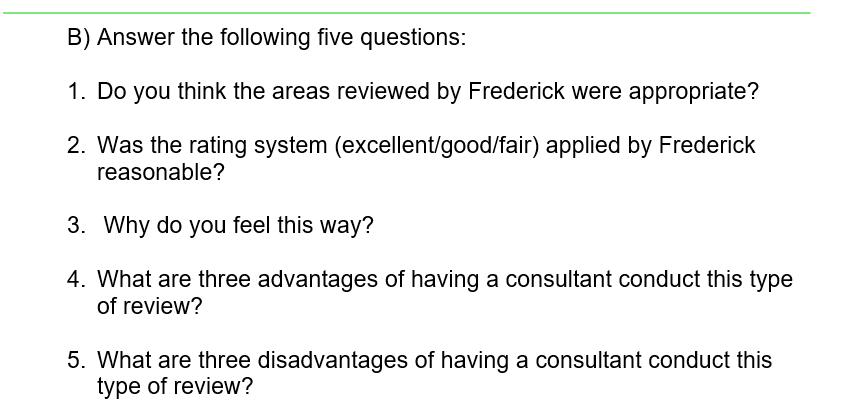
RISHARDSON STOVE WORKS COMPANY THE CASE The executive committee of Rishardson Stove Works Company had designated Frederick Associates, a management consulting firm, to make a thorough study of the company's organization and procedures and to recommend any changes that might be made to improve efficiency. This study was prompted not by any serious dissatisfaction with present performance but to get the benefit of expert, objective checklists and standards that the Frederick organization had developed for the purpose. When the data had been assembled and analyzed, George Frederick presented his report to the committee. It was generally favorable, with several suggestions regarding each department designed to simplify or expedite the work. His recommendations concerning purchasing were to bring traffic control under the jurisdiction of this department; to add one buyer, preferably with engineering training; to set up a special fund that would permit the handling of small local orders on a petty cash basis, eliminating considerable paperwork on these dealings, and to transfer the checking of invoices to the accounting department, because he felt that no department should audit its own transactions. "By the way", said Allan Rishardson, the company president, how is our purchasing department doing? I've been in the management of this company forty years, and I've never had a satisfactory answer to that question." Frederick said that in his judgment the department was doing very well. "How well? Rishardson persisted. Would you rate it as 95%, 90%, 85% or what?" Mr. Frederick said that it was impossible to set objective standards of performance that would permit a rating of this sort. There were too many variables and intangibles involved. A rating depended, first, on what you expected and, second, on whether that expectation was reasonable. But you must have some basis for saying that our buyers are doing a good job, and that's what I'm trying to get at. After all, purchasing is a tangible business. We spend X number of dollars, and we buy X tons or carloads of iron and nickel and bolts and coal and shipping cases. What I want to know is whether we're getting full value for our dollars and whether Page 1 of 5 MGMT-6082 DOMESTIC INTERNATIONAL SOURCING it's costing us more than it should to buy those materials. I'm not interested in how many purchase orders we issue or how much we deduct in cash discounts. I'm interested in the quality of our buying performance and in results. What I'd like to see is a simple report, maybe six or eight really significant figures that would give me the picture. I think we can get the figures for you?" said Frederick. You'd have to make your own evaluation, as we do. At the start, I doubt that you could rate them any closer than excellent, good or fair. After the first few months, when you have a change to make comparisons, you may be able to apply some sort of scale - if you still think it's worthwhile." Frederick went back to the purchasing manager, and together they worked out a report to give Rishardson the information he wanted. Their first step was to define the areas of purchasing activity to be considered in an evaluation; the second step was to select measurable factors in each of these areas that were known or available from existing records and that would indicate to a significant extent the quality of performance and results obtained. They decided on the following areas: 1. Effectiveness of procurement as a service of supply 2. Price performance in buying 3. Cost reductions, specific savings 4. Inventory performance 5. Administrative performance, efficiency, cost of purchasing 6. Miscellaneous intangibles Under each of these headings they jotted down everything that came to mind pertinent to that area of activity and responsibility. Despite Rishardson's aversion to statistical information, they found that much of the information was basically of this nature. However, the figures acquired more than statistical significance of the total; one of the problems was to find the appropriate standards of comparison and methods of presentation. Some of the factors were of a negative nature, inverse to the quality of purchasing performance; nevertheless, they were important in any complete evaluation. "We'll have to differentiate, said Frederick, "between those that are rated on a low score, as in golf, and those that are rated on a high score, as in bowling. If we get to the point of making a numerical rating, there are simple mathematical means to take care of this, but we'll run into the even tougher problem of assigning weights to the various factors". The list of suggested possible indicators grew much longer than the half-dozen criteria that Rishardson had requested, but it was a necessary preliminary step to the process of selection. When they had finished, the following factors were noted on their worksheet: Page 2 of 5 1. Service of supply Numbers of delinquent deliveries Machine downtime due to lack of material Schedule revisions necessary due to lack of material Successful substitutions made by purchasing department to avoid downtime or schedule revisions Number of rush orders handled (proportion of total orders of dollar volume) Number of change orders issued Follow-up action (number of orders, cost of follow-up) Number and amount of premium transportation charges paid to get deliveries on time Number of deliveries rejected by inspection department Cost of reworking substandard materials Number of overdue orders in open-order file Commodities for which alternate supply sources have been established and used 2. Price performance Number of price changes, up or down, from previous prices paid Number of orders placed on competitive bidding Number of orders placed by negotiation Commodities covered by term contracts (how long a term?) Actual prices paid compared with published market (market at time of purchase or at time of use; should this be shown for individual key commodities, as currently kept in chart form in purchasing office, or could it be put in the form of comparative price indices?) Inventory valuable, actual cost versus replacement cost Variances from standard costs Direct material cost per unit of product Average cost of selected commodities, year to date and projected to annual average based on current price 3. Cost savings Specific instances, savings projected on basis of annual usage, cumulative totals Savings through change of source Savings through change I method of buying Savinas by substitution 3. Cost savings Specific instances, savings projected on basis of annual usage, cumulative totals Savings through change of source Savings through change I method of buying Savings by substitution Savings by change in specification Savings by standardization Savings in transportation costs Savings in manner of packaging Page 3 of 5 MGMT-6082 DOMESTIC INTERNATIONAL SOURCING 4. Inventory performance Ratio of dollar inventory to sales volume Inventory increase or decrease during month Extent of forward coverage (weeks) Inventory turnover (by commodity classifications) Number of items under maximum-minimum stock control Number of stock-outs Quantity discounts earned by revision of stock limits 5. Efficiency of operation Total cost of purchasing related to dollar volume 4. Inventory performance Ratio of dollar inventory to sales volume Inventory increase or decrease during month Extent of forward coverage (weeks) Inventory turnover (by commodity classifications) Number of items under maximum-minimum stock control Number of stock-outs Quantity discounts earned by revision of stock limits 5. Efficiency of operation Total cost of purchasing related to dollar volume Number of buyers Number of non-buying personnel (breakdown by functions) Number of requisitions unprocessed within twenty-four hours Number of small orders ($50 and under) Cash discount earned and forfeited Average waiting time for salespeople 6. Miscellaneous Sales of scrap and waste Hours spent in staff training courses Number of vendor's plants visited Business and professional meetings attended "I have evaluated your department on a number of other intangible factors," Frederick said, "such things as morale, public relations, organization, supervision, and the like, as well as on adequacy of records and procedures. You'll hear about these when the general manager discusses my report with you and other department heads. There's no doubt they have a distinct bearing on performance, and they are reflected in many of the items we have set down here. They are measurable, too, but not in the same sense as your specific activities. They are factors that you, as department head, should be evaluating for yourself and on which top management will evaluate you. I have recommended a simple plan for doing this systematically and confidentially throughout all departments of the company." B) Answer the following five questions: 1. Do you think the areas reviewed by Frederick were appropriate? 2. Was the rating system (excellent/good/fair) applied by Frederick reasonable? 3. Why do you feel this way? 4. What are three advantages of having a consultant conduct this type of review? 5. What are three disadvantages of having a consultant conduct this type of reviewStep by Step Solution
There are 3 Steps involved in it
1 Expert Approved Answer
Step: 1 Unlock

Question Has Been Solved by an Expert!
Get step-by-step solutions from verified subject matter experts
Step: 2 Unlock
Step: 3 Unlock
 Study Help