Question: Write an early draft of a proposal introduction and problem section. The topic is Addressing Food Security in North Omaha, Nebraska. The draft should be
Write an early draft of a proposal introduction and problem section.
The topic isAddressing Food Security in North Omaha, Nebraska.
The draft should be at least 2.5- 3 pages in length (600-750 words), following MLA formatting guidelines. Note: There is no penalty for your draft being longer than 3 pages. Typically the completed full draft of the problem section is 3-4 pages.
Your draft should include:
Introduction paragraph, ending in the Thesis Statement.
Problem analysis section, including Overview of the problem (What is the problem? Why is it a problem? Where & when does the problem occur?), Harms caused by the problem (Who/What is negatively affected?), and Causes of the problem.
Minimum of 2.5 pages of written text. If some paragraphs/parts of your problem section are incomplete, please include a note explaining what's still to come in that paragraph and any questions you may have.
Evidence from sources integrated into paragraphs.
A minimum of 4 sources used, with sources cited parenthetically in-textLinks to an external site. and in your Works Cited (MLA) page (Note: Works Cited/References page doesn't count toward the minimum page count)
Structure:
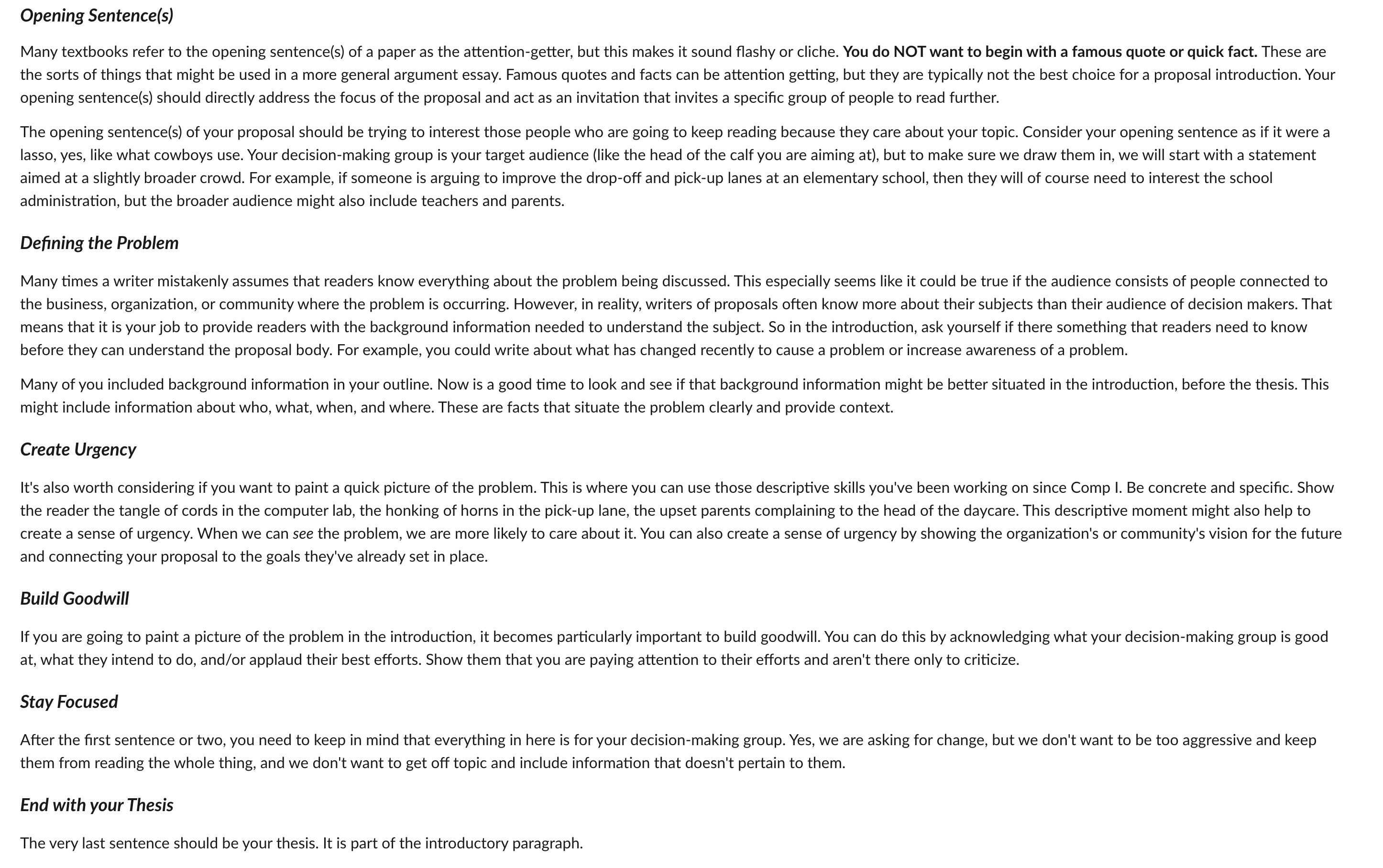
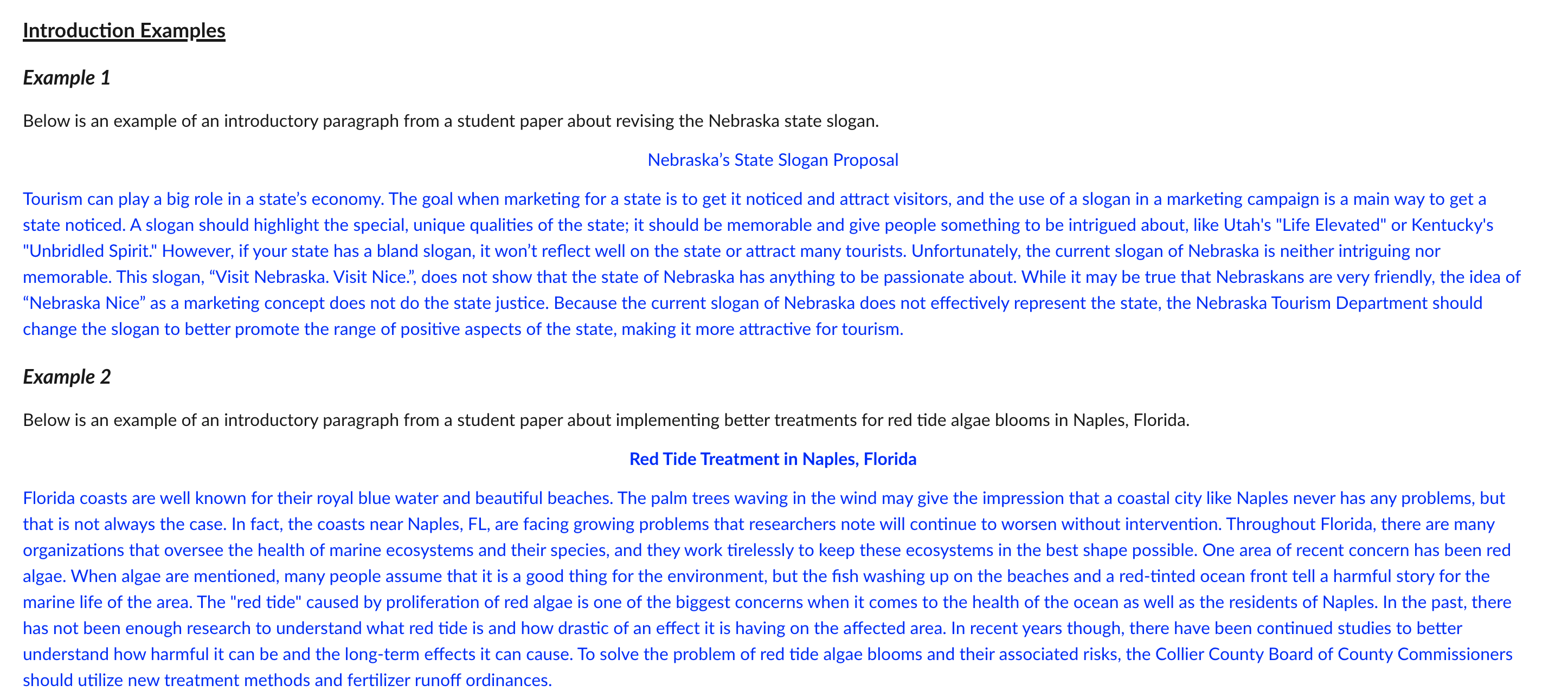
Your introduction should follow the Mod 6 introduction paragraph guidelines. (pictured below)
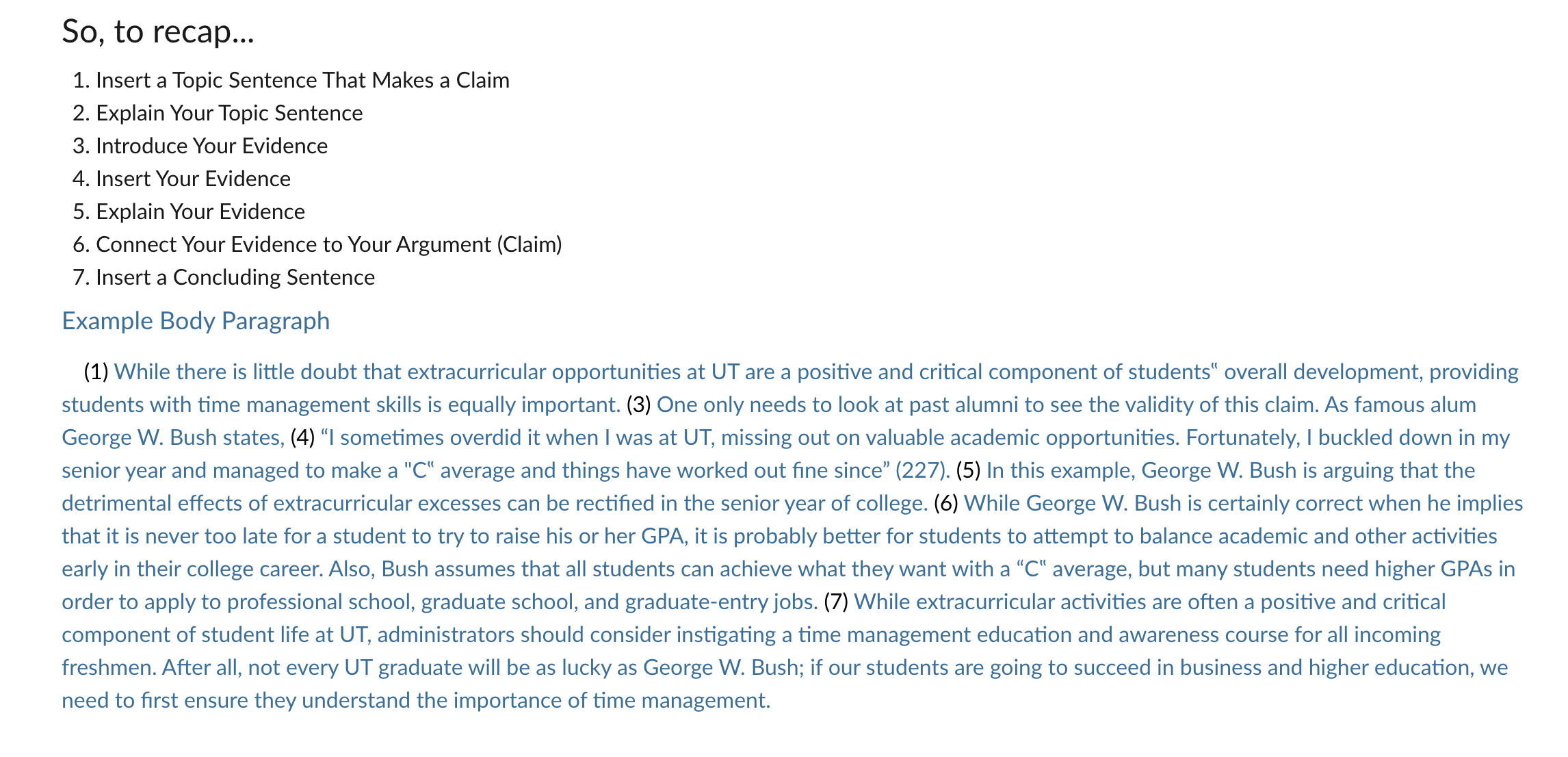
Your body paragraphs should follow the Mod 6 persuasive paragraph guidelines. (Also Pictured below)
Every paragraph should have a topic sentence that states the main idea of the paragraph, and a claim that will be proven with reasons and evidence in the paragraph.
Each paragraph should have sentences that explain and support the main idea in the topic sentence with specific examples and details.
Each paragraph should have sentences that make it clear how the topic of the paragraph connects to proving the problem exists, is causing harm, and needs to be addressed.
Style:
Format MLA style
Headings MLA style
3rd Person Point of View--use pronouns he, she, it, and they. AVOID 1st and 2nd person pronouns (I, me, my, we, us, our, you, your, yours)
Written using language, tone, and strategies appropriate for persuading the target audience
introduction paragraph guidelines.
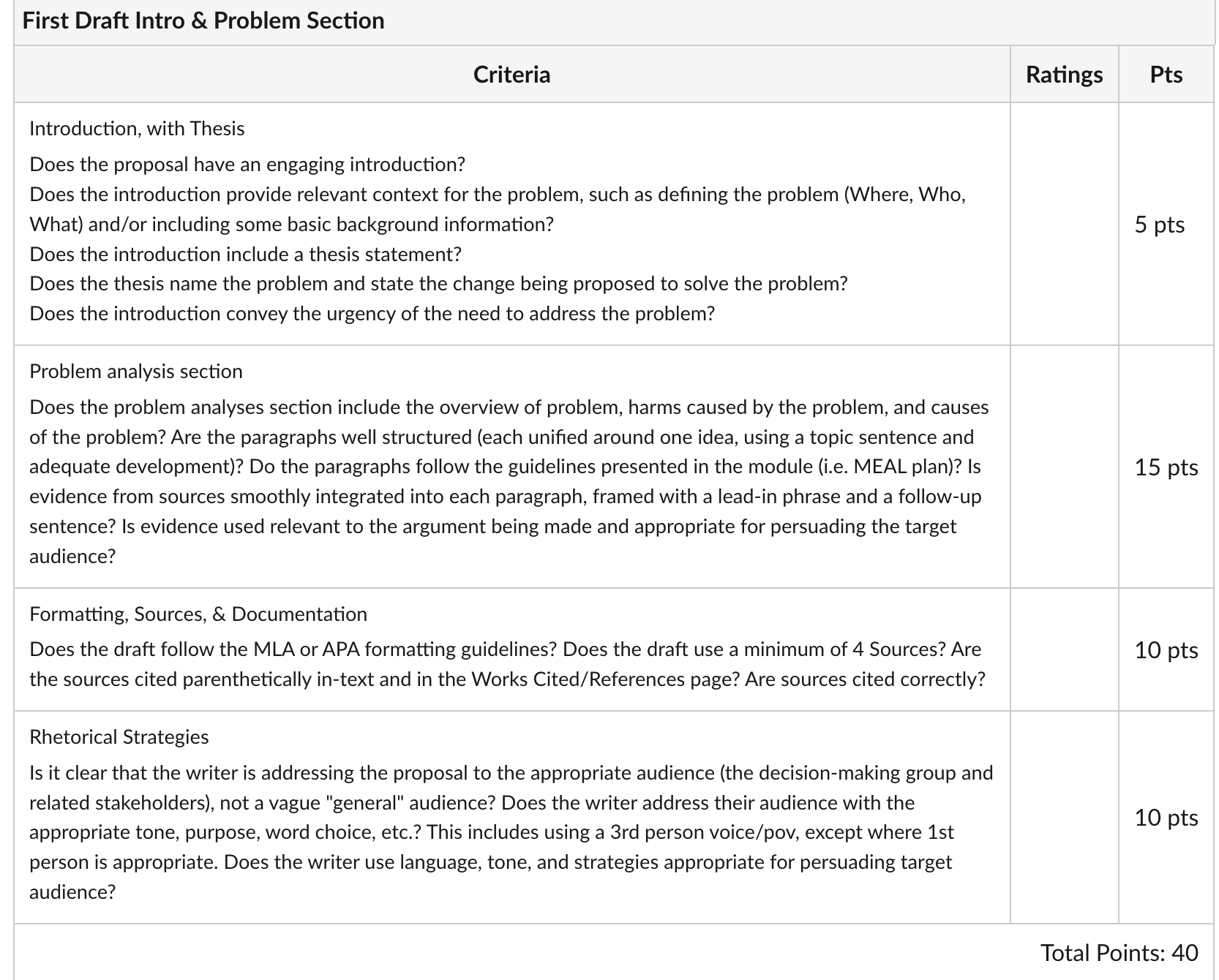
First Draft Intro & Problem Section Criteria Ratings Introduction, with Thesis Does the proposal have an engaging introduction? Does the introduction provide relevant context for the problem, such as defining the problem (Where, Who, What) and/or including some basic background information? Does the introduction include a thesis statement? Does the thesis name the problem and state the change being proposed to solve the problem? Does the introduction convey the urgency of the need to address the problem? Problem analysis section Does the problem analyses section include the overview of problem, harms caused by the problem, and causes of the problem? Are the paragraphs well structured (each unified around one idea, using a topic sentence and adequate development)? Do the paragraphs follow the guidelines presented in the module (i.e. MEAL plan)? Is evidence from sources smoothly integrated into each paragraph, framed with a lead-in phrase and a follow-up sentence? Is evidence used relevant to the argument being made and appropriate for persuading the target audience? Formatting, Sources, & Documentation Does the draft follow the MLA or APA formatting guidelines? Does the draft use a minimum of 4 Sources? Are the sources cited parenthetically in-text and in the Works Cited/References page? Are sources cited correctly? Rhetorical Strategies Is it clear that the writer is addressing the proposal to the appropriate audience (the decision-making group and related stakeholders), not a vague "general" audience? Does the writer address their audience with the appropriate tone, purpose, word choice, etc.? This includes using a 3rd person voice/pov, except where 1st person is appropriate. Does the writer use language, tone, and strategies appropriate for persuading target audience? Pts 5 pts 15 pts 10 pts 10 pts Total Points: 40 Opening Sentence(s) Many textbooks refer to the opening sentence(s) of a paper as the attention-getter, but this makes it sound flashy or cliche. You do NOT want to begin with a famous quote or quick fact. These are the sorts of things that might be used in a more general argument essay. Famous quotes and facts can be attention getting, but they are typically not the best choice for a proposal introduction. Your opening sentence(s) should directly address the focus of the proposal and act as an invitation that invites a specific group of people to read further. The opening sentence(s) of your proposal should be trying to interest those people who are going to keep reading because they care about your topic. Consider your opening sentence as if it were a lasso, yes, like what cowboys use. Your decision-making group is your target audience (like the head of the calf you are aiming at), but to make sure we draw them in, we will start with a statement aimed at a slightly broader crowd. For example, if someone is arguing to improve the drop-off and pick-up lanes at an elementary school, then they will of course need to interest the school administration, but the broader audience might also include teachers and parents. Defining the Problem Many times a writer mistakenly assumes that readers know everything about the problem being discussed. This especially seems like it could be true if the audience consists of people connected to the business, organization, or community where the problem is occurring. However, in reality, writers of proposals often know more about their subjects than their audience of decision makers. That means that it is your job to provide readers with the background information needed to understand the subject. So in the introduction, ask yourself if there something that readers need to know before they can understand the proposal body. For example, you could write about what has changed recently to cause a problem or increase awareness of a problem. Many of you included background information in your outline. Now is a good time to look and see if that background information might be better situated in the introduction, before the thesis. This might include information about who, what, when, and where. These are facts that situate the problem clearly and provide context. Create Urgency It's also worth considering if you want to paint a quick picture of the problem. This is where you can use those descriptive skills you've been working on since Comp |. Be concrete and specific. Show the reader the tangle of cords in the computer lab, the honking of horns in the pick-up lane, the upset parents complaining to the head of the daycare. This descriptive moment might also help to create a sense of urgency. When we can see the problem, we are more likely to care about it. You can also create a sense of urgency by showing the organization's or community's vision for the future and connecting your proposal to the goals they've already set in place. Build Goodwiill If you are going to paint a picture of the problem in the introduction, it becomes particularly important to build goodwill. You can do this by acknowledging what your decision-making group is good at, what they intend to do, and/or applaud their best efforts. Show them that you are paying attention to their efforts and aren't there only to criticize. Stay Focused After the first sentence or two, you need to keep in mind that everything in here is for your decision-making group. Yes, we are asking for change, but we don't want to be too aggressive and keep them from reading the whole thing, and we don't want to get off topic and include information that doesn't pertain to them. End with your Thesis The very last sentence should be your thesis. It is part of the introductory paragraph. Introduction Examples Example 1 Below is an example of an introductory paragraph from a student paper about revising the Nebraska state slogan. Nebraska's State Slogan Proposal Tourism can play a big role in a state's economy. The goal when marketing for a state is to get it noticed and attract visitors, and the use of a slogan in a marketing campaign is a main way to get a state noticed. A slogan should highlight the special, unique qualities of the state; it should be memorable and give people something to be intrigued about, like Utah's "Life Elevated" or Kentucky's "Unbridled Spirit." However, if your state has a bland slogan, it won't reflect well on the state or attract many tourists. Unfortunately, the current slogan of Nebraska is neither intriguing nor memorable. This slogan, \"Visit Nebraska. Visit Nice\So, to recap... 1. Insert a Topic Sentence That Makes a Claim 2. Explain Your Topic Sentence 3. Introduce Your Evidence 4. Insert Your Evidence 5. Explain Your Evidence 6. Connect Your Evidence to Your Argument (Claim) 7. Insert a Concluding Sentence Example Body Paragraph (1) While there is little doubt that extracurricular opportunities at UT are a positive and critical component of students" overall development, providing students with time management skills is equally important. (3) One only needs to look at past alumni to see the validity of this claim. As famous alum George W. Bush states, (4) \"| sometimes overdid it when | was at UT, missing out on valuable academic opportunities. Fortunately, | buckled down in my senior year and managed to make a "C" average and things have worked out fine since\" (227). (5) In this example, George W. Bush is arguing that the detrimental effects of extracurricular excesses can be rectified in the senior year of college. (6) While George W. Bush is certainly correct when he implies that it is never too late for a student to try to raise his or her GPA, it is probably better for students to attempt to balance academic and other activities early in their college career. Also, Bush assumes that all students can achieve what they want with a \"C" average, but many students need higher GPAs in order to apply to professional school, graduate school, and graduate-entry jobs. (7) While extracurricular activities are often a positive and critical component of student life at UT, administrators should consider instigating a time management education and awareness course for all incoming freshmen. After all, not every UT graduate will be as lucky as George W. Bush; if our students are going to succeed in business and higher education, we need to first ensure they understand the importance of time management
Step by Step Solution
There are 3 Steps involved in it
1 Expert Approved Answer
Step: 1 Unlock
Question Has Been Solved by an Expert!
Get step-by-step solutions from verified subject matter experts
Step: 2 Unlock
Step: 3 Unlock
Students Have Also Explored These Related Business Writing Questions!









 Study Help