







Question: Write an SOP document based on the article assigned Must be graphic operating procedure only(put/include illustrations,images & etc put the link/references for the images/illustrations/photos that
Write an SOP document based on the article assigned

Must be graphic operating procedure only(put/include illustrations,images & etc
put the link/references for the images/illustrations/photos that you used in SOP
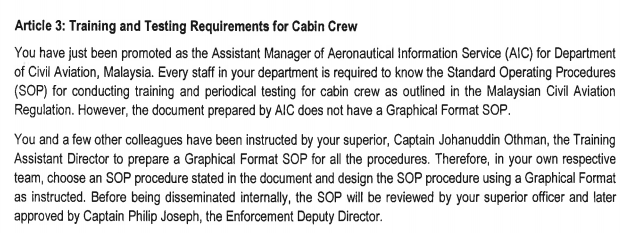
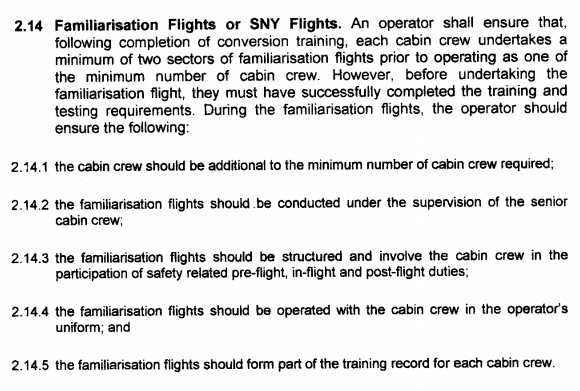
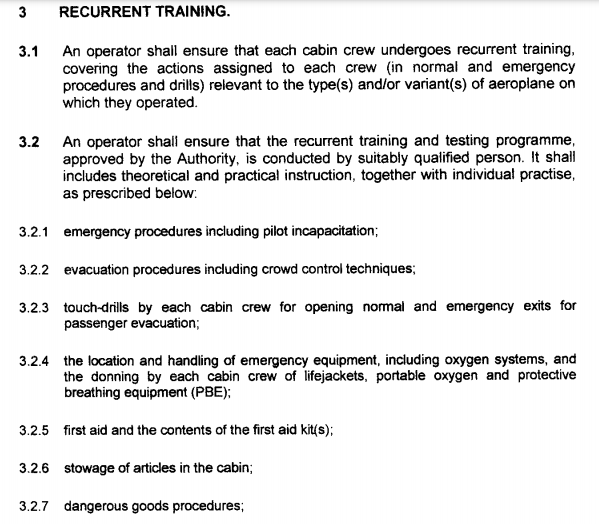
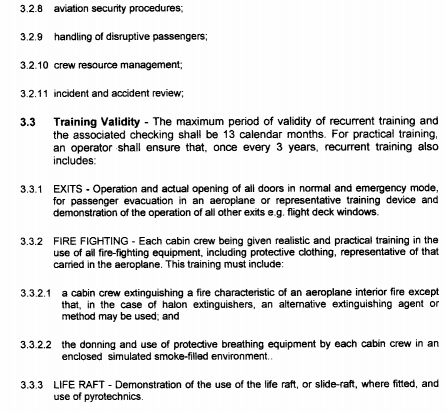
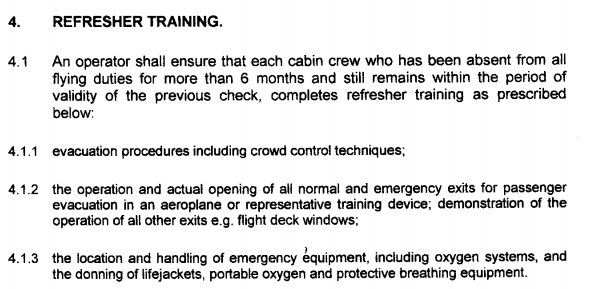
Article 3: Training and Testing Requirements for Cabin Crew You have just been promoted as the Assistant Manager of Aeronautical Information Service (AIC) for Department of Civil Aviation, Malaysia. Every staff in your department is required to know the Standard Operating Procedures (SOP) for conducting training and periodical testing for cabin crew as outlined in the Malaysian Civil Aviation Regulation. However, the document prepared by AIC does not have a Graphical Format SOP. You and a few other colleagues have been instructed by your superior, Captain Johanuddin Othman, the Training Assistant Director to prepare a Graphical Format SOP for all the procedures. Therefore, in your own respective team, choose an SOP procedure stated in the document and design the SOP procedure using a Graphical Format as instructed. Before being disseminated internally, the SOP will be reviewed by your superior officer and later approved by Captain Philip Joseph, the Enforcement Deputy Director. 2.14 Familiarisation Flights or SNY Flights. An operator shall ensure that, following completion of conversion training, each cabin crew undertakes a minimum of two sectors of familiarisation flights prior to operating as one of the minimum number of cabin crew. However, before undertaking the familiarisation flight, they must have successfully completed the training and testing requirements. During the familiarisation flights, the operator should ensure the following: 2.14.1 the cabin crew should be additional to the minimum number of cabin crew required; 2.14.2 the familiarisation flights should be conducted under the supervision of the senior cabin crew; 2.14.3 the familiarisation flights should be structured and involve the cabin crew in the participation of safety related pre-flight, in-flight and post-flight duties; 2.14.4 the familiarisation flights should be operated with the cabin crew in the operator's uniform; and 2.14.5 the familiarisation flights should form part of the training record for each cabin crew. 3 RECURRENT TRAINING. 3.1 An operator shall ensure that each cabin crew undergoes recurrent training, covering the actions assigned to each crew (in normal and emergency procedures and drills) relevant to the type(s) and/or variant(s) of aeroplane on which they operated. 3.2 An operator shall ensure that the recurrent training and testing programme, approved by the Authority, is conducted by suitably qualified person. It shali includes theoretical and practical instruction, together with individual practise, as prescribed below: 3.2.1 emergency procedures including pilot incapacitation; 3.2.2 evacuation procedures including crowd control techniques; 3.2.3 touch-drills by each cabin crew for opening normal and emergency exits for passenger evacuation; 3.2.4 the location and handling of emergency equipment, including oxygen systems, and the donning by each cabin crew of lifejackets, portable oxygen and protective breathing equipment (PBE); 3.2.5 first aid and the contents of the first aid kit(s); 3.2.6 stowage of articles in the cabin; 3.2.7 dangerous goods procedures; 3.2.8 aviation security procedures 3.2.9 handling of disruptive passengers; 3.2.10 crew resource management; 3.2.11 incident and accident review; 3.3 Training Validity - The maximum period of validity of recurrent training and the associated checking shall be 13 calendar months. For practical training, an operator shall ensure that once every 3 years, recurrent training also includes: 3.3.1 EXITS - Operation and actual opening of all doors in normal and emergency mode, for passenger evacuation in an aeroplane or representative training device and demonstration of the operation of all other exits eg. flight deck windows 3.3.2 FIRE FIGHTING - Each cabin crew being given realistic and practical training in the use of all fire-fighting equipment, including protective clothing, representative of that carried in the aeroplane. This training must include: 3.3.2.1 a cabin crew extinguishing a fire characteristic of an aeroplane interior fire except that, in the case of halon extinguishers, an alternative extinguishing agent or method may be used; and 3.3.2.2 the donning and use of protective breathing equipment by each cabin crew in an enclosed simulated smoke-filled environment 3.3.3 LIFE RAFT - Demonstration of the use of the life raft, or slide-raft, where fitted, and use of pyrotechnics. 4. REFRESHER TRAINING. 4.1 An operator shall ensure that each cabin crew who has been absent from all flying duties for more than 6 months and still remains within the period of validity of the previous check, completes refresher training as prescribed below: 4.1.1 evacuation procedures including crowd control techniques; 4.1.2 the operation and actual opening of all normal and emergency exits for passenger evacuation in an aeroplane or representative training device; demonstration of the operation of all other exits e.g. flight deck windows; 4.1.3 the location and handling of emergency quipment, including oxygen systems, and the donning of lifejackets, portable oxygen and protective breathing equipment. ProceduresStep by Step Solution
There are 3 Steps involved in it
1 Expert Approved Answer
Step: 1 Unlock

Question Has Been Solved by an Expert!
Get step-by-step solutions from verified subject matter experts
Step: 2 Unlock
Step: 3 Unlock
 Study Help