







Question: Writing a stock pitch report involves several key components that collectively provide a comprehensive and persuasive analysis of a particular stock. Here are the main
Writing a stock pitch report involves several key components that collectively provide a comprehensive and persuasive analysis of a particular stock. Here are the main elements you should include in a stock pitch report:
Executive Summary: This section should provide a concise overview of the investment thesis and key points of the report. It's a snapshot for readers to understand the rationale behind the stock recommendation quickly.
Company Overview: Include basic information about the company, such as its business model, industry sector, size, and geographic presence. This section sets the stage for deeper analysis.
Investment Thesis: Clearly articulate why the stock is a good or bad investment opportunity. Highlight the catalysts or factors that could drive the stocks price up This might include unique competitive advantages, market opportunities, or financial strength.
Valuation: Present a detailed valuation of the stock using various methods such as discounted cash flow DCF analysis, comparable company analysis, or precedent transactions. Show how these valuations support your investment thesis.
Financial Analysis: Analyze the company's financial statements, focusing on income statement, balance sheet, and cash flow statement. Discuss key financial ratios, trends, and any potential financial risks.
Market and Competitive Analysis: Examine the market dynamics and competitive landscape. Identify the companys main competitors, market share, and its position within the industry. Discuss any external factors that could impact the company, like economic conditions or regulatory changes.
Risks and Mitigants: Outline the primary risks that could derail the investment thesis. Provide potential mitigants or ways the company could address these risks.
Investment Risks: Describe specific investment risks such as volatility, liquidity, or regulatory changes that could affect the stock's performance.
Conclusion and Recommendation: Summarize the key findings and reaffirm your recommendation eg buy, hold, sell Be clear about the expected return and the time frame for this return.
Appendices and Supporting Data: Include any additional data, charts, or models that support your analysis but are too detailed for the main sections of the report.
Step by Step Solution
There are 3 Steps involved in it
1 Expert Approved Answer
Step: 1 Unlock

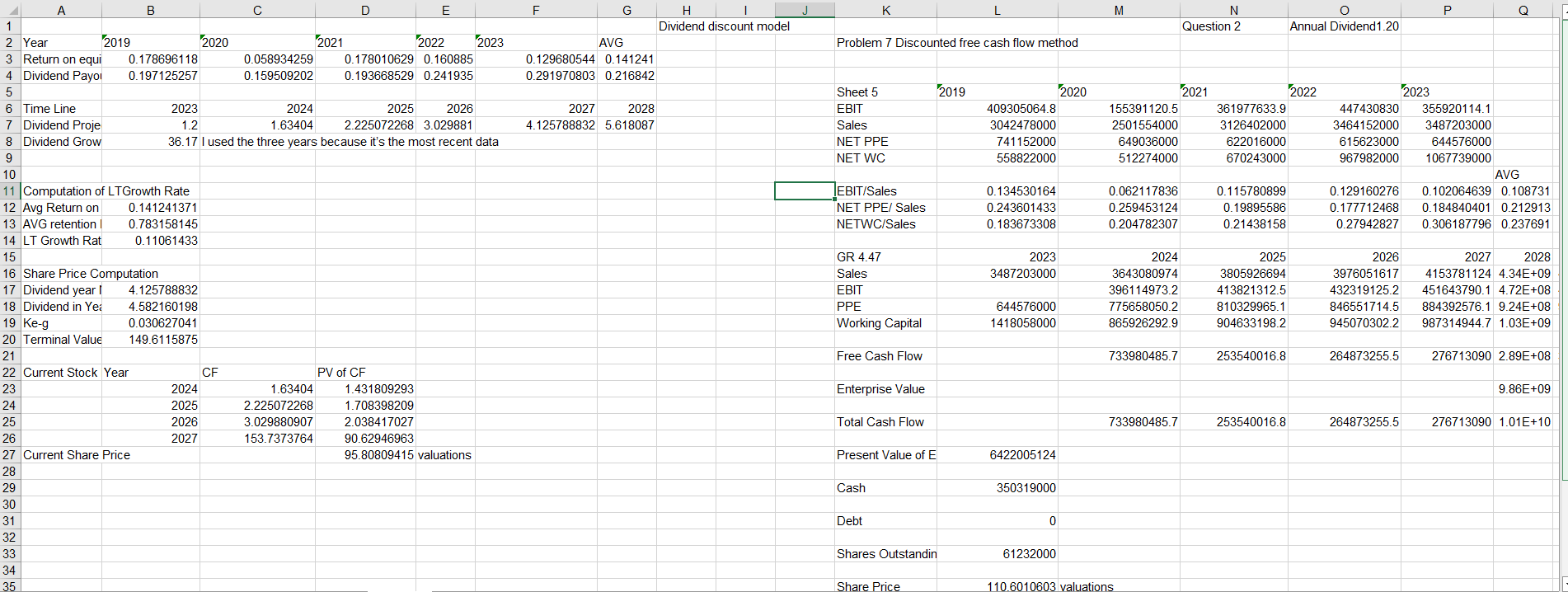
Comprehensive Stock Pitch Report Structure Using the Provided Spreadsheet Data 1 Executive Summary This report presents a valuation and investment recommendation for the company based on both the Divi... View full answer
Question Has Been Solved by an Expert!
Get step-by-step solutions from verified subject matter experts
Step: 2 Unlock
Step: 3 Unlock
 Study Help