







Question: (x,y) ,(x,y) for SML drop down windows below! REQUIRED RATE OF RETURN (Percent) 1,8 Return on HC's Stock 1.0 RISK (Beta) CAPM Elements Risk-free rate
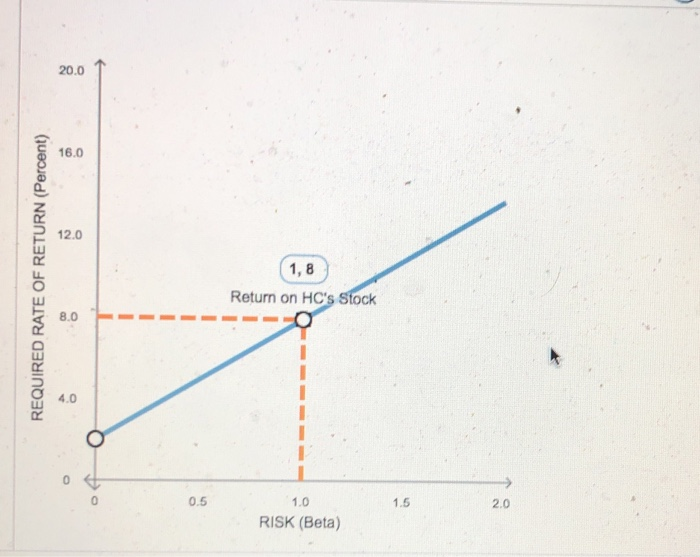
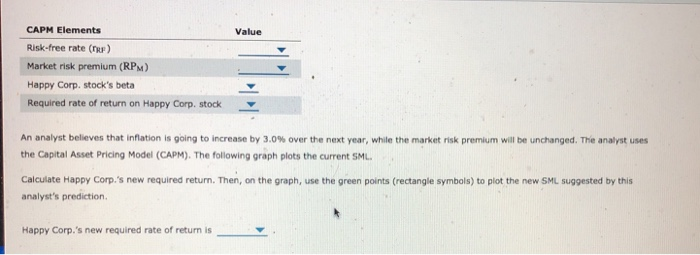
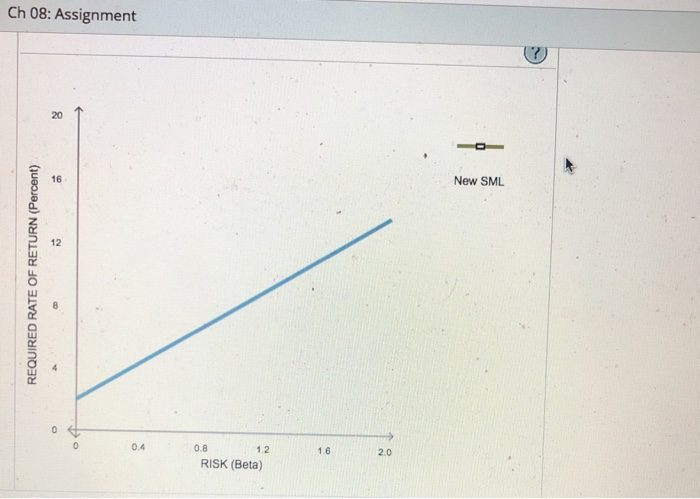
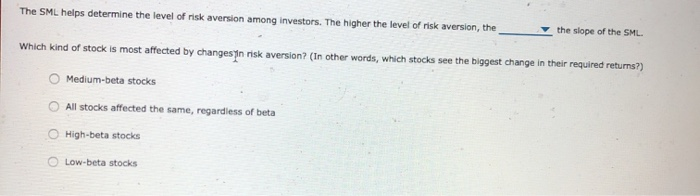
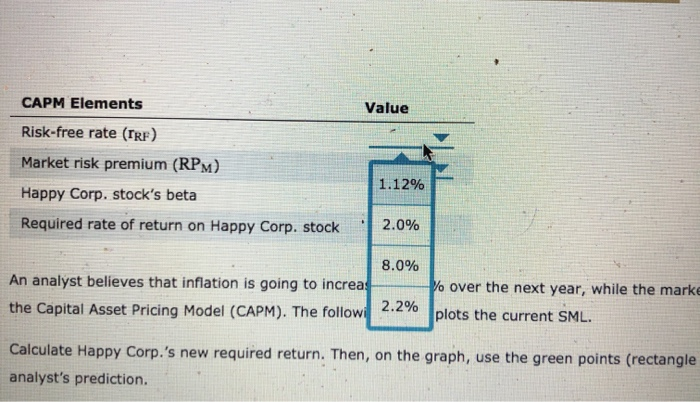
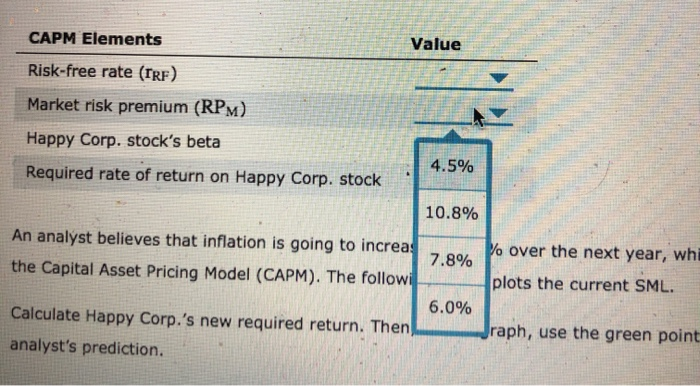
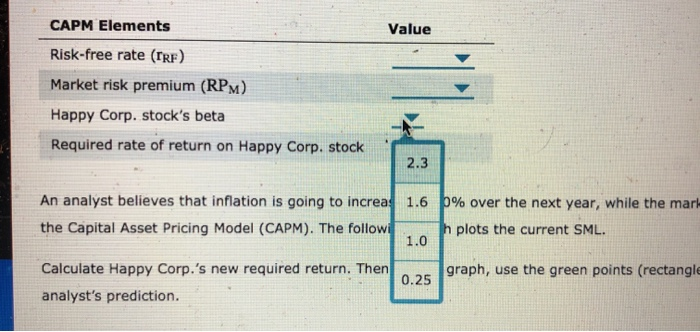
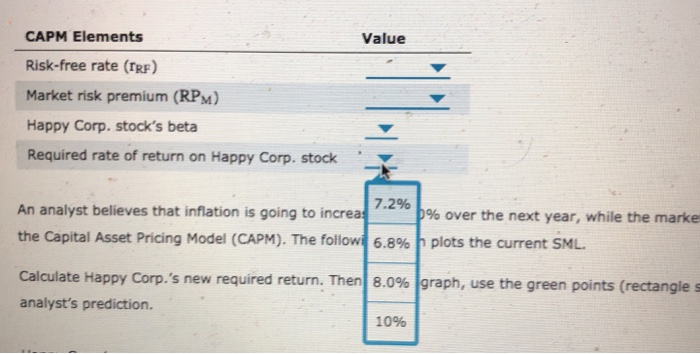
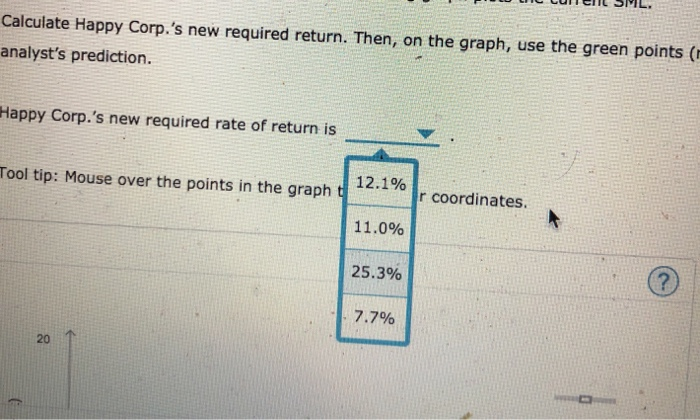
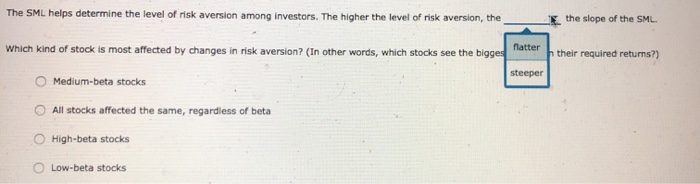
REQUIRED RATE OF RETURN (Percent) 1,8 Return on HC's Stock 1.0 RISK (Beta) CAPM Elements Risk-free rate (TRF) Market risk premium (RPM) Happy Corp. stock's beta Required rate of return on Happy Corp. stock An analyst believes that inflation is going to increase by 3.0% over the next year, while the market risk premium will be unchanged. The analyst uses the Capital Asset Pricing Model (CAPM). The following graph plots the current SML. Calculate Happy Corp's new required return. Then, on the graph, use the green points (rectangle symbols) to plot the new SML suggested by this analyst's prediction Happy Corp's new required rate of return is Ch 08: Assignment New SML REQUIRED RATE OF RETURN (Percent) 2.0 0.8 RISK (Beta) The SML helps determine the level of risk aversion among investors. The higher the level of risk aversion, the the slope of the SML Which kind of stock is most affected by changes in risk aversion? (In other words, which stocks see the biggest change in their required returns?) O Medium-beta stocks All stocks affected the same, regardless of beta High-beta stocks Low-beta stocks Value CAPM Elements Risk-free rate (TRF) Market risk premium (RPM) Happy Corp. stock's beta Required rate of return on Happy Corp. stock 1.12% 2.0% 8.0% An analyst believes that inflation is going to increas the Capital Asset Pricing Model (CAPM). The followi y over the next year, while the marke plots the current SML. 2.2% Calculate Happy Corp.'s new required return. Then, on the graph, use the green points (rectangle analyst's prediction. CAPM Elements Value 4.5% Risk-free rate (IRF) Market risk premium (RPM) Happy Corp. stock's beta Required rate of return on Happy Corp. stock 10.8% An analyst believes that inflation is going to increas z 90% y over the next year, whi the Capital Asset Pricing Model (CAPM). The followil plots the current SML. 6.0% Calculate Happy Corp.'s new required return. Then raph, use the green point analyst's prediction. Value CAPM Elements Risk-free rate (TRF) Market risk premium (RPM) Happy Corp. stock's beta Required rate of return on Happy Corp. stock An analyst believes that inflation is going to increa the Capital Asset Pricing Model (CAPM). The followi 1.6 % over the next year, while the mark n plots the current SML. graph, use the green points (rectangle Calculate Happy Corp.'s new required return. Then analyst's prediction. Value CAPM Elements Risk-free rate (TRF) Market risk premium (RPM) Happy Corp. stock's beta Required rate of return on Happy Corp. stock 7.2% An analyst believes that inflation is going to increas the Capital Asset Pricing Model (CAPM). The follow b% over the next year, while the marke 6.8% h plots the current SML. Calculate Happy Corp.'s new required return. Then 8.0% graph, use the green points (rectangles analyst's prediction 10% Calculate Happy Corp.'s new required return. Then, on the graph, use the green points nalyst's prediction. Happy Corp.'s new required rate of return is Tool tip: mouse over the points in the graph 12.1% Ir coordinates. 11.0% 25.3% 7.7% The SML helps determine the level of risk aversion among investors. The higher the level of risk aversion, the E the slope of the SML Which kind of stock is most affected by changes in risk aversion? (In other words, which stocks see the bigges natter their required returns?) steeper Medium-beta stocks All stocks affected the same, regardless of beta High-beta stocks Low-beta stocks
Step by Step Solution
There are 3 Steps involved in it

Get step-by-step solutions from verified subject matter experts
 Study Help