







Question: (Y 2. Find the volume of the solid whose base is the region bounded by the circle z? + y2 = 9 and whose cross

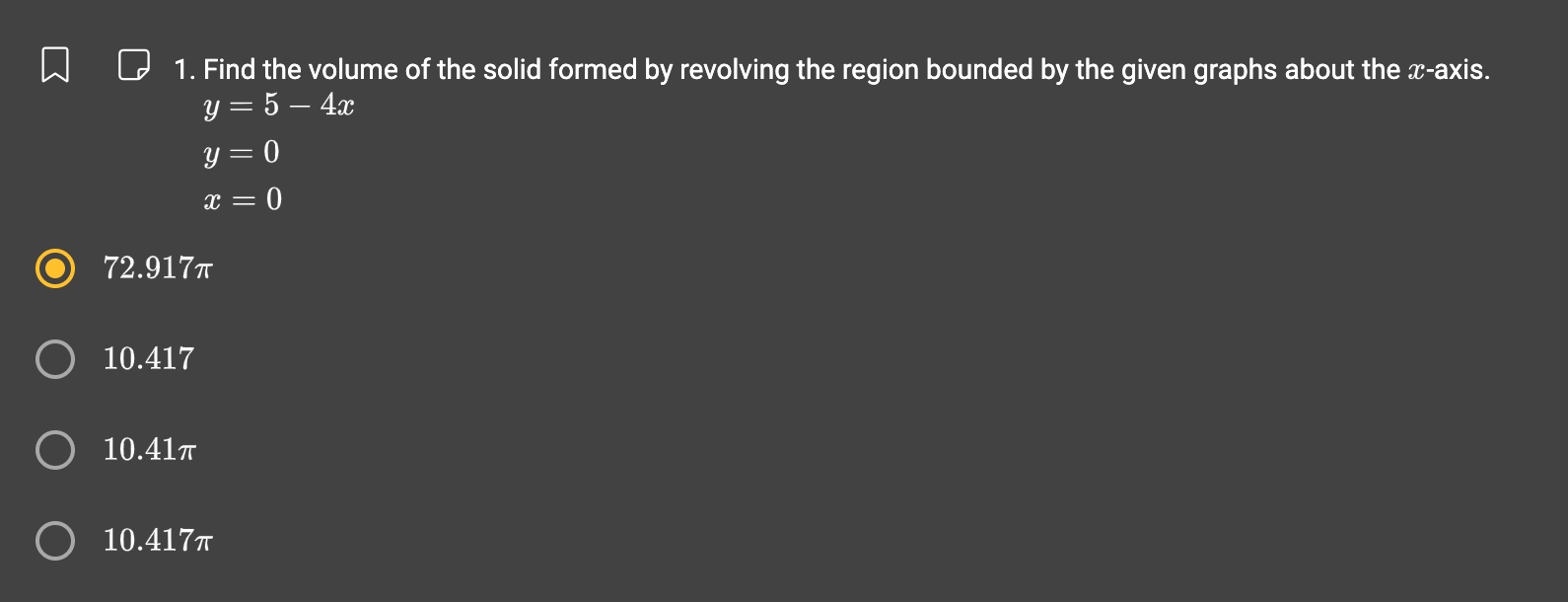
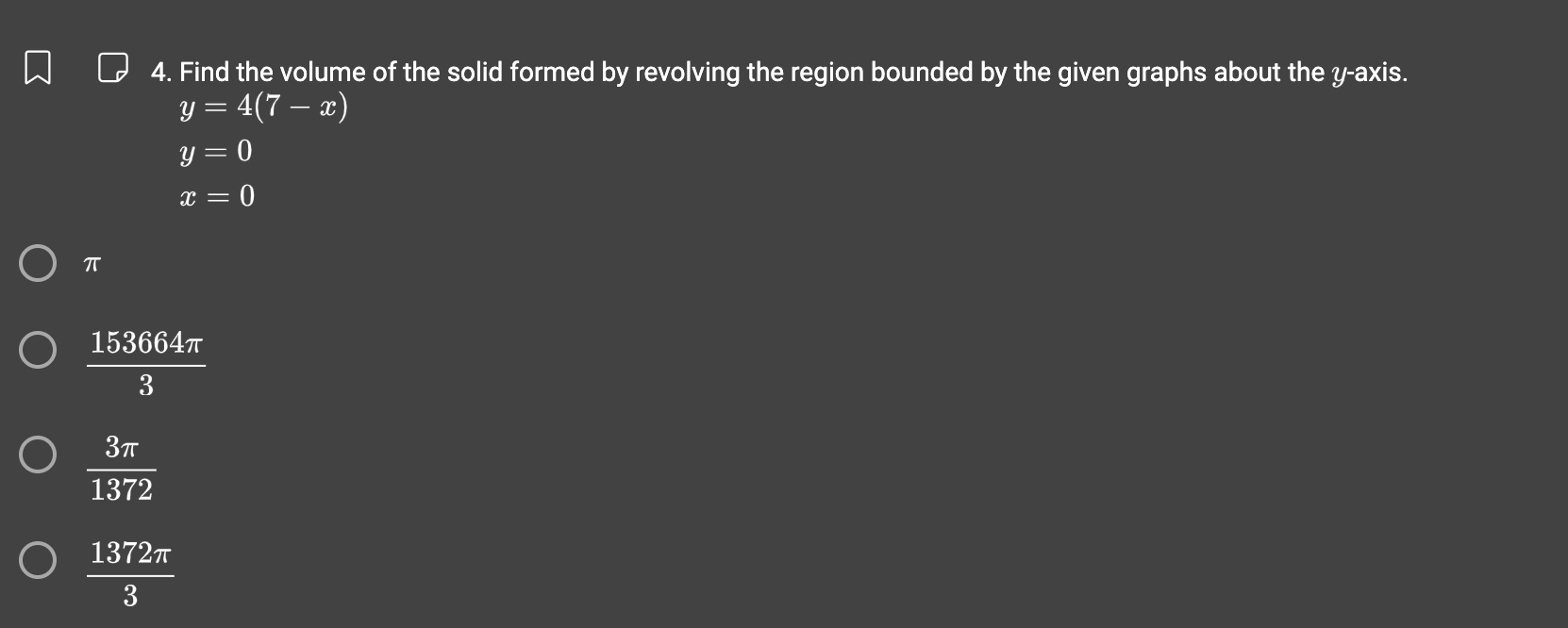

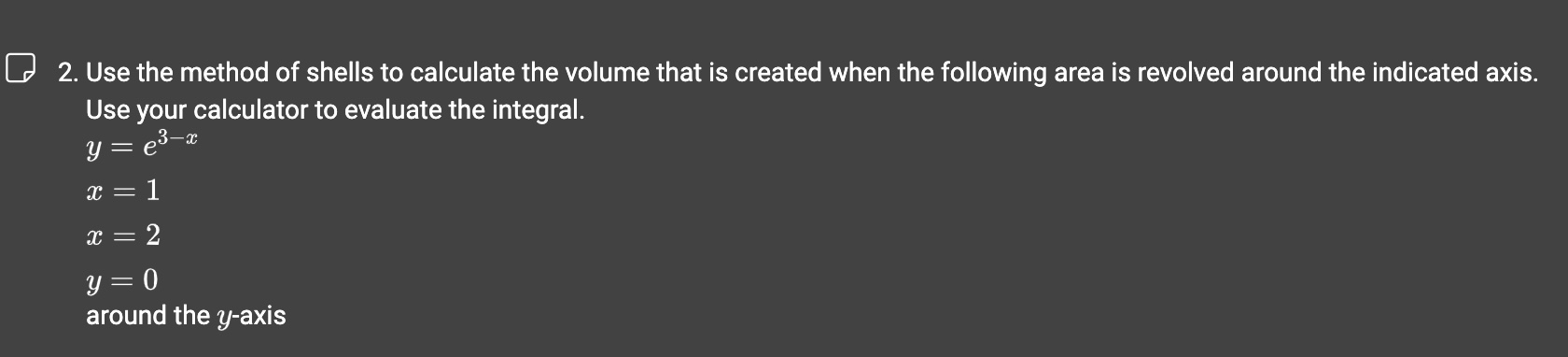
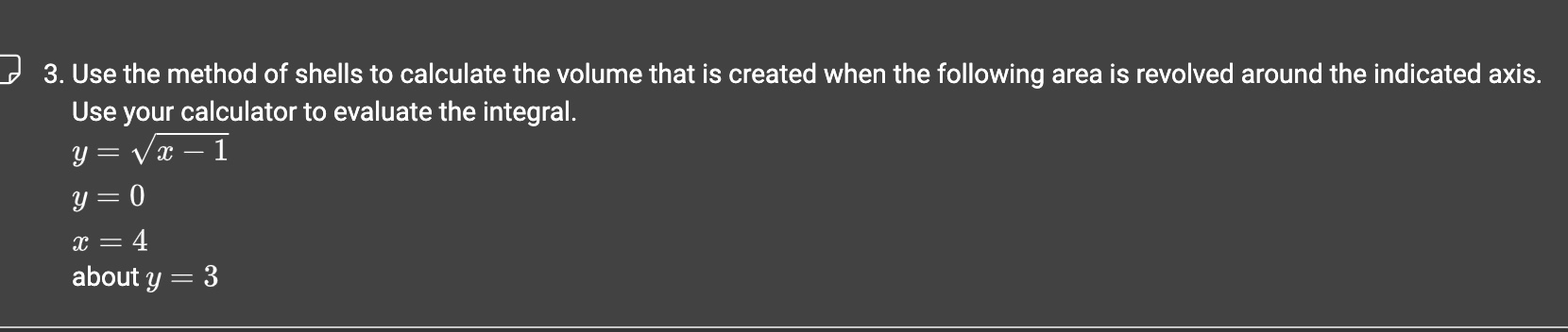

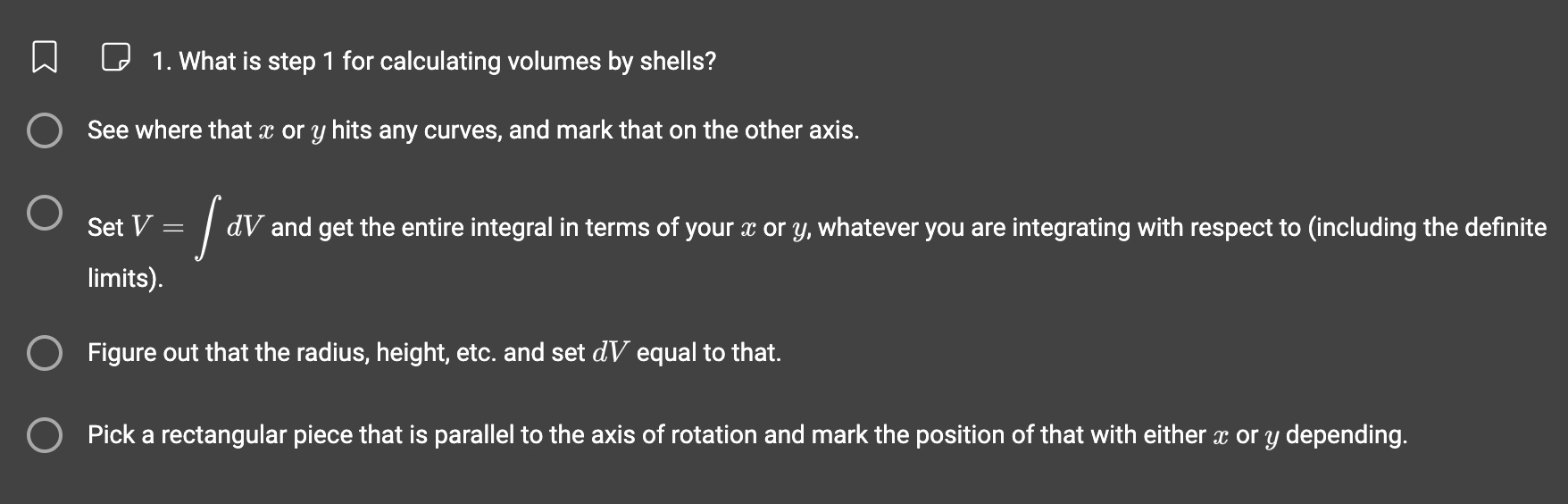
(Y 2. Find the volume of the solid whose base is the region bounded by the circle z? + y2 = 9 and whose cross sections perpendicular to the x-axis are equilateral triangles. 1. Find the volume of the solid formed by revolving the region bounded by the given graphs about the x-axis. y = 5 - 4x y =0 x = 0 O 72.917T O 10.417 O 10.417 O 10.4171LJ () 4. Find the volume of the solid formed by revolving the region bounded by the given graphs about the y-axis. i e e o = (1] O, O BRIy 3 O R @ ? 3. Find the volume of the solid formed by revolving the region bounded by the graphs y = /= and TES e TR T (VAR (D 2. Use the method of shells to calculate the volume that is created when the following area is revolved around the indicated axis. Use your calculator to evaluate the integral. e 63.1'- around the y-axis ) 3. Use the method of shells to calculate the volume that is created when the following area is revolved around the indicated axis. Use your calculator to evaluate the integral. = v = | K A abouty = 3 PR Compare using the method of volume by disks and volume by shells by completing this problem using both methods. Find the volume obtained by rotating the region bounded by the curve y = v/ 5 and the x-axis on the interval [5, 10]. Make sure you label which method is which. 1. What is step 1 for calculating volumes by shells? O See where that a or y hits any curves, and mark that on the other axis. O Set V = / dV and get the entire integral in terms of your a or y, whatever you are integrating with respect to (including the definite limits) O Figure out that the radius, height, etc. and set dV equal to that. O Pick a rectangular piece that is parallel to the axis of rotation and mark the position of that with either a or y depending
Step by Step Solution
There are 3 Steps involved in it

Get step-by-step solutions from verified subject matter experts
 Study Help