Question: You are applying to a summer graduate program with the University of California's Reducing Crime and Violent Extremism Project. Part of the application requires you
You are applying to a summer graduate program with the University of California's Reducing Crime and Violent Extremism Project. Part of the application requires you to submit a one-page memo on your intended research project.
Write a professional memo using the Basic Memo format
Text must be single-spaced. Times New Roman style size 12
Use APA copyright footnotes to cite your sources.
Your memo will be one page. Writing less than half a page or over one page will be penalized. You will not be penalized if your footnotes may make your paper can go slightly over a page.
Topic research Proposals For Improvement to the Professional Model of Policing
College Education Requirement
Humanitarian Responses to Improve Community Relations
Recruit more members of minority groups
Defunding the police
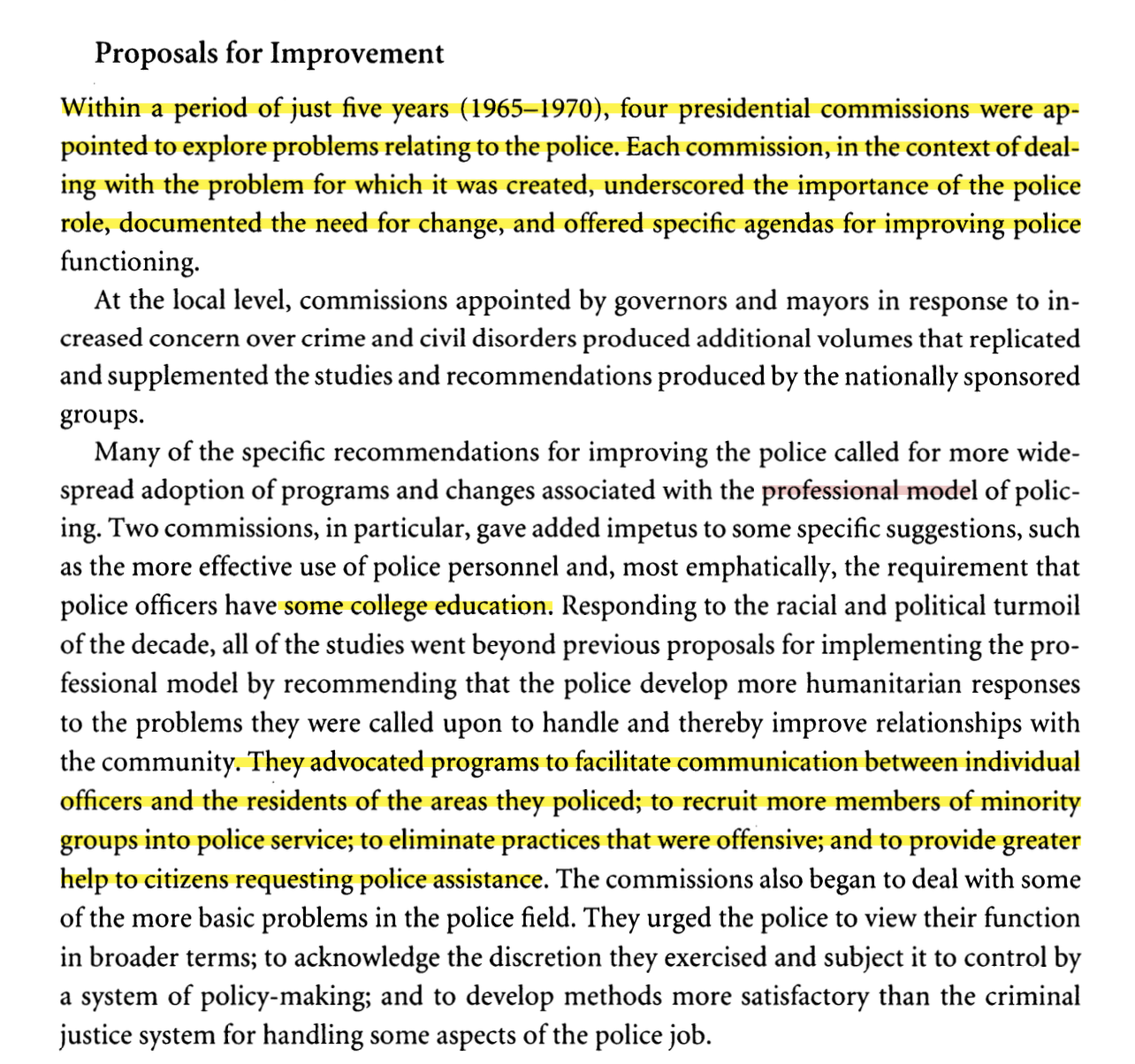
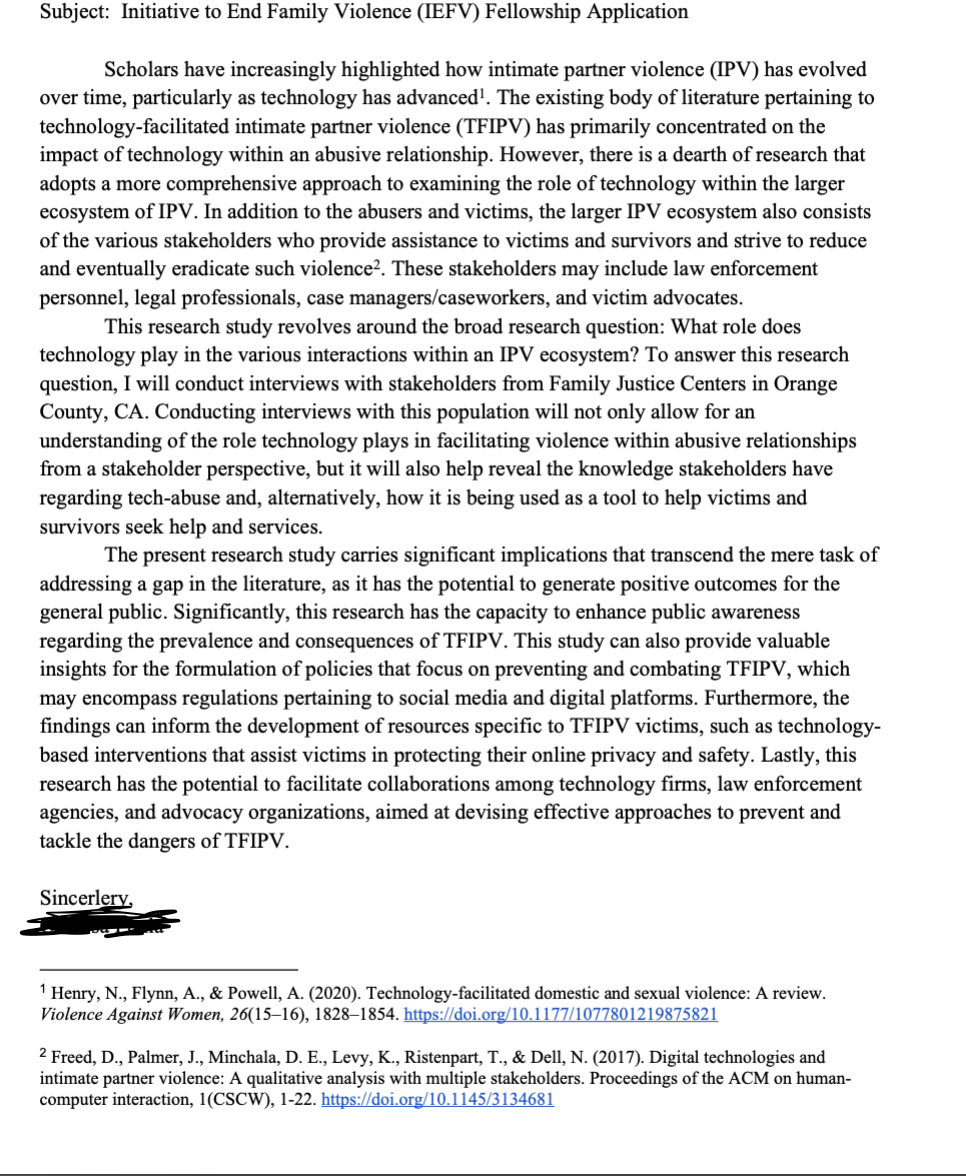
Use 3 sources, one is provided, use one source from the image below or you can search up for the book I will provide the name and author below, and the third source use own outside anything. For the 3 sources provide the citation on the footnotes.
INTRODUCTION TO CRIMINAL JUSTICE A Sociological Perspective EDITED BY CHARIS E. KUBRIN AND THOMAS D. STUCKY (2013 Stanford Press)
Proposals for Improvement Within a period of just five years (1965-1970), four presidential commissions were ap- pointed to explore problems relating to the police. Each commission, in the context of deal- ing with the problem for which it was created, underscored the importance of the police role, documented the need for change, and offered specific agendas for improving police functioning. At the local level, commissions appointed by governors and mayors in response to in- creased concern over crime and civil disorders produced additional volumes that replicated and supplemented the studies and recommendations produced by the nationally sponsored groups. Many of the specific recommendations for improving the police called for more wide- spread adoption of programs and changes associated with the professional model of polic- ing. Two commissions, in particular, gave added impetus to some specific suggestions, such as the more effective use of police personnel and, most emphatically, the requirement that police officers have some college education. Responding to the racial and political turmoil of the decade, all of the studies went beyond previous proposals for implementing the pro- fessional model by recommending that the police develop more humanitarian responses to the problems they were called upon to handle and thereby improve relationships with the community. They advocated programs to facilitate communication between individual officers and the residents of the areas they policed; to recruit more members of minority groups into police service; to eliminate practices that were offensive; and to provide greater help to citizens requesting police assistance. The commissions also began to deal with some of the more basic problems in the police field. They urged the police to view their function in broader terms; to acknowledge the discretion they exercised and subject it to control by a system of policy-making; and to develop methods more satisfactory than the criminal justice system for handling some aspects of the police job. Subject: Initiative to End Family Violence (IEFV) Fellowship Application Scholars have increasingly highlighted how intimate partner violence (IPV) has evolved over time, particularly as technology has advanced'. The existing body of literature pertaining to technology-facilitated intimate partner violence (TFIPV) has primarily concentrated on the impact of technology within an abusive relationship. However, there is a dearth of research that adopts a more comprehensive approach to examining the role of technology within the larger ecosystem of IPV. In addition to the abusers and victims, the larger IPV ecosystem also consists of the various stakeholders who provide assistance to victims and survivors and strive to reduce and eventually eradicate such violence?. These stakeholders may include law enforcement personnel, legal professionals, case managers/caseworkers, and victim advocates. This research study revolves around the broad research question: What role does technology play in the various interactions within an IPV ecosystem? To answer this research question, I will conduct interviews with stakeholders from Family Justice Centers in Orange County, CA. Conducting interviews with this population will not only allow for an understanding of the role technology plays in facilitating violence within abusive relationships from a stakeholder perspective, but it will also help reveal the knowledge stakeholders have regarding tech-abuse and, alternatively, how it is being used as a tool to help victims and survivors seek help and services. The present research study carries significant implications that transcend the mere task of addressing a gap in the literature, as it has the potential to generate positive outcomes for the general public. Significantly, this research has the capacity to enhance public awareness regarding the prevalence and consequences of TFIPV. This study can also provide valuable insights for the formulation of policies that focus on preventing and combating TFIPV, which may encompass regulations pertaining to social media and digital platforms. Furthermore, the findings can inform the development of resources specific to TFIPV victims, such as technology- based interventions that assist victims in protecting their online privacy and safety. Lastly, this research has the potential to facilitate collaborations among technology firms, law enforcement agencies, and advocacy organizations, aimed at devising effective approaches to prevent and tackle the dangers of TFIPV. Sincerl%i ! Henry, N., Flynn, A., & Powell, A. (2020). Technology-facilitated domestic and sexual violence: A review. Violence Against Women, 26(15-16), 18281854. https://doi.org/10.1177/1077801219875821 2 Freed, D., Palmer, J., Minchala, D. E., Levy, K., Ristenpart, T., & Dell, N. (2017). Digital technologies and intimate partner violence: A qualitative analysis with multiple stakeholders. Proceedings of the ACM on human- computer interaction, 1(CSCW), 1-22. https://doi.org/10.1145/3134681
Step by Step Solution
There are 3 Steps involved in it
1 Expert Approved Answer
Step: 1 Unlock
Question Has Been Solved by an Expert!
Get step-by-step solutions from verified subject matter experts
Step: 2 Unlock
Step: 3 Unlock
Students Have Also Explored These Related Business Writing Questions!