







Question: You are given two integer arrays nums 1 and nums 2 of lengths m and n respectively. nums 1 and nums 2 represent the digits
You are given two integer arrays nums and nums of lengths and respectively. nums and nums represent
the digits of two numbers. You are also given an integer k
Create the maximum number of length from digits of the two numbers. The relative order of the
digits from the same array must be preserved.
Return an array of the digits representing the answer.
Example :
Input: nums nums
Output:
Example :
Input: nums nums
Output:
Example :
Input: nums nums
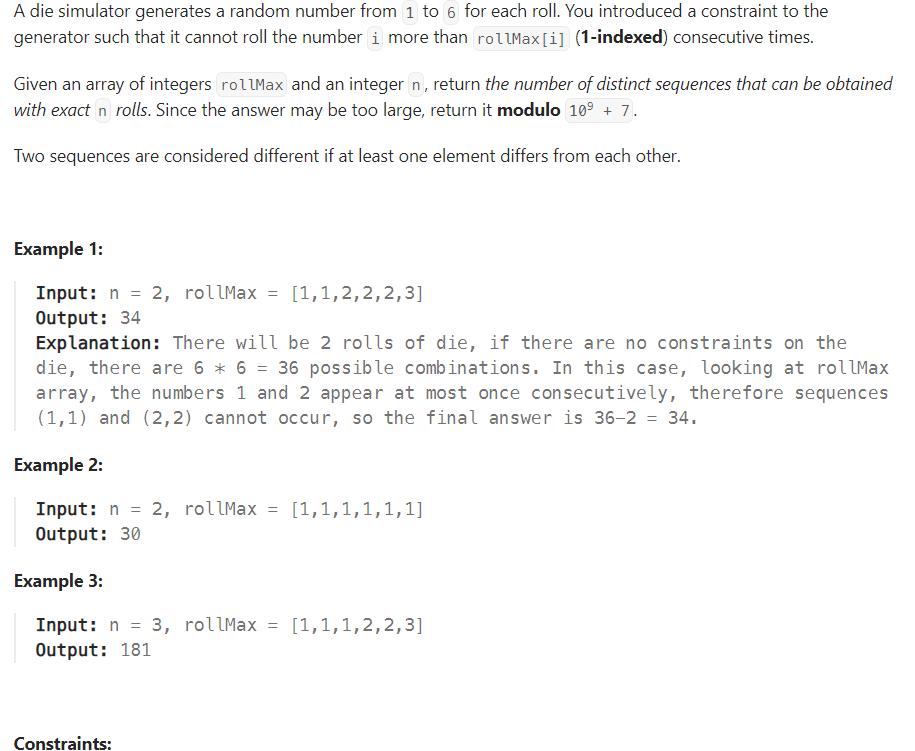
Output: A die simulator generates a random number from to for each roll. You introduced a constraint to the
generator such that it cannot roll the number i more than rollMaxiindexed consecutive times.
Given an array of integers and an integer return the number of distinct sequences that can be obtained
with exact rolls. Since the answer may be too large, return it modulo
Two sequences are considered different if at least one element differs from each other.
Example :
Example :
Example :
Constraints:
Step by Step Solution
There are 3 Steps involved in it
1 Expert Approved Answer
Step: 1 Unlock

Question Has Been Solved by an Expert!
Get step-by-step solutions from verified subject matter experts
Step: 2 Unlock
Step: 3 Unlock
 Study Help