







Question: You encounter a split system that uses R-22 refrigerant and observe the following refrigeration parameters from the unit's control display. The unit is operating
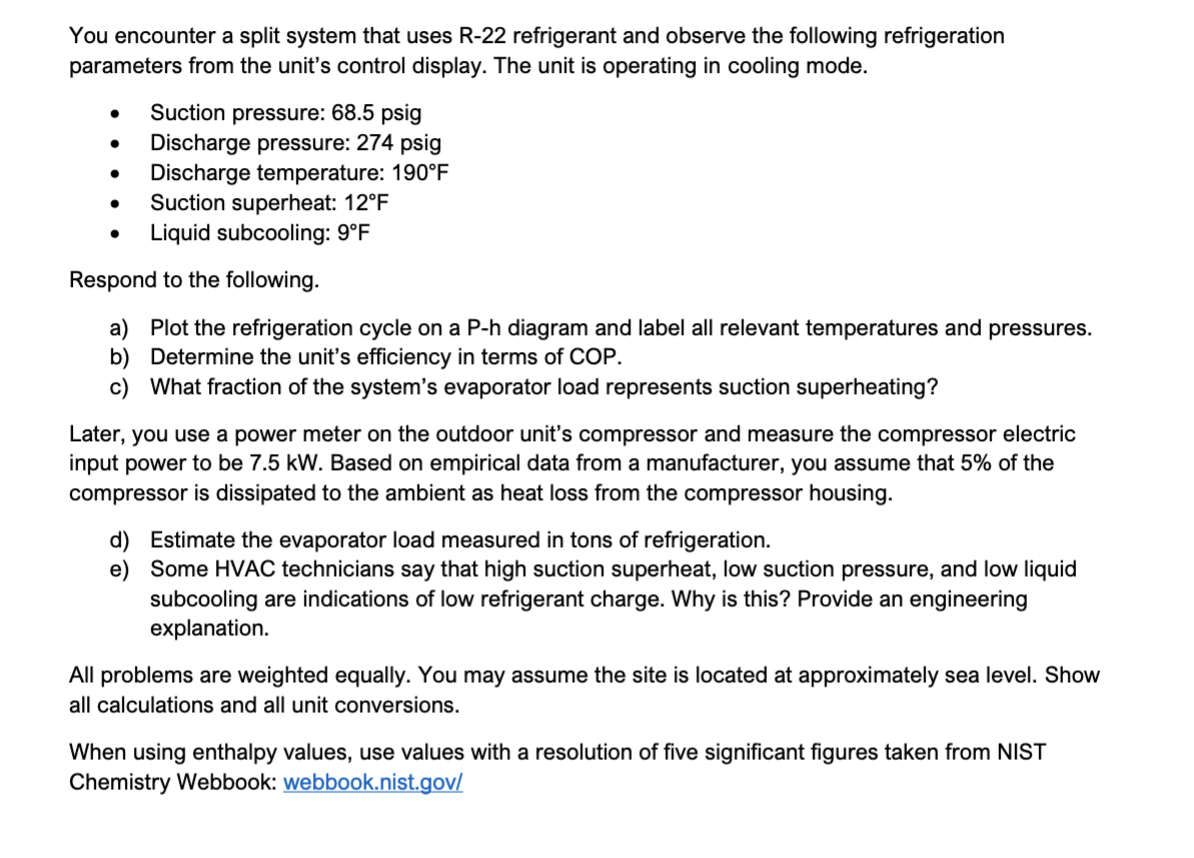
You encounter a split system that uses R-22 refrigerant and observe the following refrigeration parameters from the unit's control display. The unit is operating in cooling mode. Suction pressure: 68.5 psig Discharge pressure: 274 psig Discharge temperature: 190F Suction superheat: 12F Liquid subcooling: 9F Respond to the following. a) Plot the refrigeration cycle on a P-h diagram and label all relevant temperatures and pressures. b) Determine the unit's efficiency in terms of COP. c) What fraction of the system's evaporator load represents suction superheating? Later, you use a power meter on the outdoor unit's compressor and measure the compressor electric input power to be 7.5 kW. Based on empirical data from a manufacturer, you assume that 5% of the compressor is dissipated to the ambient as heat loss from the compressor housing. d) Estimate the evaporator load measured in tons of refrigeration. e) Some HVAC technicians say that high suction superheat, low suction pressure, and low liquid subcooling are indications of low refrigerant charge. Why is this? Provide an engineering explanation. All problems are weighted equally. You may assume the site is located at approximately sea level. Show all calculations and all unit conversions. When using enthalpy values, use values with a resolution of five significant figures taken from NIST Chemistry Webbook: webbook.nist.gov/
Step by Step Solution
There are 3 Steps involved in it
Plotting the refrigeration cycle on a Ph diagram Explanation A PressureEnthalpy Ph diagram is a graphical representation of the refrigeration cycle in which pressure is plotted against enthalpy The re... View full answer

Get step-by-step solutions from verified subject matter experts
 Study Help